Myvatn Lakes
After a lovely breakfast we drove from Laxhus, our stay to Lake Myvatn which was about 32 minutes over a distance of 42 km.

We had five sightseeing destinations around Lake Myvatn in our itinerary.The day before we visited three, they were Krafla Viti Crater, Namafjall Hverir and Myvatn Nature Baths. Today we would visit the remainder two, Dimmuborgir and Skutustadagigar.

From our stay we drove on route 87 until we we reached its intersection with Ring Road 1 at Lake Myvatn. Mývatn was a volcanic lake of about 37 square kilometres. It had numerus bays and creeks and some fifty islands and islet. The lake was not very deep, it had an average depth of 2.5 metres and a maximum depth was 4 metres.
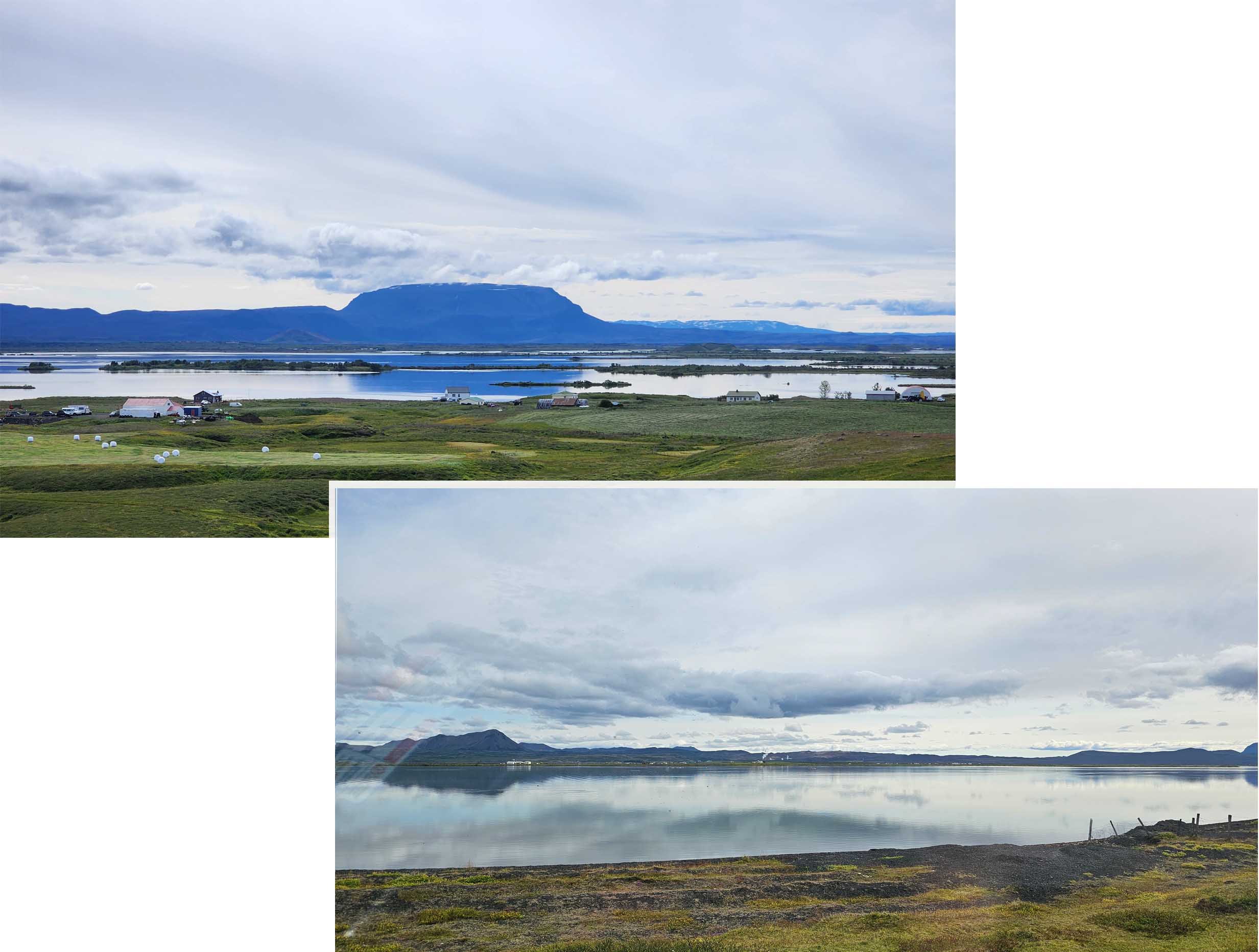
The lake looked very beautiful, we found a place to park our car and came down to have a better look. We were not able to stay out in the “open” for long as very soon we were surrounded by tiny flying insects. They looked like flies. We had to get back into our car to escape the irritating buzzies.
We drove on to a few other places to view the lake but every time we were surrounded by the tiny flies. These flies swarmed all over us..getting into our noses, ear and eyes!
Dimmuborgir
We reached Dimmuborgir carpark, but did not get out of our car as we felt overwhelmed with the “millions” of tiny flies in the air. We did not came prepared, we did not have any head nets to protect ourselves from these summer flies! We drove to a nearby store but were unable to find any head nets on sale.
Skutustadagigar
We drove another 11 km to our next destination Skutustadagigar and parked at Myvatn Visitor Center just beside it, which was free of charge. Here the summer flies were a bit lesser. Yat Thong dug into his backpack and found the faceshield attachment to his hat. Well he seemed to get some protection from the flies! As for me I decided to pull my hat low and “brave” the annoying buzzies!
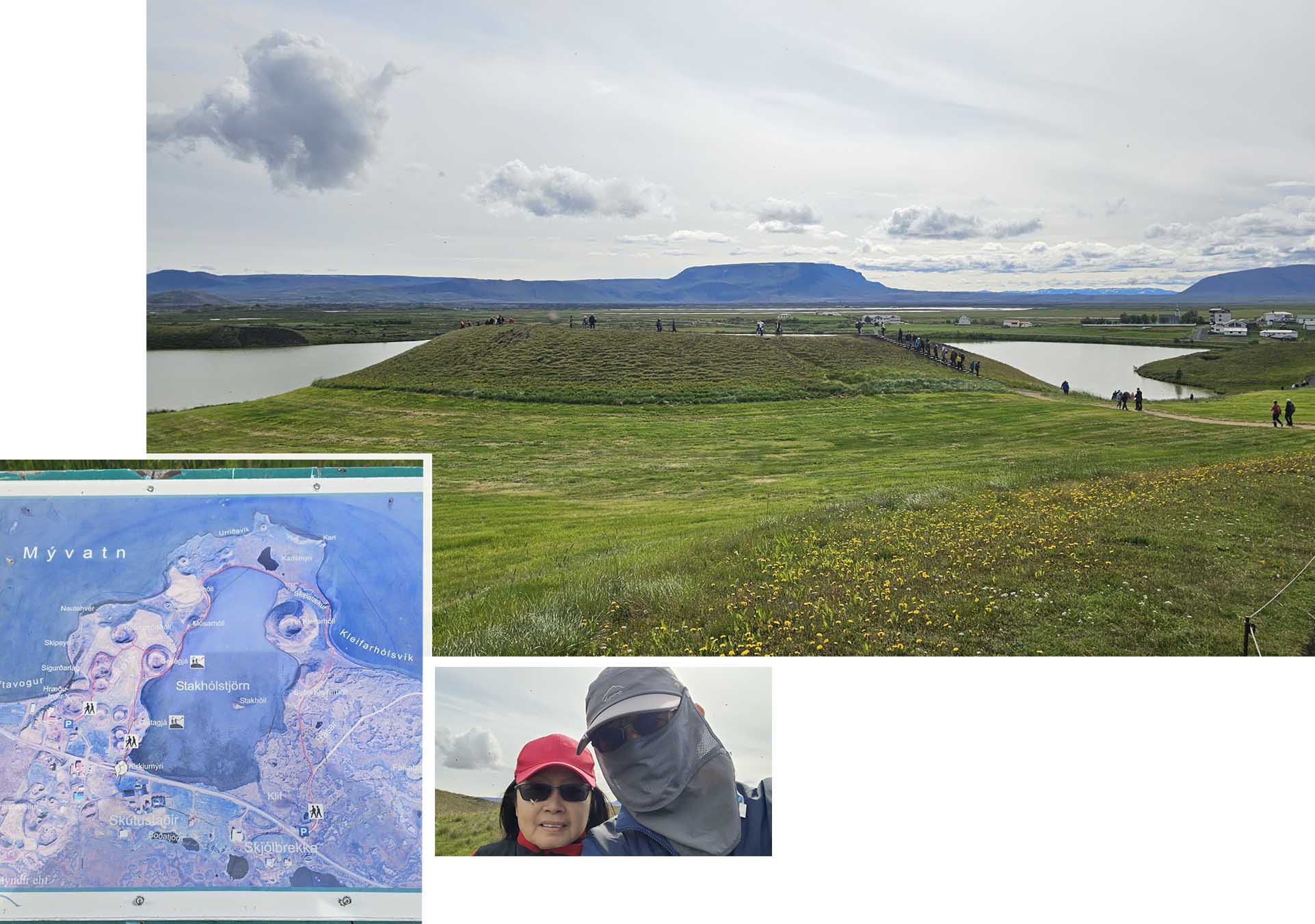
Skútustaðagígar was an area of many pseudocraters. These pseudocraters were formed some 2,300 years ago in the eruption of Lúdentaborgir and Þrengslaborgir. These craters were rootless craters as they had no end to them, they were not connected to a direct magma conduit.
These rootless craters were formed when hot flowing molten lava flowed over a wetland or boggy areas. The hot lava boiled the water of the wetlands and the steam pressure causes explosions, creating clusters of pseudocraters. “Imagine boiling bubbles bursting in a pot of thick sauce”.
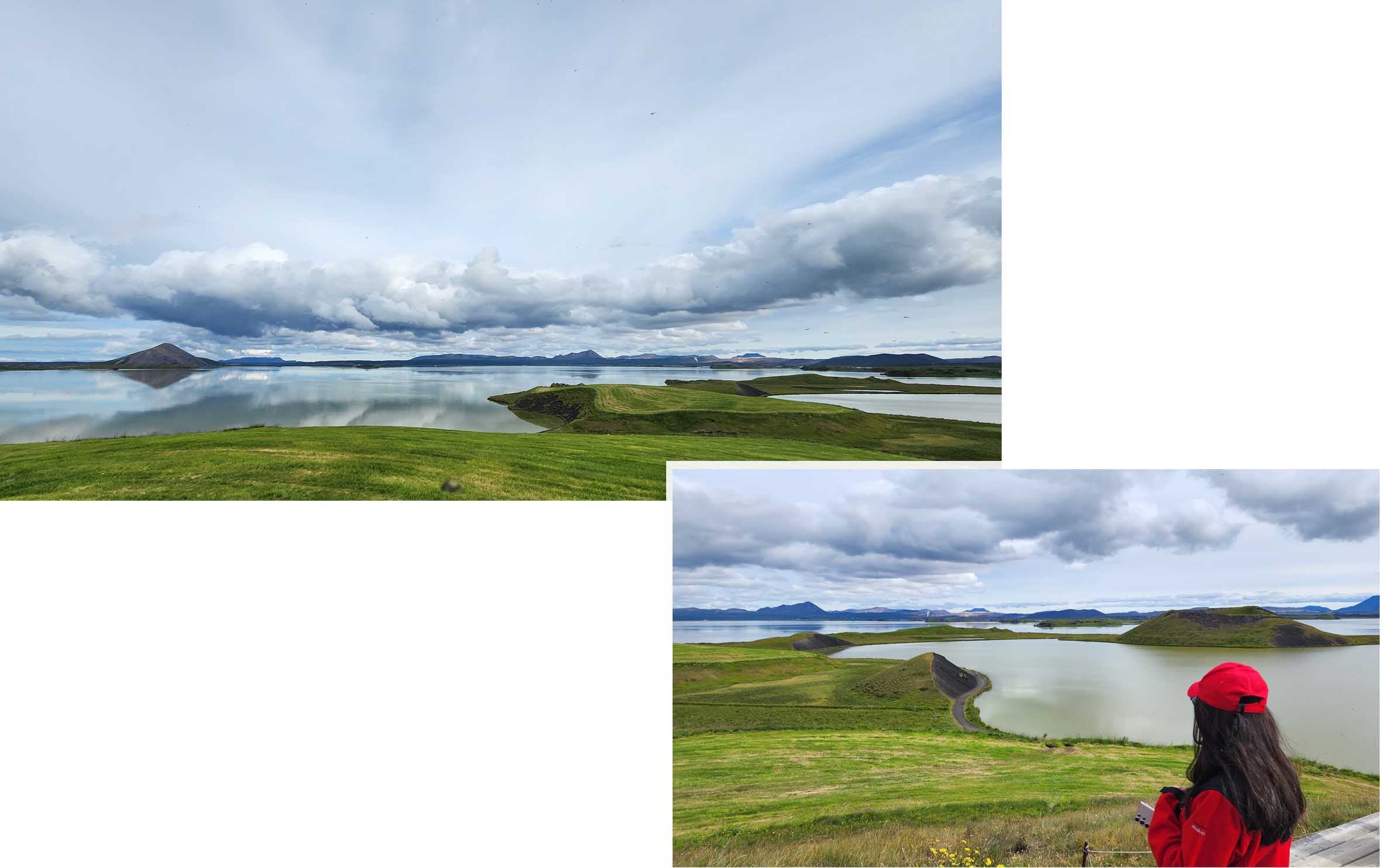
Some pseudocraters looked like hills while other looked like a crater bowls. Basically if the hot lava exploded a few times in the wetlands, hills would be formed but it the explosion continued over and over again then crater bowls would be formed.
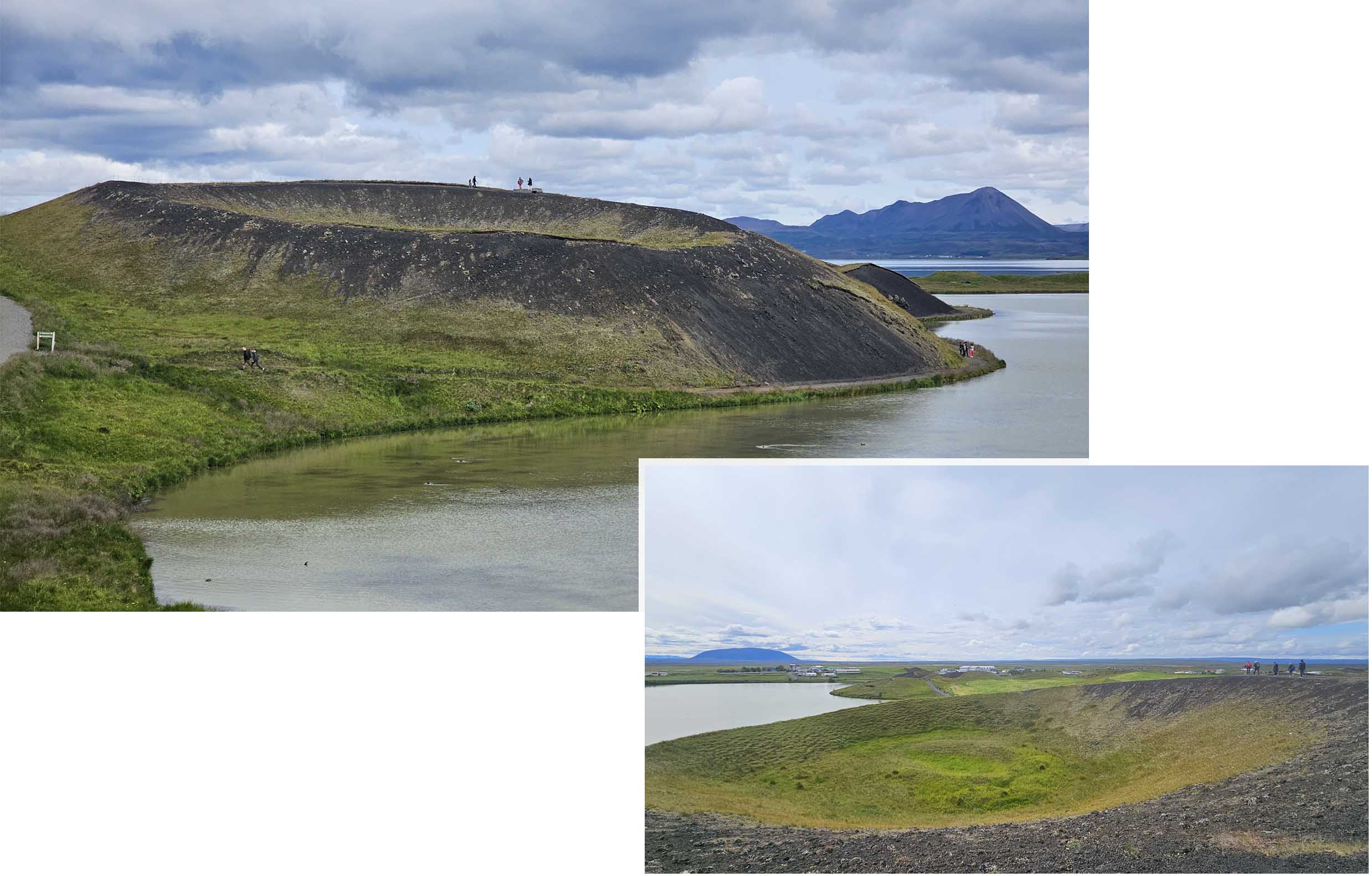
Skútustaðagígar was absolutely unique and stunning. We were glad we made the effort to ignore the summer flies to come out and explore.
Godafoss
We left Myvatn area in the early afternoon and drove on to Godafoss which was about 38km away.

We parked at “Godafoss East Bank Parking” and walked forward to a bridge that spanned a fast river. From the bridge we did not have a direct view of the falls.

The bridge spanned across River Skjálfandafljót which had its origin in Icelandic Highlands, running north through Barðárdalur valley. This river was 178 km long and was the fourth longest river of Iceland.
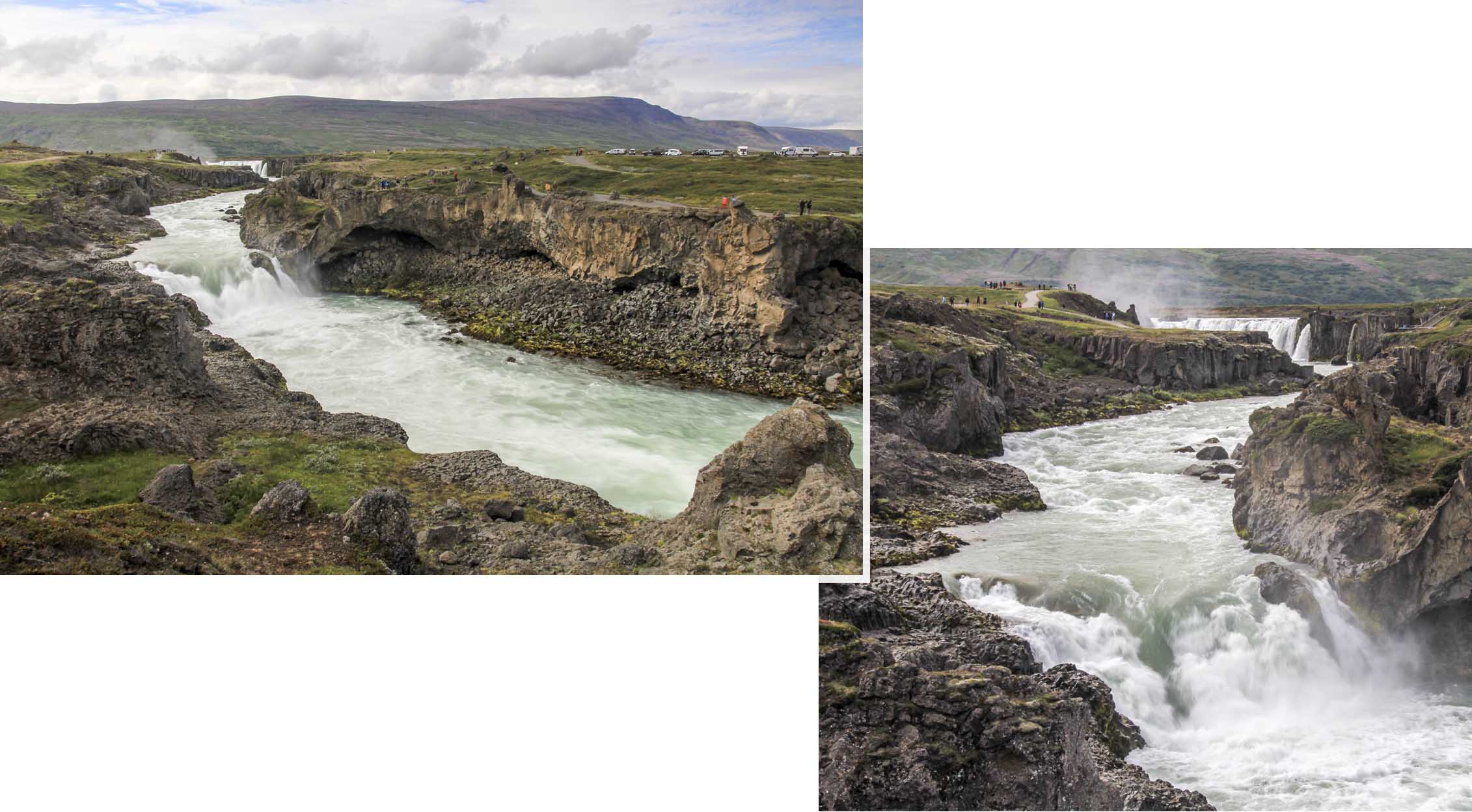
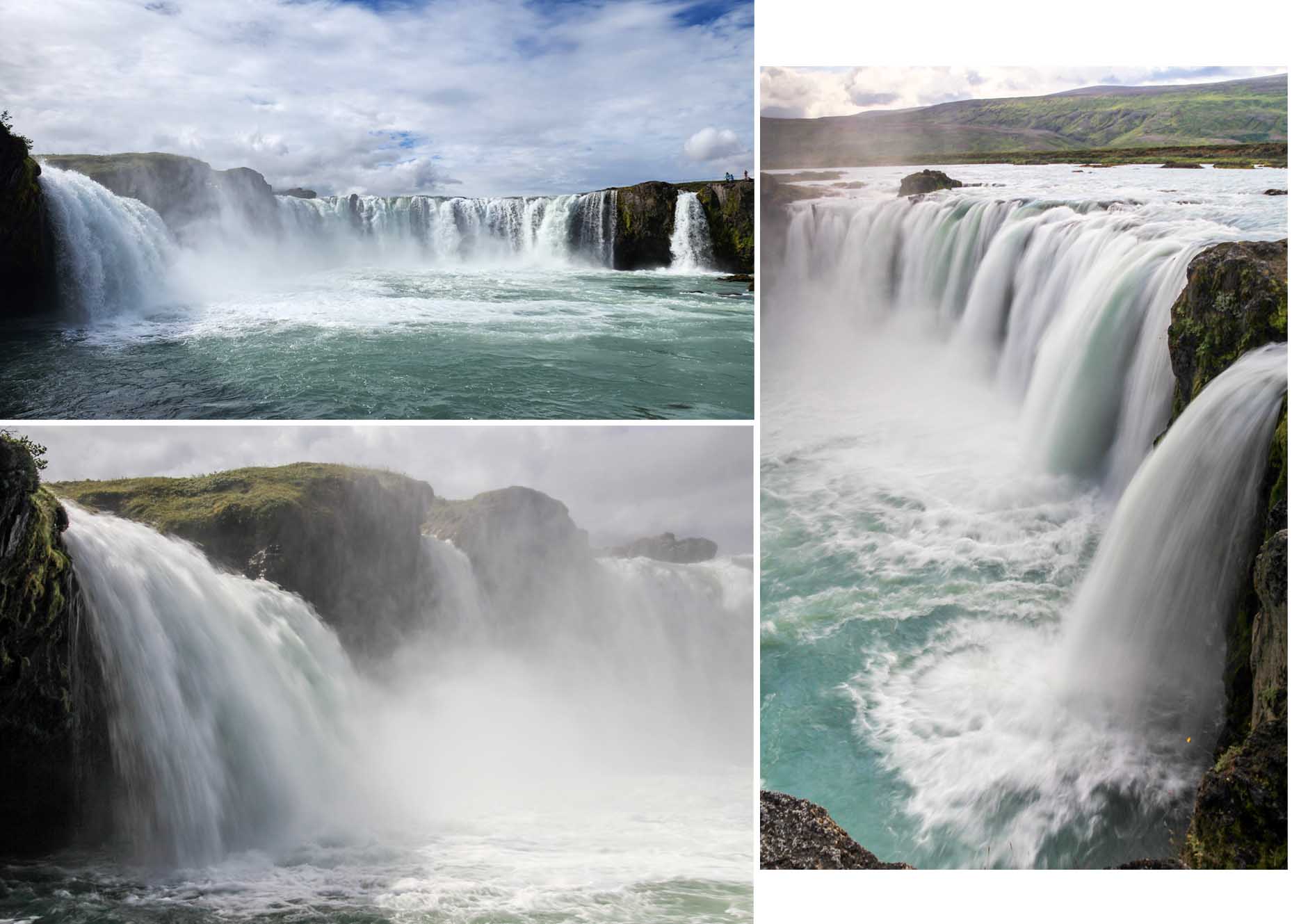
Godafoss could be explored on the east side and west side. On the east side there was a rocky path down to the water level. Godafoss was a lovely horse-shaped waterfall. The water fell over a 30 meters wide horse-shaped rock/cliff. In the middle of the horse-shaped cliff was a “bump” and the water was divided into two sections. One section was a shorter 9m falls and the other section was a higher 17 m falls.

We crossed the pedestrian bridge to explore Godafoss on the west side. After the bridge was a path to the falls. On the west side there was no path to the water level. The falls looked more magnificient on the west side as it was higher and wider.
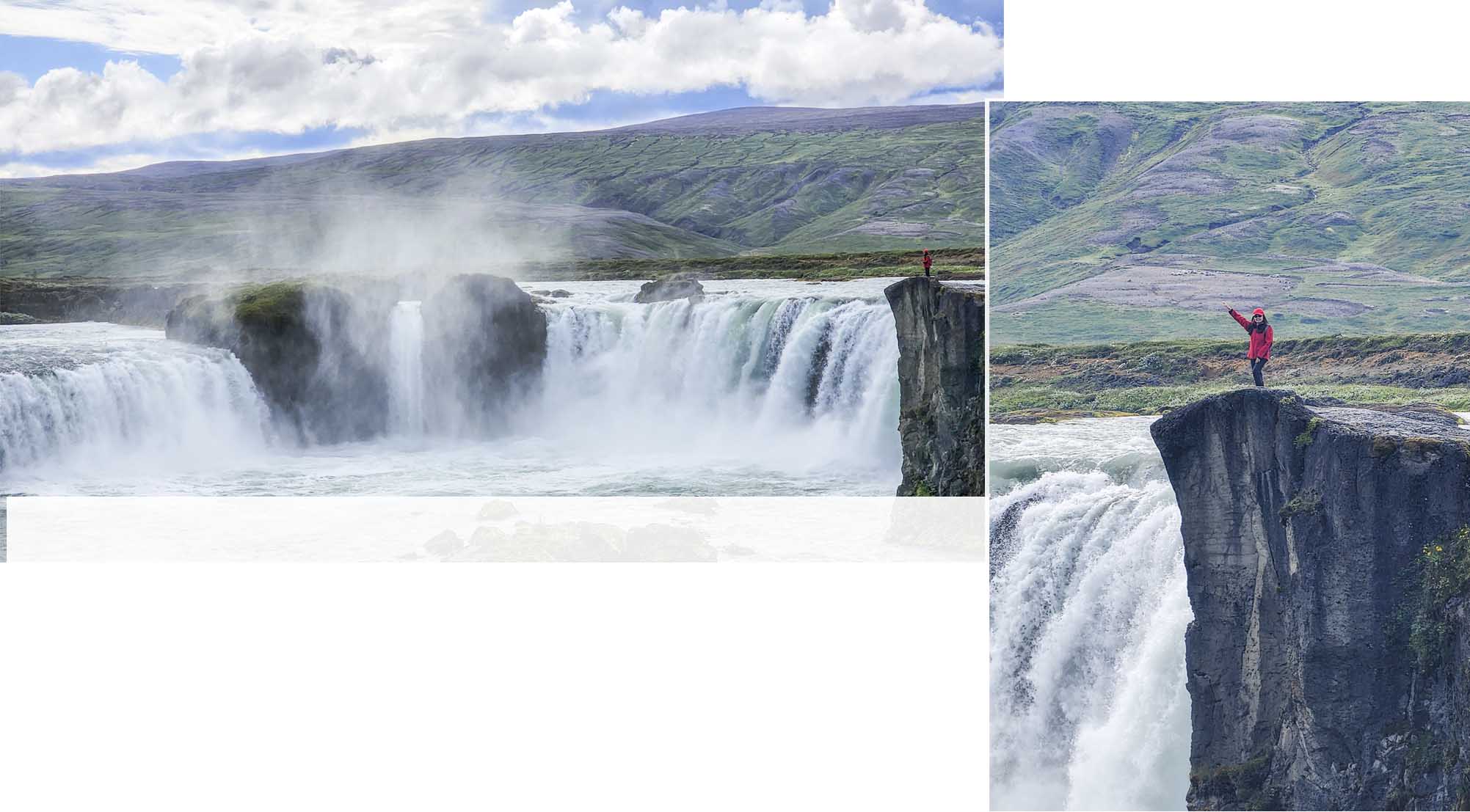
Godafoss was nicknamed the “Waterfall of Gods” and some believed that it was due to its god-like beauty.

There was also a folklore about Þorkelsson (an Icelandic man) , for whatever reasons he threw the statues of Norse gods from his family temple into Godafoss which angered the gods greatly. So the gods splitted Godafoss into two sections!
Our Stay at Akureyri
We had booked an “apartment” from Airbnb in Akureyri. The apartment was sort built in a garage ” beside the host main house. The “apartment” costed SGD$282 for one night.

The apartment had a living room, a full kitchen dnd a dining area. The apartment was very lovely and spacious. It was cosy, clean and comfortable. It was time to do laundry!

There was a supermarket Bonus nearby and we were able to stocked up our grocery and cooked two lovely meals.
