On way to forbidden city
Our stay, base Beijing Wanfujing Serviced Apartment, was about 2.8km to the Forbidden City. It was a pretty straight forward route so we decided to get to the Forbidden City on foot. On the way we would looked out for a nice cafe or restaurant to grab some breakfast.

It was a surprising pleasant walk. The weather was nice and cooling, the streets were clean and wide and there was no many vehicle. There were a mixtures of old and modern buildings.

We reached a huge promenade and around it were many high, large and modern buildings. The floor/ground was nicely paved and the place was off limit to vehicles.

We found a “food court” 食坊 and went in for our breakfast. The food court was bright and clean, there were many smaller stores in the food court each selling a different type of food. We selected our noodles and drinks and paid the store holders using “Alipay”.
Unlike the day before when we paid our cab driver by scanning his Alipay QR code and entering the amount, this time the food store owner informed us that he would need to scan my QR code for the payment. We were getting confused and he kindly guided us through the steps.
- step 1: opened Alipay App
- step 2: clicked [¥]Pay/Receive icon (2nd leftmost icon on the top), a QR code would be shown
- step 3: allowed the store holder to scan the code and the payment get deducted from my already linked debit card

The prices of the food was very reasonable. For a huge bowl of beef noodle it cost ¥38 and for a bottle of chrysanthemum drink it was ¥10.
After breakfast we got a bit lazy and decided to take the subway to the Forbidden City, exiting at TianAnMeng (天安门东) station. The cost of the ticket was ¥3 per person which was pretty inexpensive.

Beijing subway was modern and clean. We bought our tickets at the ticketing machine using Alipay for payment. The ticketing machine had “English” language which made interaction simple. China took safety very seriously, before we could go through the gantry to board the train, every bags we carried had to be submitted for scanning.
Forbidden City
Forbidden City was also known as the Palace Museum and its Chinese name was 故宫博物院. To enter into the Forbidden City we needed to purchase the ticket online. Tickets were not sold on site.
We purchased the tickets directly from the official palace museum website, the url was https://bookingticket.dpm.org.cn. We could also purchased the ticket from trip.com/Beijing attraction. Only 40,000 tickets were sold for each day to limit the number of visitors to the muesum and the ticket purchase were available 7 days in advance. Tickets that were put up for sales ran out just in a few hours. Passport details were needed during the ticket purchase and this ticket was not transferable.
The basic tickets costed ¥30 per senior (discounted rate for senior age 60 and above). We added visit to “The Gallery of Clocks” and “The Treasure Gallery” for additional ¥5 each gallery per senior. After the purchase we received an email acknowlegement, there was no official tickets emailed to us or for us to pick up on site. We only needed to scan our Passports to enter the Palace Museum.
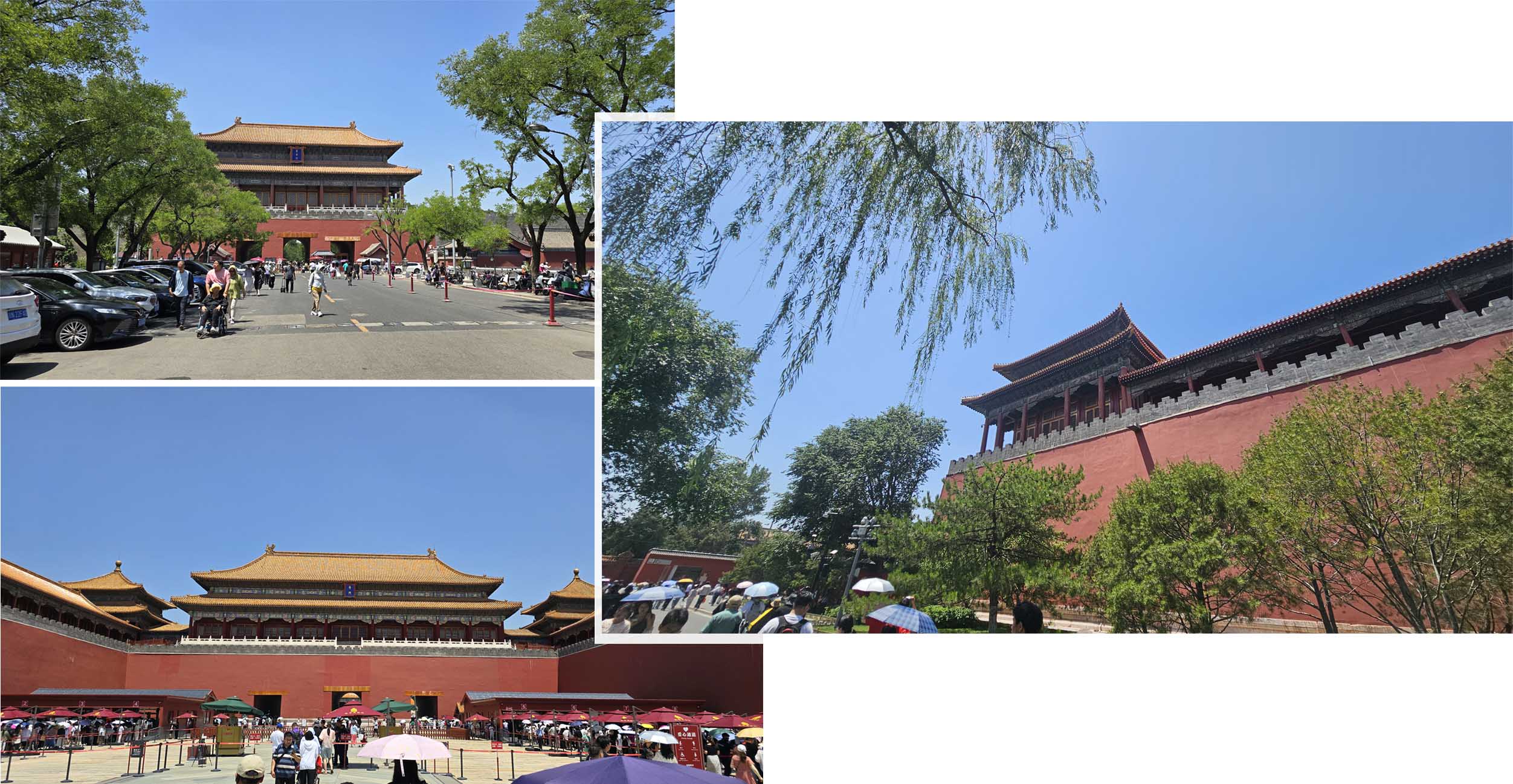
We entered the Forbidden City by the DongHua Entrance, 东华门城楼. This is the East Entrance Gate into the city. This entrance was a huge complex, it was a huge gate tower with double eaved yellow glazed tiles sitting on top of a high, red brick and thick fortress wall. We walked into one of the three rectangle holes/doorwasy in the red wall to enter the “Forbidden City”.
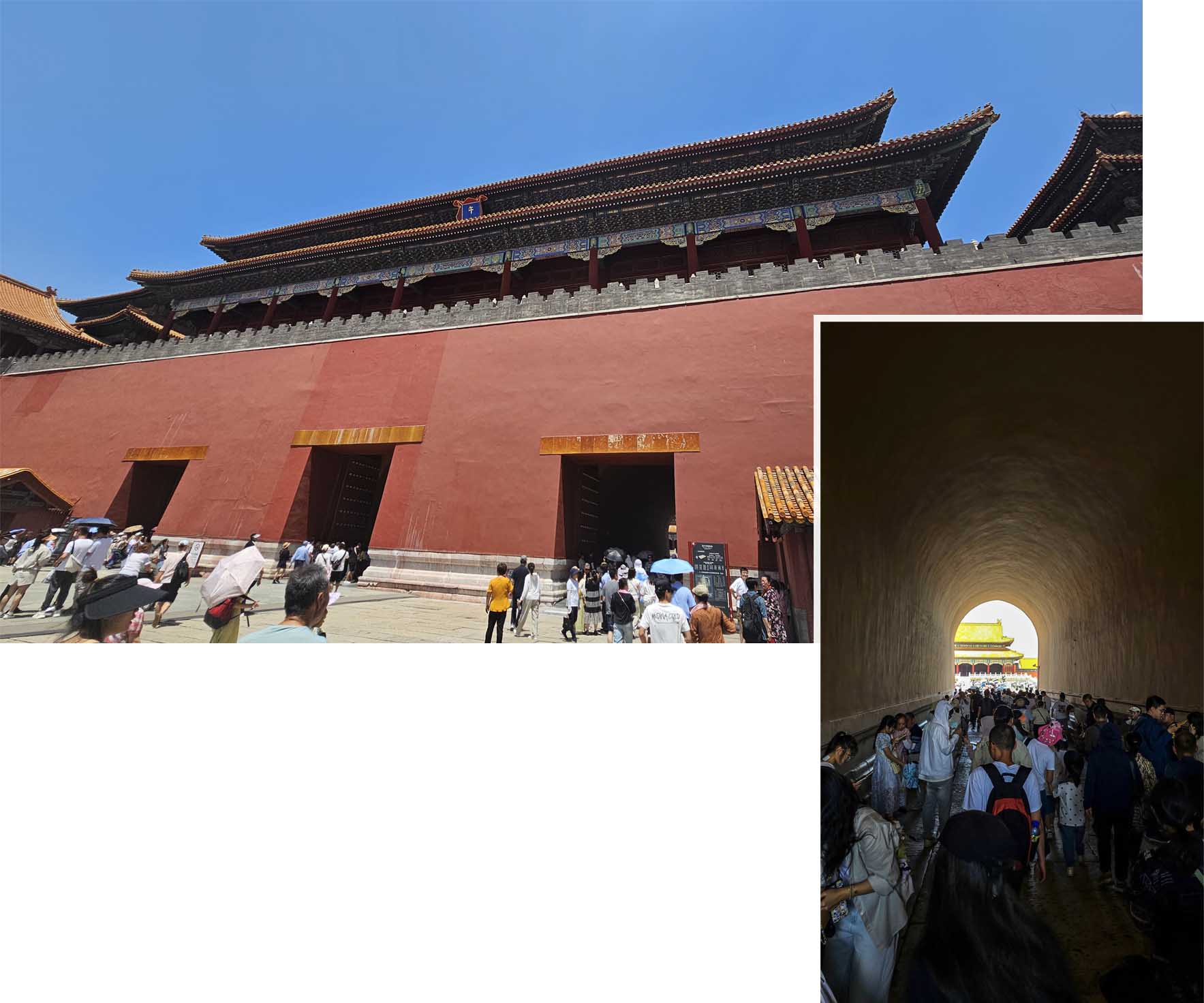
Wow, the Forbidden City was gigantic. Its total area was about 720,000 square meters with 150,000 square meters constructed area. The total area was as large as 100 football fields!
To help us with our exploration of this huge place we rented two “audio guide” for ¥40 per device and placed a ¥100 deposit per devie. We would get back the deposit once we returned the audio device and it needed not be at the entrance where we came in. We were told to look out carefully for the audio device “return station” as once we exited we would not be able to get back in to return the audio devices and would lose our deposit.
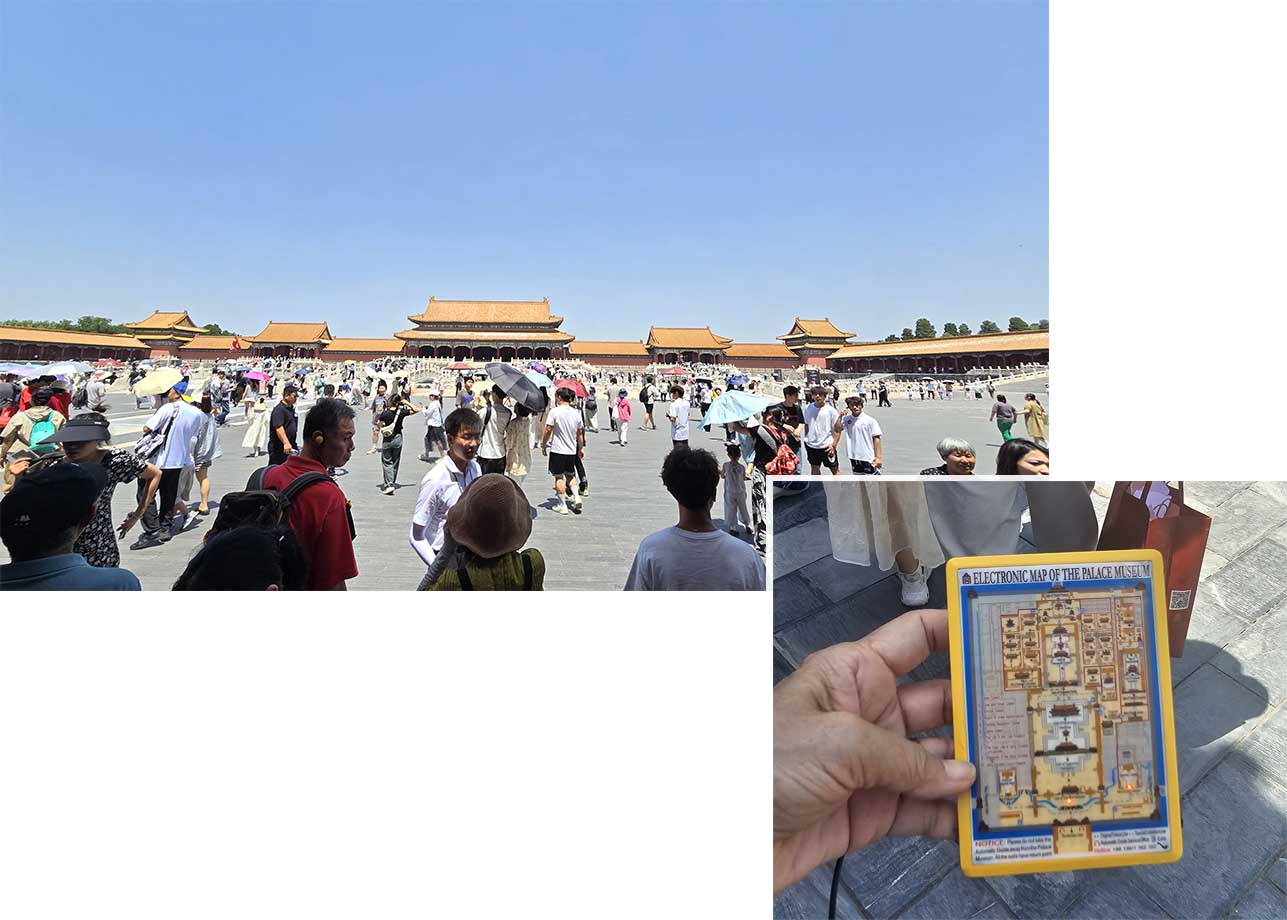
The audio guides should be clever enough to detect our location and gave us some commentaries of the halls as we moved along. Unfortunately it was not as “smart” as they seemed and we had a hard time “managing” them.
The Forbidden City (紫禁城) was constructed from 1406 to 1420. It was the imperial palace and winter residence of the Emperors of China, stating form the Ming dynasty to the Qing dynasty (1924). This place served as the home of Chinese emperors and their households and was the ceremonial and political center of the China government for over 500 years.
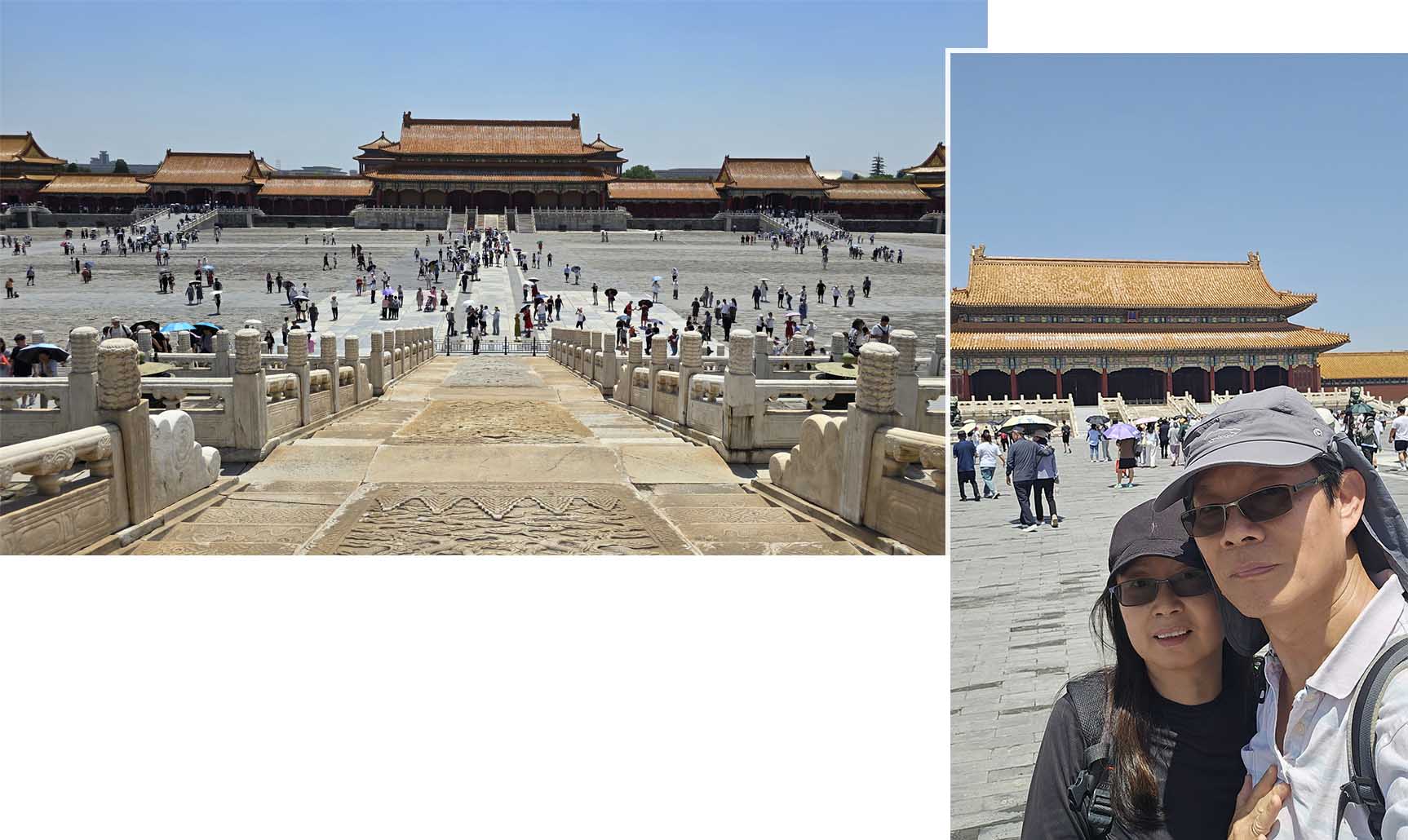
In the compound of the Forbidden City were 980 surviving buildings with 8,886 bays of room. We went in search of the throne room which was in the Hall of Supreme Harmony,太和殿. It was the largest hall within the Forbidden City. The hall was built above three levels of marble stone base, and surrounded by bronze incense burners, the Hall of Supreme Harmony is one of the largest wooden structures within China.
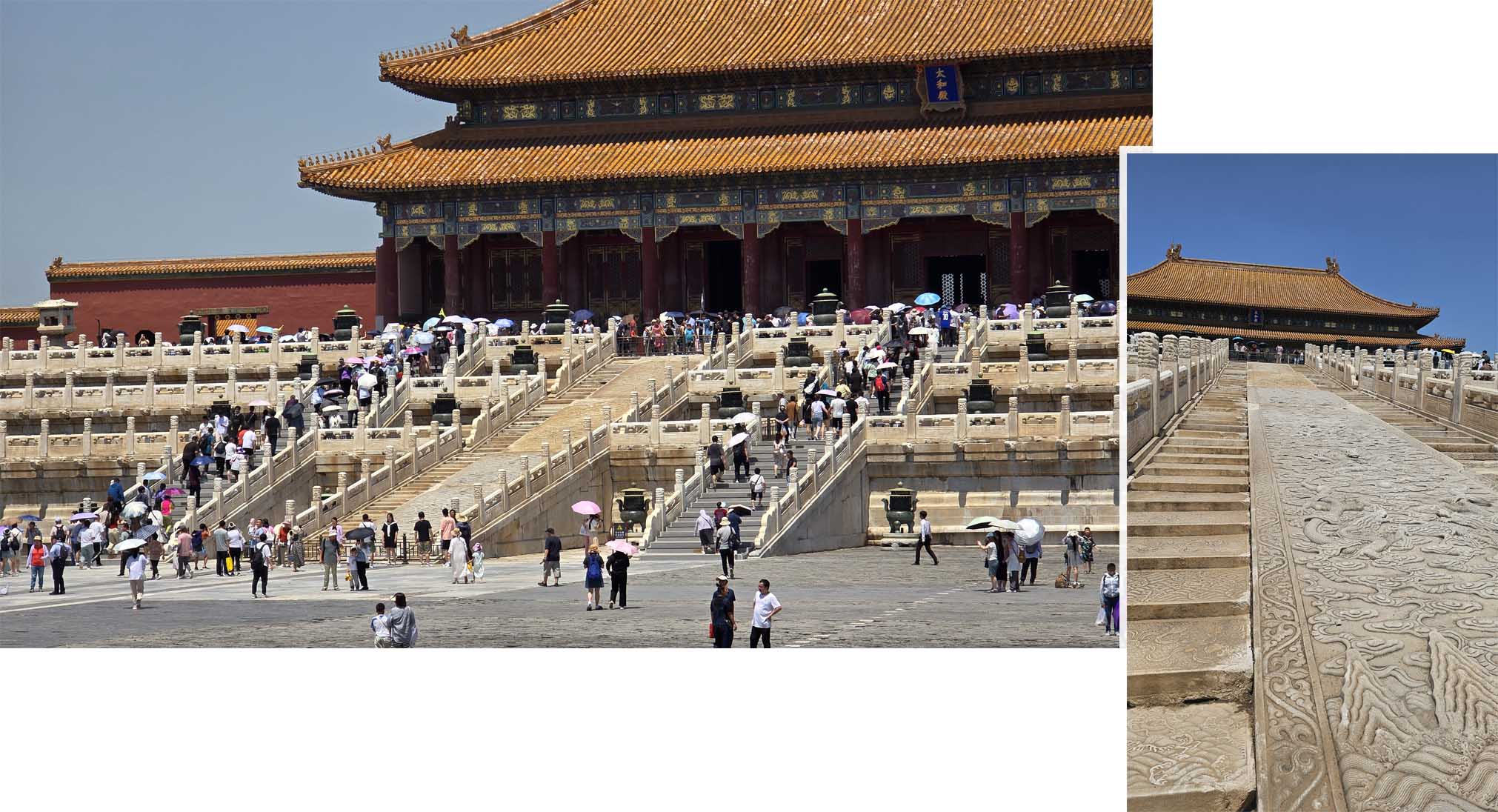
We thought to have a look of the Throne Room unfortunately after climbing up the three levels of marble stones base to the hall we found that the place was “condone” off. The internal of the hall were dark and there was no way to look inside and see the “Dragon Throne”!!
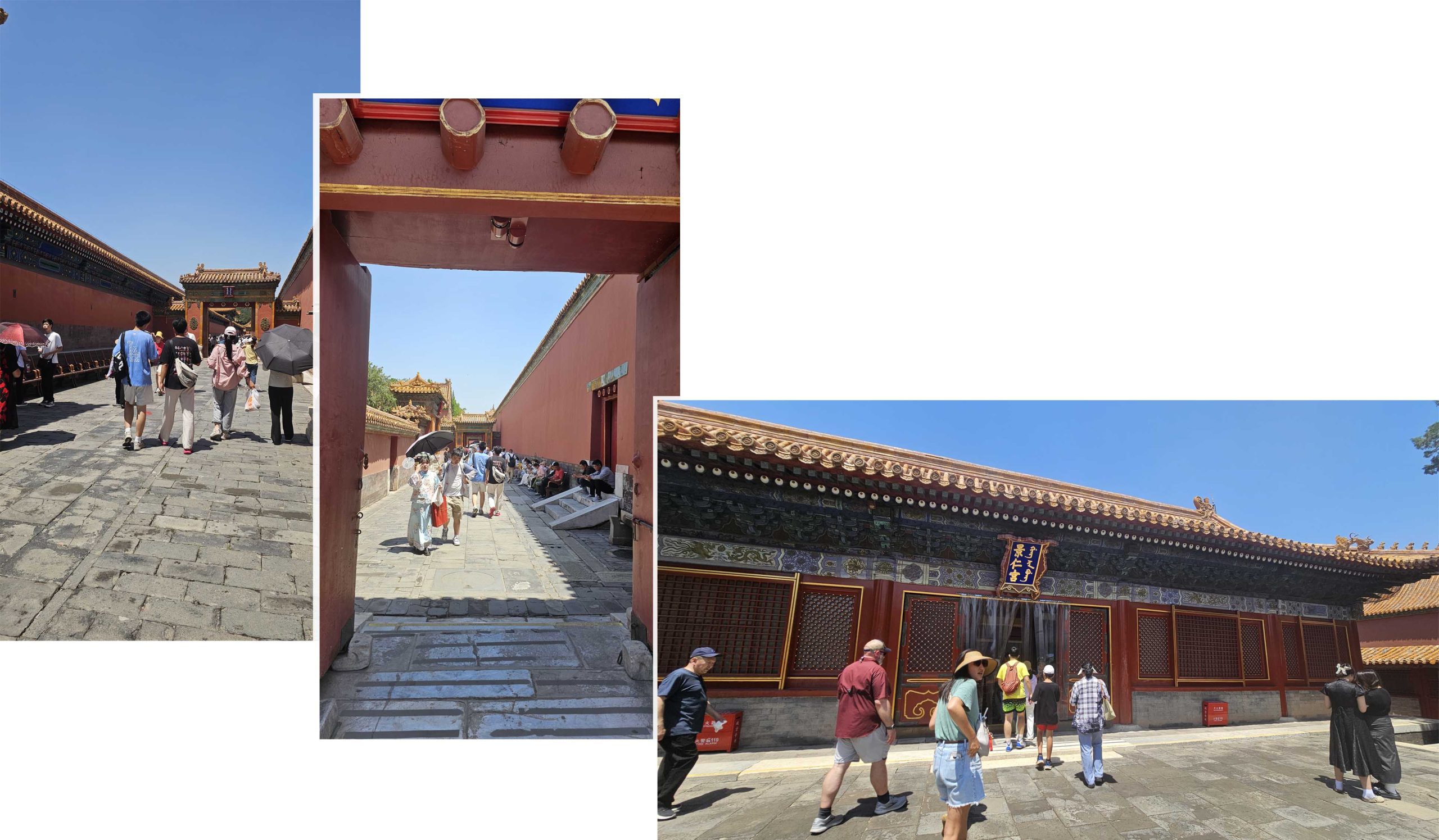
To non locals like us, we knew this place as The Forbidden City (紫禁城). To the locals when we mentioned “The Forbidden City” or “紫禁城” they had no idea where we were refering to. They knew it as 故宫 (Imperial Palace). The Forbidden City got its name because access was strictly restricted to the emperor, his family and select officials. Similarly palace maids, eunuchs, concubines etc were retricted from leaving the Forbidden City after entering it.
We kind of walked along with the crowd, moving to places where everybody went. Soon one courtyards looked like the previous ones, one “hall/mini palace/queen residence/concubine residence” looked like the other.
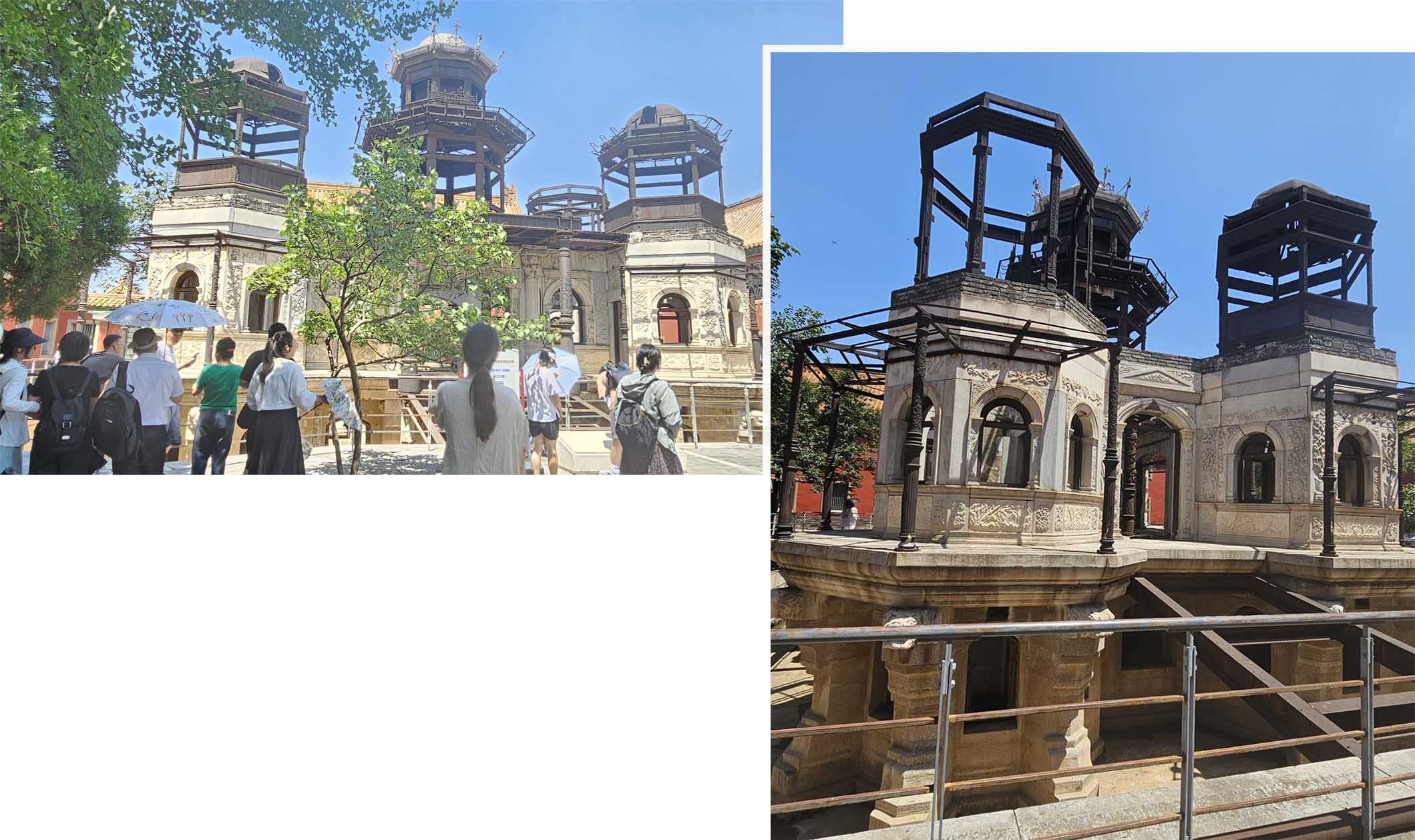
The weather was hot and there were not many trees or shades in the Forbidden City. One unique hall/courtyard stood up as the design was very different from the other typical oriental structure.
Being Singaporeans of Chinese descents we had watched countless China Emperor/dynasty dramas and were not keen on a guided tour of the Forbidden City. In our brains we already had plentiful of “meshed up” impression of this place gathered over the years of colorful Chinese/HongKong/Taiwan dramas/documentaries of the emperors/empress/concubines/officials of the Forbidden City. We were happy to walk on the ground of this grandiose place.
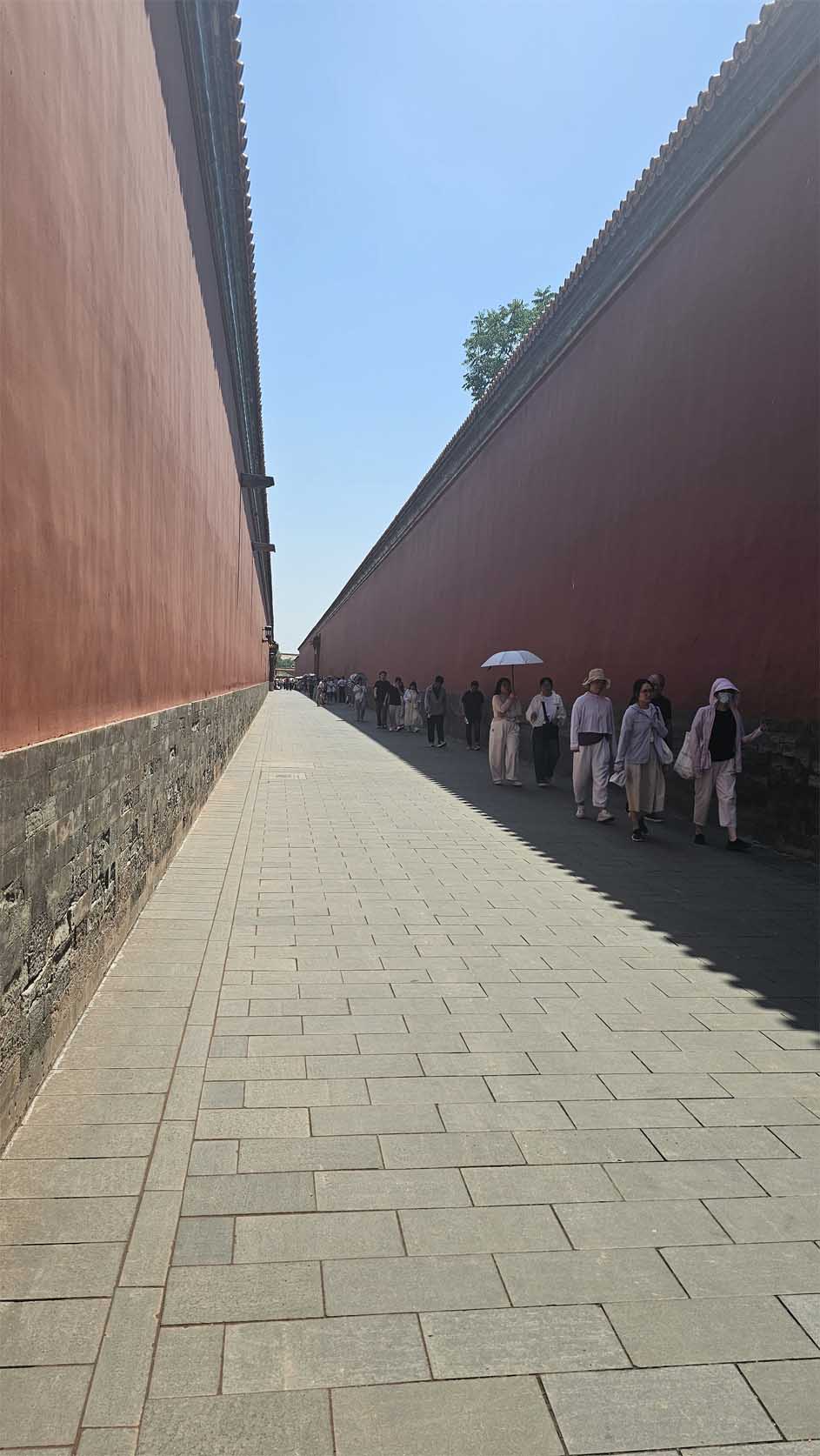
Soon we were walking along the iconic double red walls of the Forbidden City. These red walls were featured often in the dramas where emperor/empress/imperial concubines were shown seated on sedan chairs carried on thick poles moving along these double red walls going from one courtyard to the next.
The weather was getting very hot and there were not many places/shades to sit or rest (beside sitting on the floor). After two hours we were exhausted and dying to get out. We totally forgot that we had tickets to the “The Gallery of Clocks” and “The Treasure Gallery” and we left without visiting them.
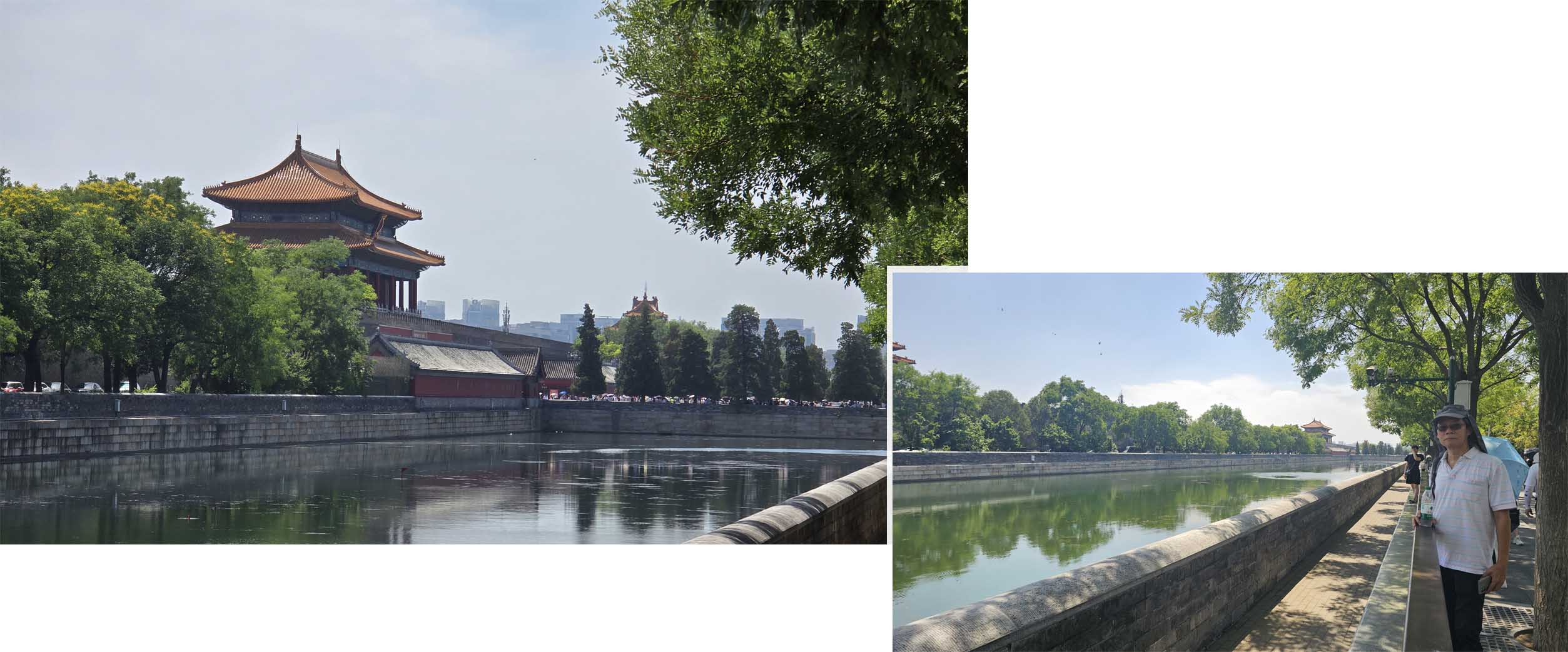
We left the Forbidden City via another entrance. This time we left from ShenWu Gate “神武门” (the Gate of Divine Prowess) which was the northern gate. Surprising outside the Forbidden City the temperature was cooler. There were more trees and and viewing the Forbidden City across the moat we saw another farcade of the place.
Cakes Times
It was too early to go back to our “stay” so we walked along the promenade bordering the moat. Along the road there were many “red buses” but we had no idea if they were “hop on and off” sightseeing buses. We did not find any ticketing booth or information about these buses so we gave up the idea of boarding one.
After the promenade we continued walking straight down the road and came upon a “drinking place” 顺时而饮. The cakes looked good! After ordering the cakes we tried to ordered coffee but was told there were none. The staff at the lower level told us that we could get coffee upstair! I thought my Mandarin was good but….

The cake bill came up to ¥104, pretty expensive for just too cakes. Apparently 顺时而饮 (Shunshi Eryin) was an “atta” (Singapore phase for expensive or high class) place. It originated from a century-old tea shop, having served numerous international events such as the Beijing Olympics and the Shanghai World Expo. Over the past decade, they had visited nearly 30 countries, conducting in-depth research on nearly 100 medicinal and edible tea-producing regions and tea shops worldwide!
Doing some Banking Stuff
We had been carrying a lot of yuan cash, there were meant to pay for two guided tours of 16 days for the two of us. Though China was a very safe country it still felt very uneasy having so much cash. So we walked into a Chinese bank to check if we could transfer the cash to the Tour Agency in Chengdu. Surprisingly the staff processed our request and did the transfer. Best of all there was no fee. The no fee was probably because the Tour Agency account was also from the same bank. Interestingly we needed not open an account at the bank to do the transfer.

Coffee Times
After we were done with our banking it was time for coffee. We found LavAzza which was just . next door to the bank. So we went in for our coffee fix. The cost of two cups of cafe latte was ¥58 which was pretty reasonable.

Travelling by Public Bus
Our last destination for the day was our “dinner place”. On checking Baidu Map we found we could reach our “dinner place” by public bus 110.

Well, we had experienced the Beijing Subway this morning and would like to try taking the public bus. On checking with a passerby, we would need do installed Beijing Transportation card on our Alipay which would allow us to pay when boarding the bus as no cash was allowed.

We sat at a bus stop to install Beijing Public Transport Card into our Alipay App via the Alipay “Transport Icon” on the home page. It was a tedious process of entering our passport details and a series of confusing verification. Finally we got it done! And here came the bus!
The bus fee was only ¥2 per person which was a discounted rate for senior. We supposed from our passport details the systems already knew we were of senior age. Wow the Bus Public Transport of Beijing was “top class”. The bus stop was wide and clean, the bus was modern, clean and new. Beside the bus driver there was also a security officer on board.
Peking Duck for Dinner
Coming to Beijing we definitely had to eat Peking Duck. We picked up several nice restaurants and ended up at Jingzun Peking Duck Restaurant, 京尊烤鸭店(春秀路店) because it was conveniently near our stay.

We reached Jingzun Peking Duck Restaurant at about 6.40pm and the place was not full yet. We ordered a Peking Duck set. Once the duck was roast and ready, a chef brought it out on a tray and set it up on a table infront of us. He sliced the crisply skin off the duck carefully and then the meat.

Beside serving the Peking Duck in the usually way with wraps, vege strips and sauces. The restaurant served Peking Duck sushi set which was crispy skin + ebiko on rice. It was fun wrapping the crispy duck skin piece + sauces + vege strips using the round paper thin wraps. The wraps came in white and green color, but both tasted similar.

The dinner cost ¥260 and was worth every single Yuan. After dinner it was back to our hotel, base Beijing Wanfujing Serviced Apartment . We had yet learn to hail a taxis/cab from our mobile so we requested the staff of the restaurant.