Scenic sites for the day
For the day we visited two very special and interesting temples. One was practically carved into t rock cliffs and the other was integrated into a hill. Both the temples were near to each other about 1hour 20 minutes drive from Zhangye. In the late afternoon we visited Asia largest reclining Buddha in a Dafo temple sited in Zhangye city.

Mati Temple and hundred buddha caves Temple
After driving about 62 kilometers we reached Mati Temple Scenic area (马蹄寺风光旅游区). The entrance to the scenic area was a huge grand gate complex. After the entrance we drove on to a carpark. Coming down we could already see Mati Temple far away! It looked amazing from afar.

From the carpark to Mati Temple (马蹄寺) we had to walk by a row of shophouses. It was still early in the morning (10am) and there were not many visitors about.

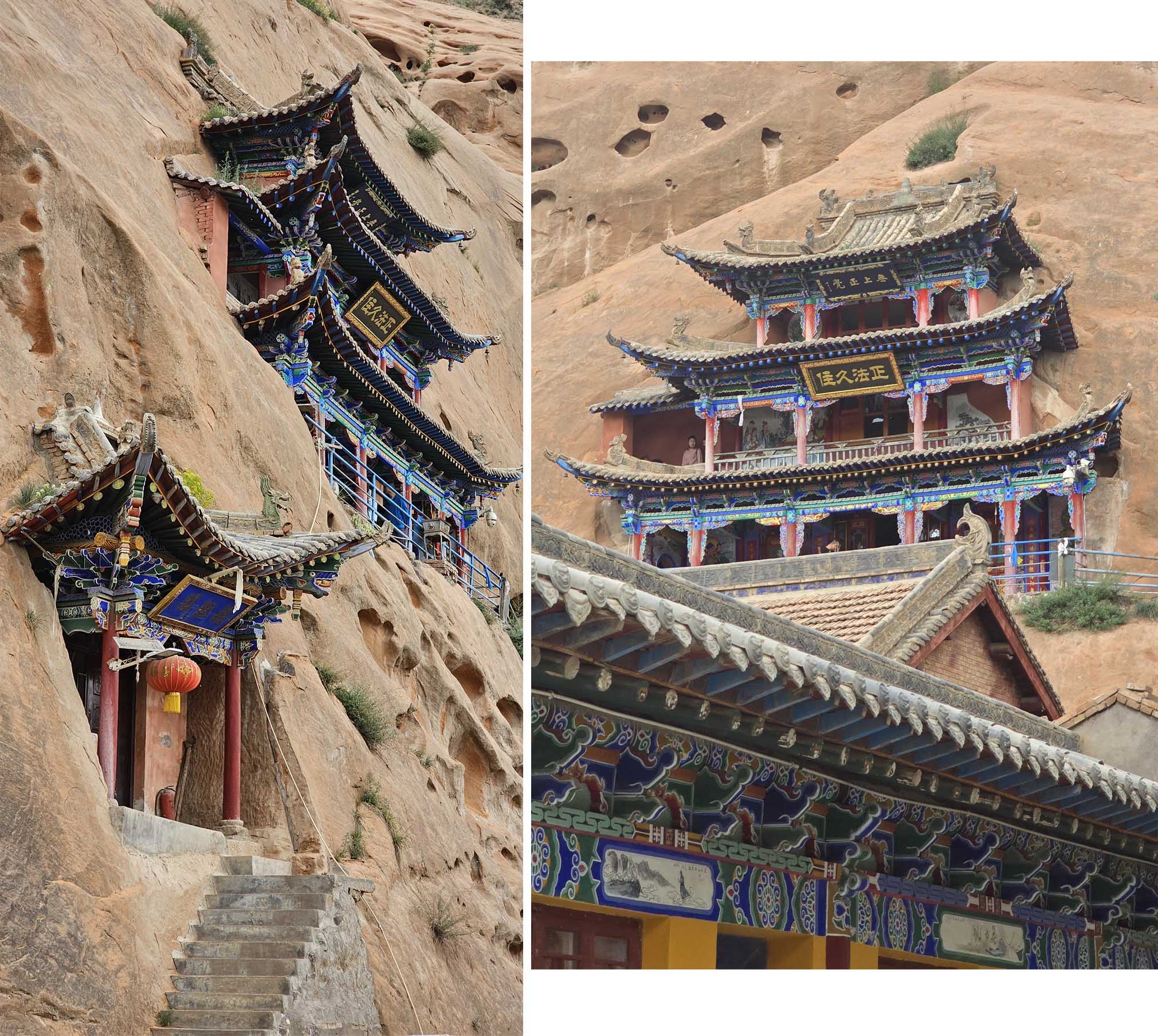
Finally we reached Mati Temple. The temple was absolutely “stunning”. It was craved into a vertical wall off a cliff. We couldn’t wait to go closer, to go into this unique temple and explore.
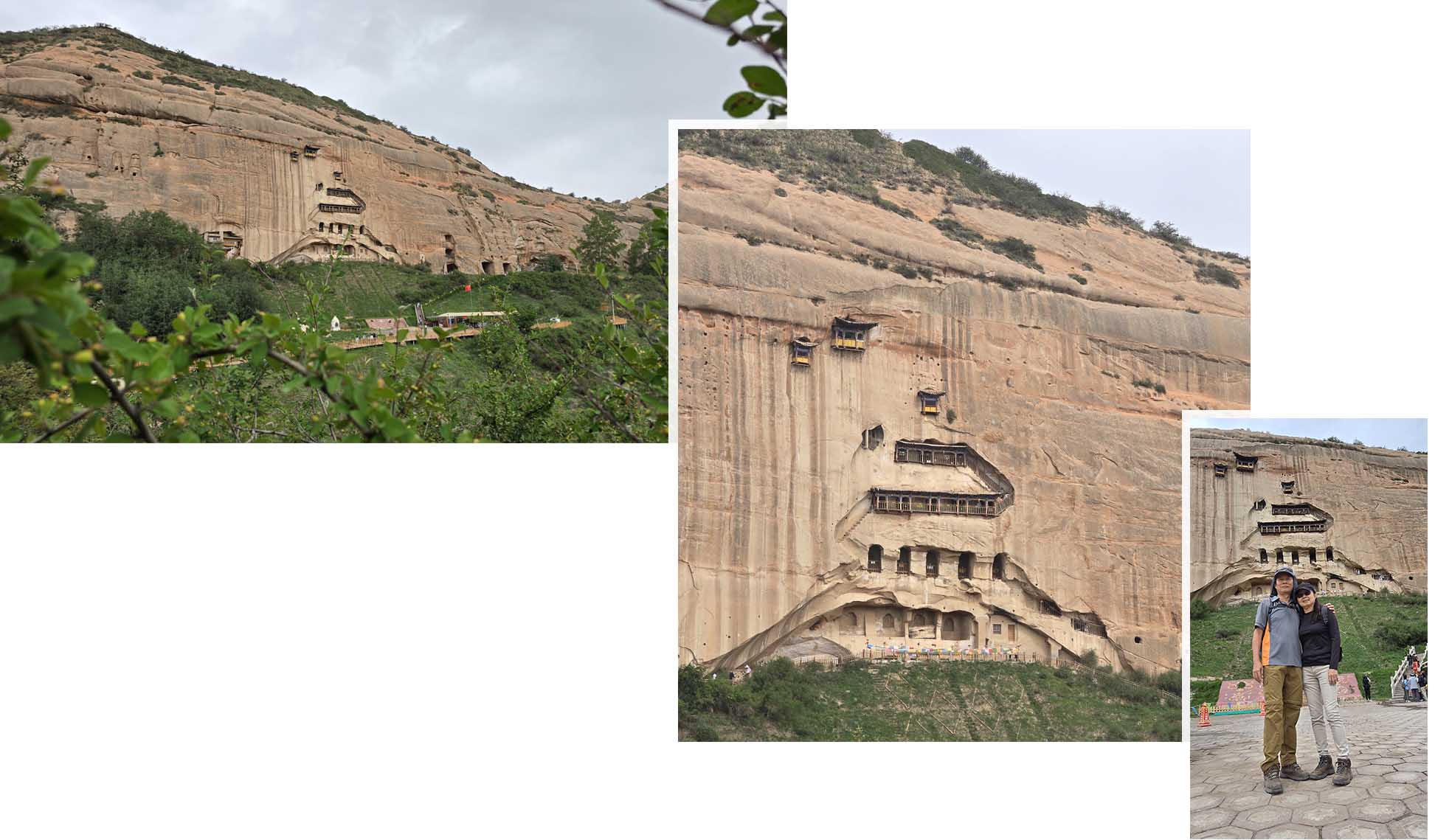
Beside the multi layers complex was several stone holes also carved into the the cliff wall. We walked into one of the stone holes and found that it was a prayer hall with a tall golden Buddha statue and many more smaller statues placed in the wall cavities.
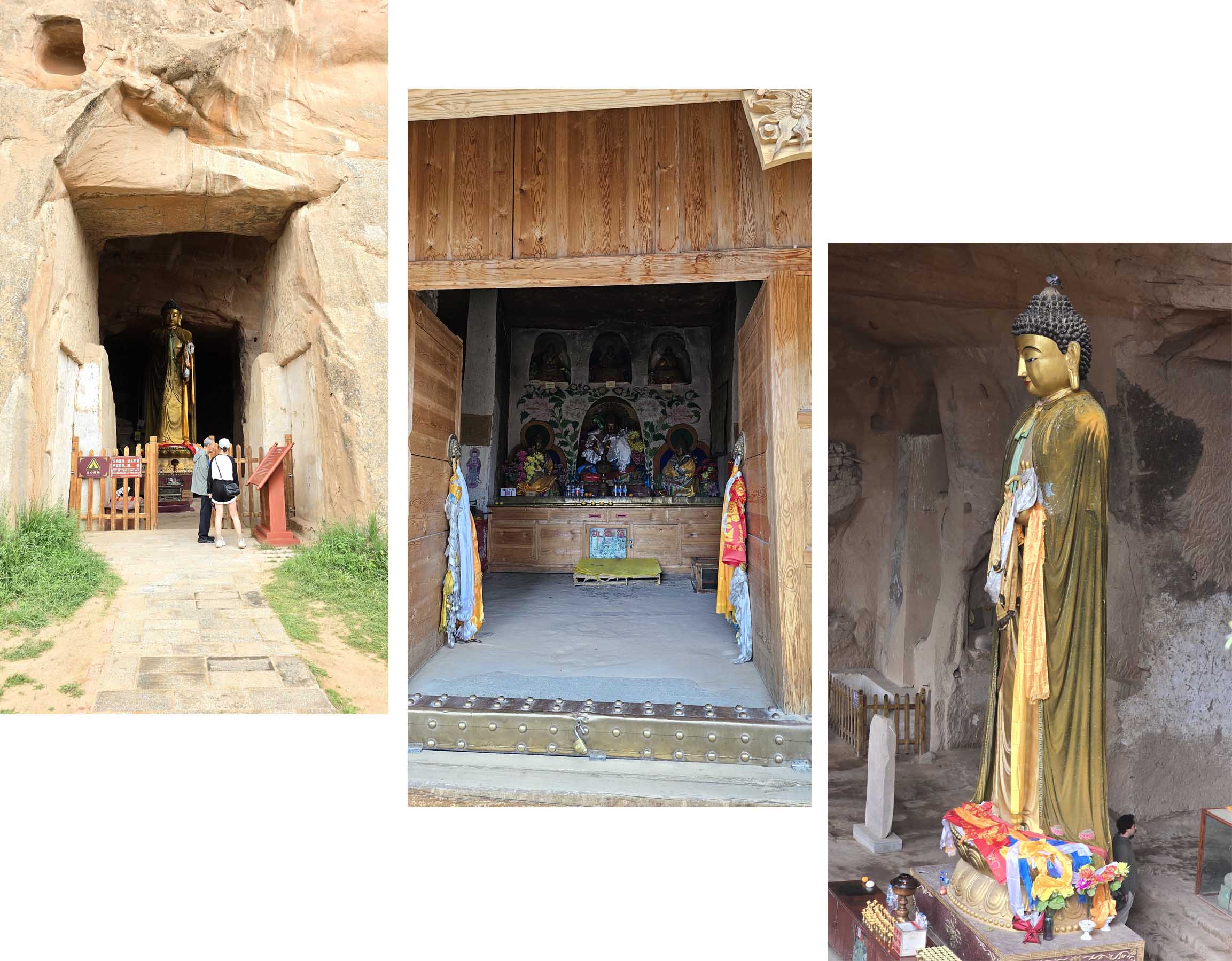
One of the artifact in the stone hall was an imprint of a horse hoof on the stone floor. According to our tour guide, Lau Li, there was only one imprint because the horse was flying up, so it stepped on one of its legs and “zoomed” up into the air. Wow! It was flying horse!

The name of the temple was Mati Temple, Mati meant “horse hoof” so the locals built a temple here and named it Mati Temple and this entire scenic area was called Mati Temple Scenic area (马蹄寺风光旅游区).
The main temple structure on the cliff had seven layers. The rooms in the various levels were carved into the rock. These levels were linked by rock tunnel corridors, rock door ways, rock stairs.
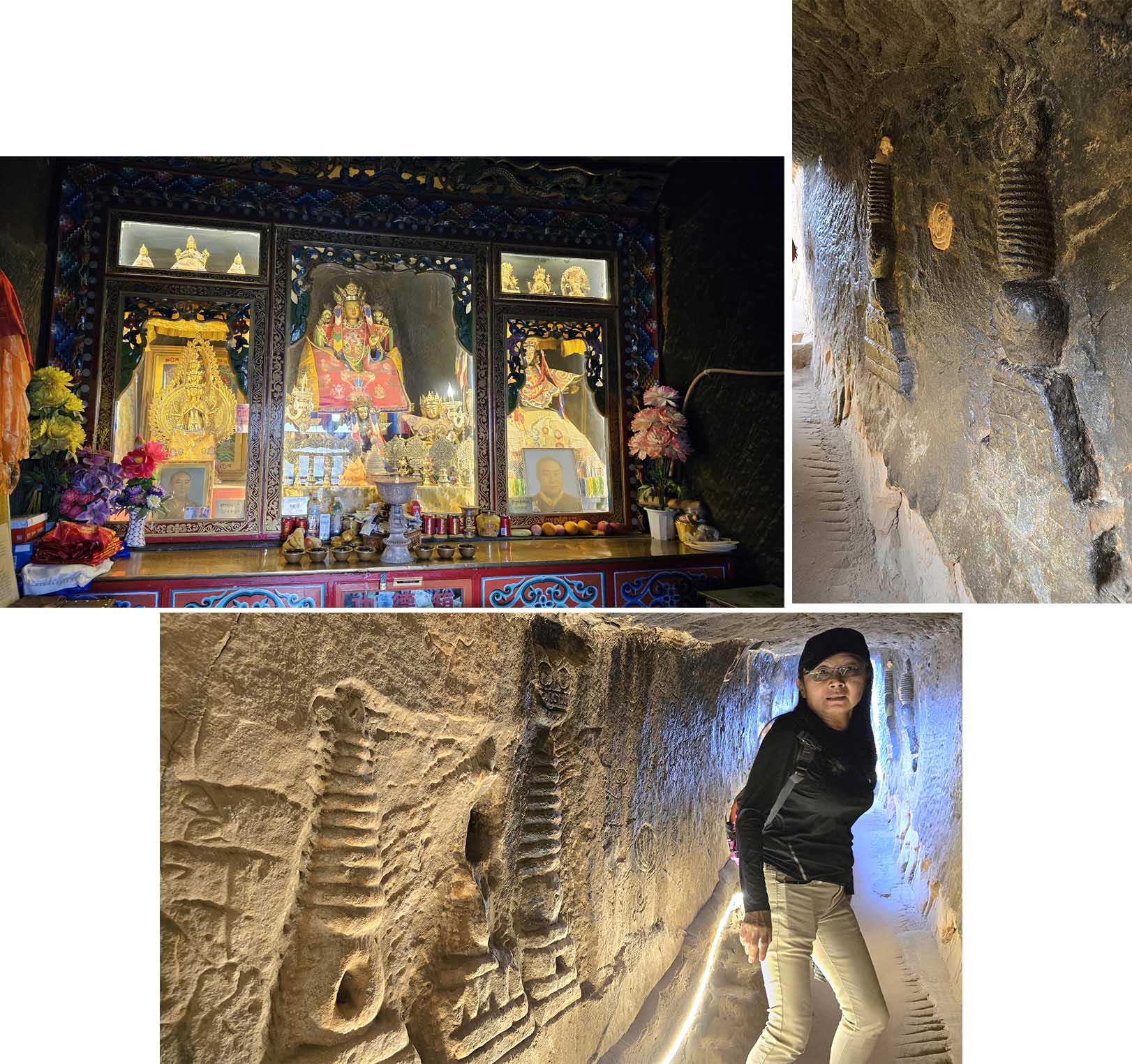
It was not easy going up the different level. Some were just a narrow tunnel stair of only a one person width. So as we went up and down we had to yell ahead so that there was no people coming down or up in the opposite direction. We finally understood the reason our guide insisted that we explored Mati temple before other tourist groups arrived.

In the Mati Temple Scenic area was another prominent temple. The Chinese name at the entrance to the temple was “Thousand Buddha Cave” (千佛洞). Our guide explained that this temple was more beautiful than Mati Temple.

This temple was also build into the cliff wall. Indeed this temple was more “colorful” and in a way a more beautiful temple in terms of structures but it was still Mati Temple that took our breath away.
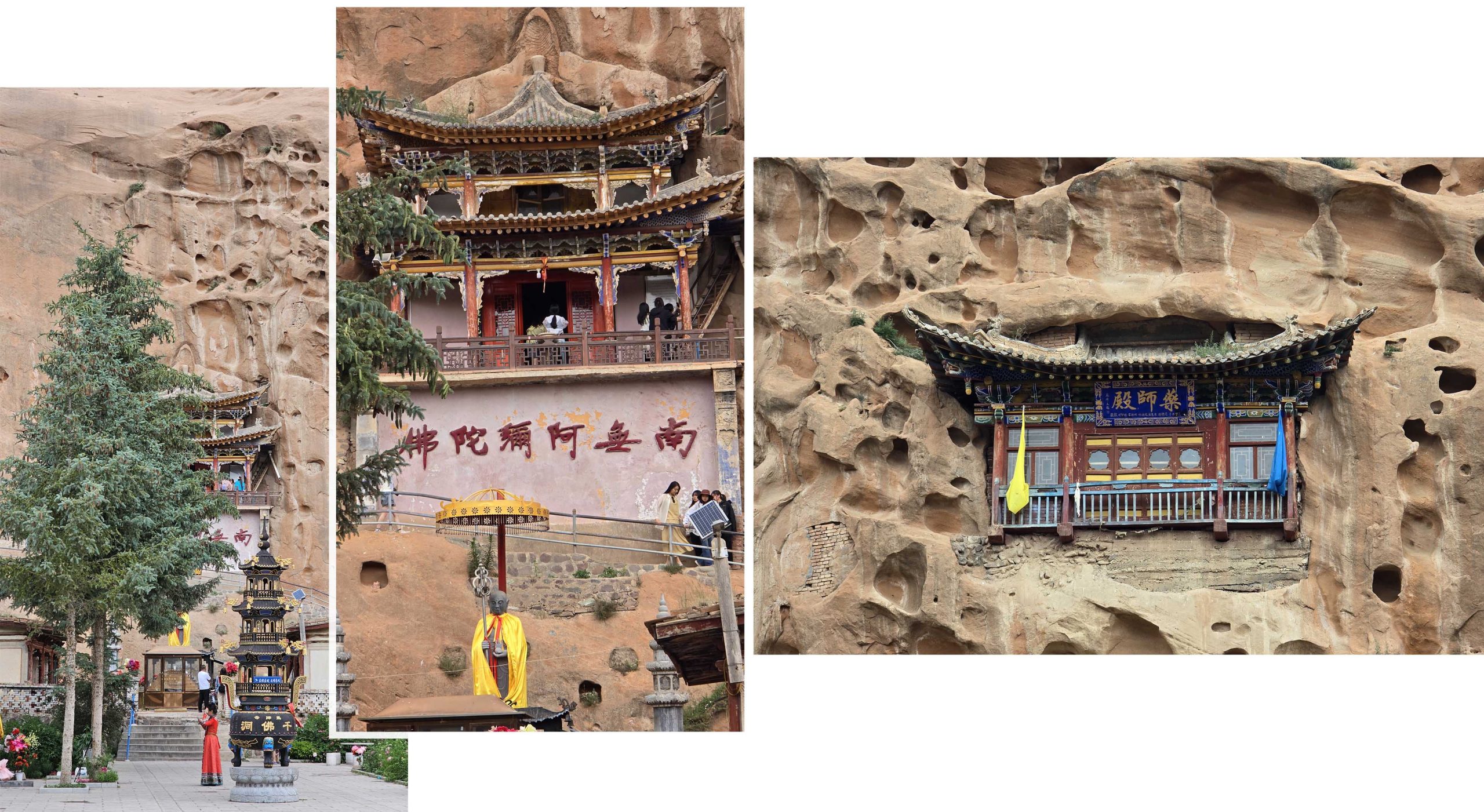
We could only explore the external compound of the temple as the interior was close to visitors. We left the temple without seeing “thousand buddhas”
Zhangye great buddha temple
Our last destination for the day was Zhangye Great Buddha temple back in Zhangye Town. This temple was also known as Dafo Temple (大佛寺), Dafo meant “Big Buddha”
The temple was built in 1098 in the Western Xia Dynasty (A.D. 1038-1227). It was originally called Kasyapa Buddha Temple (迦叶如来寺). Entry into the temple required buying entrance tickets which could be bought on site or on Trip.com. Dafo Temple was a 4A Destinated Scenic Site.

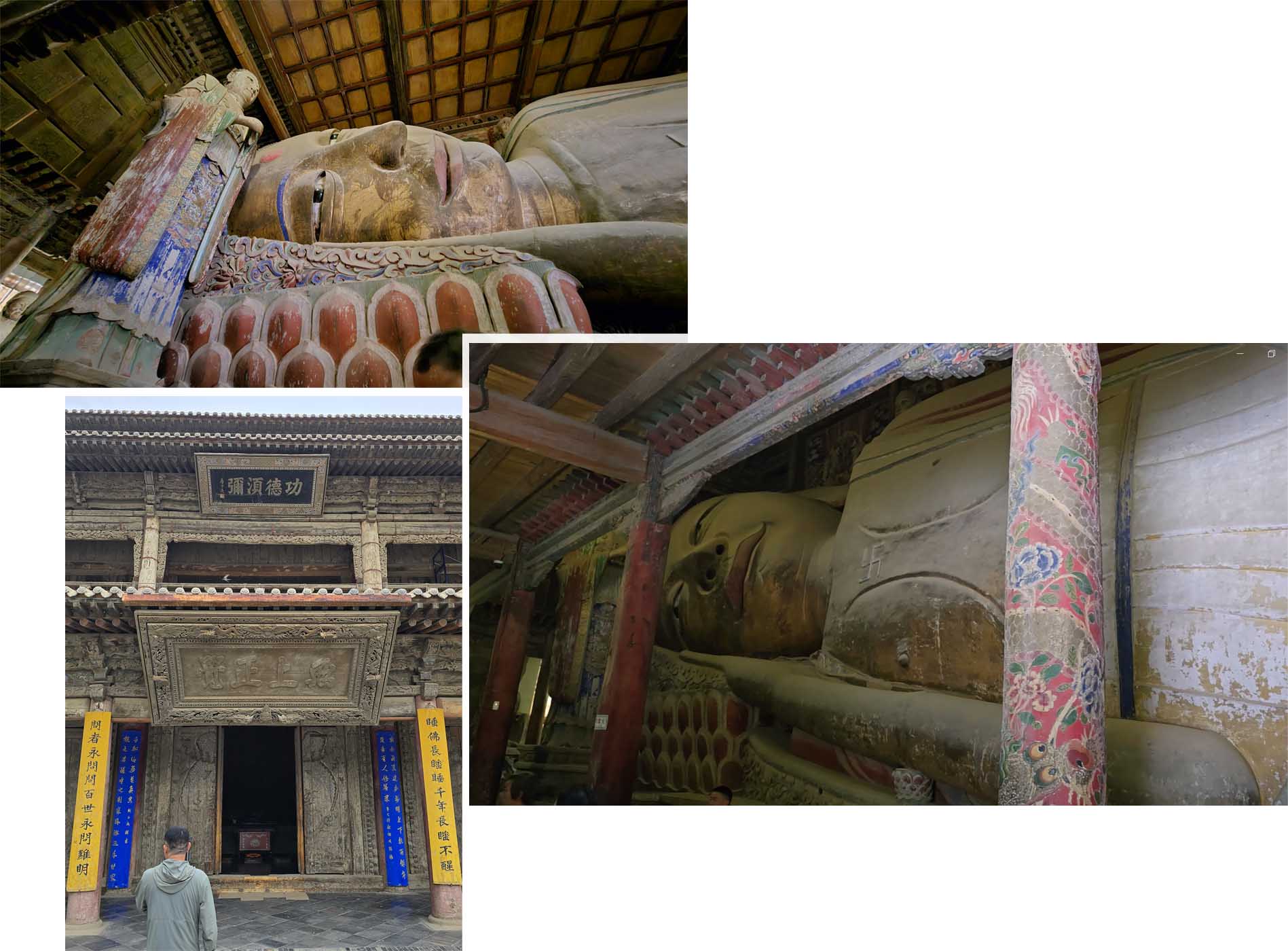
In the Grand Buddha hall was the largest reclining Buddha Statue in Asia. This temple was famous in the Buddhism world not because it housed the statue, it was famous because in 1445 Emperor Yingzong sent 6,361 Buddhist scriptures to the temple as a gift.
The imperial commissioner was very interested in the Buddhist scriptures and paid to make a copy of Prajnaparamita, the first part of the scriptures, with gold ink. A nun named Yao protected the scriptures. She put them in a golden box and buried them inside the walls. Years later people found the scriptures and were shocked by the amount of them and the golden writing. All the scriptures were well-preserved and people call the Grand Buddha Temple a library of Buddhism.

The reclining clay Buddha statue was housed in the Mainhall. The statue was 48 metres long and 24 metres wide with a heightt of 33 metres. The figure was covered with gold leaf and painted in various colors. We took a couple of photos of the statue before being stopped by a staff!
When we walked behind the statue, we saw many wall murals. They told the stories “Journey to the West” showing Xuanzang (a monk) riding on a horse and the monkey king Sun Wukong kneeling on the ground.The story of “Journey to the West” was carved on the wall 300 years earlier than the book Journey to the West (Monkey) was written!