Leaving Chaka Town
We had a good breakfast at our hotel, Jintian Century Hotel (茶卡锦天世纪大酒店). We checked out of our hotel at about 8.45am, and were “backtracking” to Xining.
The weather was gloomy and the sky was downcast. We were so glad to have visited Chaka Salt Lake the day before when the sky was bright and blue. If we had adhered to the original plan of visiting Chaka Salt Lake in the morning it would be a great disappointment. There was no sunrise, no blue sky and definitely no reflection this morning.

It would be a 4.5 hour journey to Taer Monastery (near Xining city), the monastery was our next attraction. Along the journey we had three “break” stops. The first stop was at a huge grassland, the second was a town and the third a highland pass.
Greenland near HeiMaHe Town
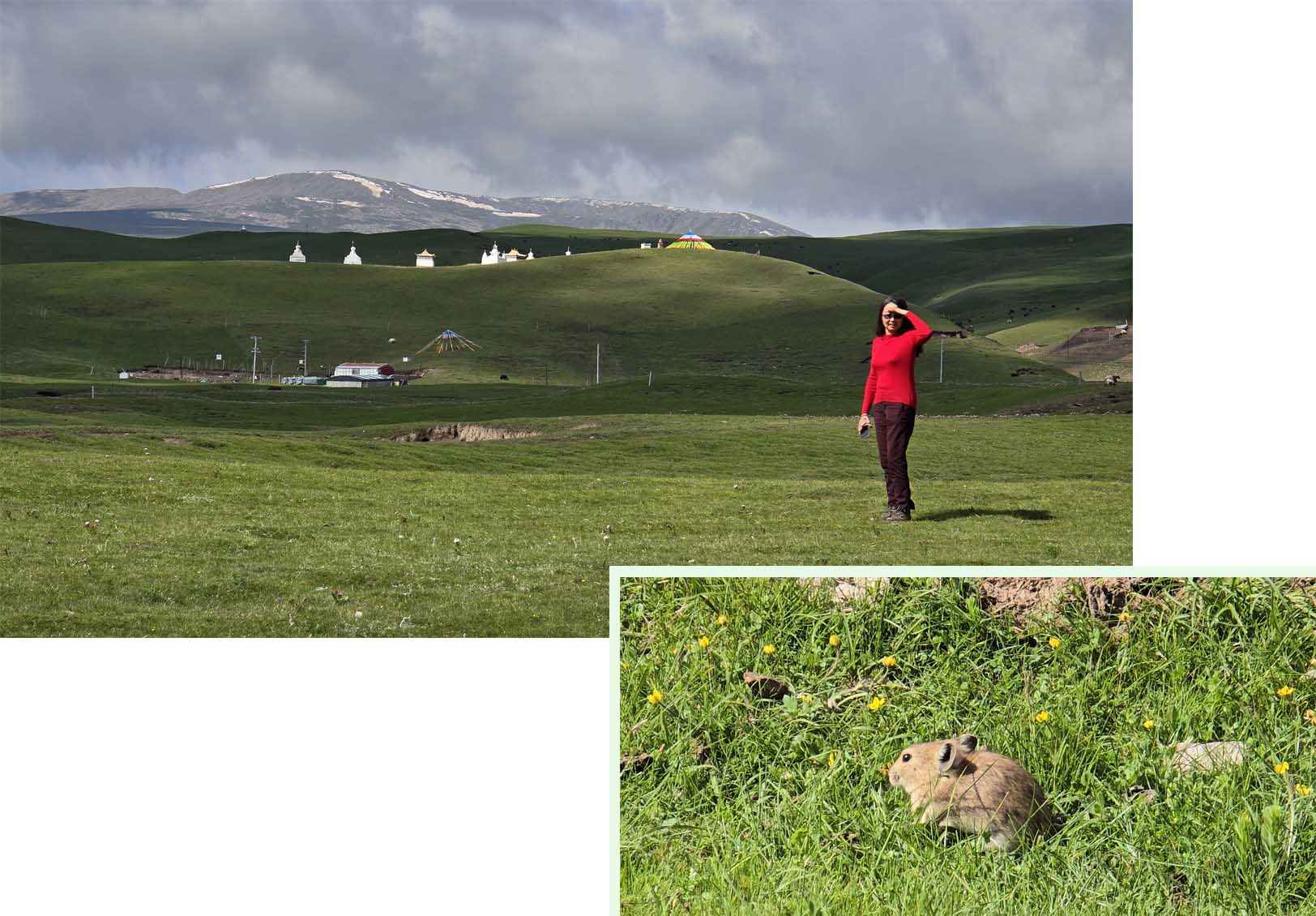
The first “break” was a grassland near near HeiMaHuetown. Many tourists also took a break by this grassland. The sky was still overcast but the grassland was brilliantly green and we could see several stupas on a low hills. The vast greenland was so pleasantly refreshing and we sat down on the grass to relax. While resting we saw a couple small wild animals running on the field and disappearing into burrows in the ground.
DaoTangHe Town (倒淌河镇)
From the grassland it was about two hours drive before we reached DaoTangHe Town (倒淌河镇). We stopped at the town for a coffee break. Unfortunately, we did not find a cafe so went into a minimart shop and got some ourselves some icecreams. After half an hour break we were back into our van and continued our journey.

Lajishan (拉脊山)
From DaoTangHe Town (倒淌河镇) was another 1 hour drive to Lajishan base (拉脊山口). The highest peak was 4525m above sea level and the base was at 3820m above sea level
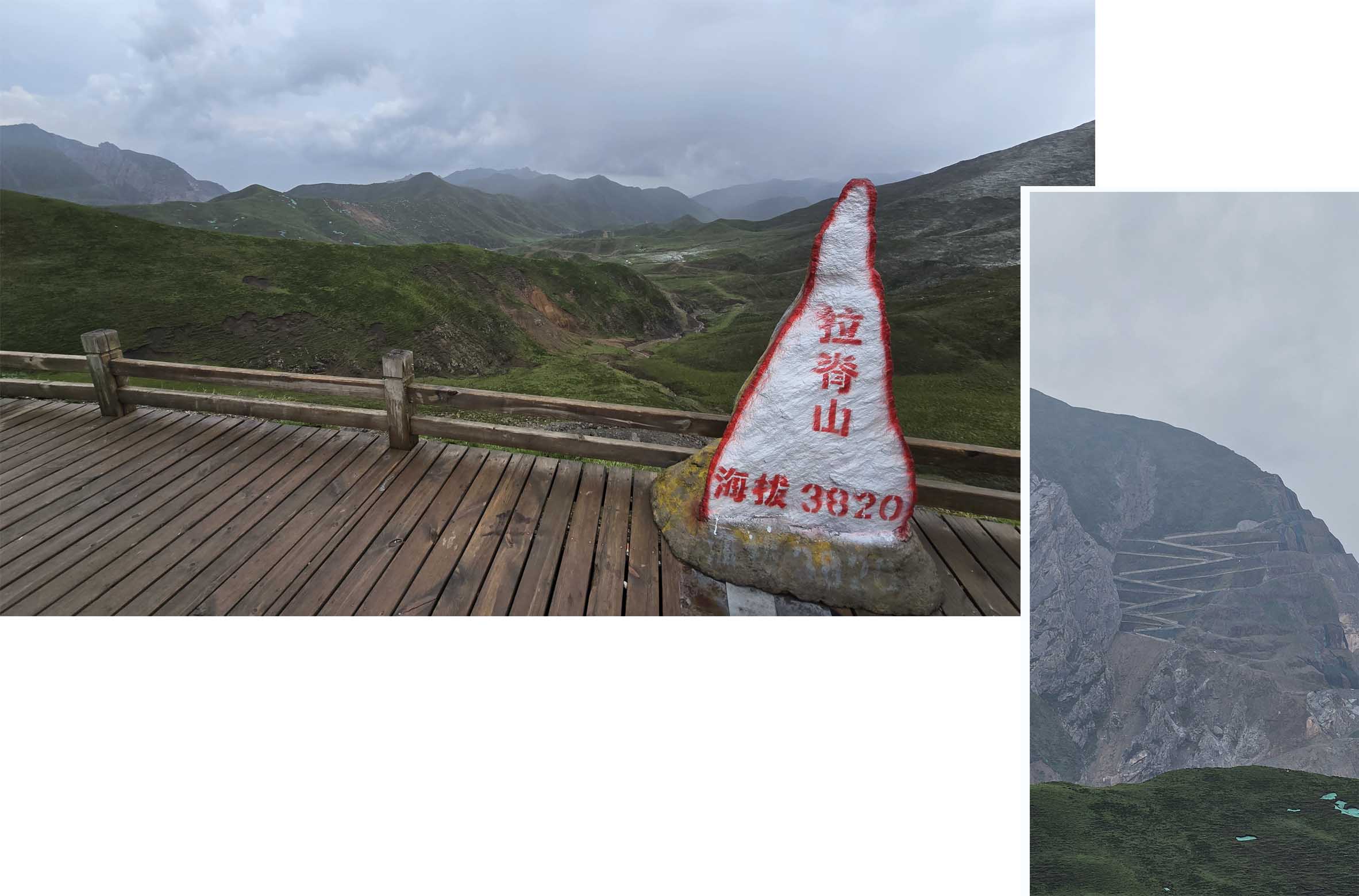
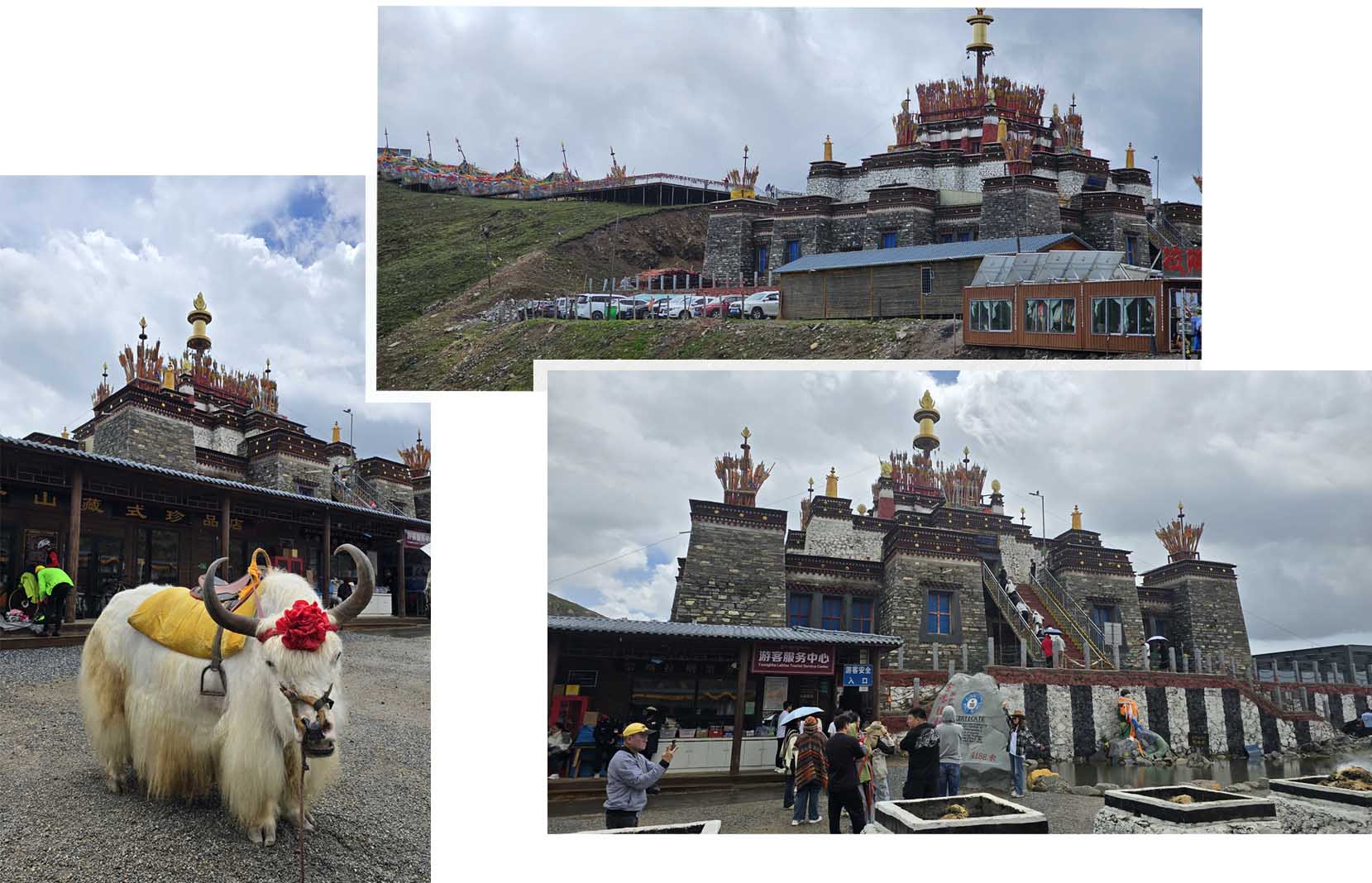
At Lajishan carpark was a tibetan buddhist temple and also a set of steps leading up to a viewpoint. We went up to have a look around before leaving.
Taer Monastery
From Lajishan was a 45minutes drive to Taer Monastery. Finally at about 2pm we reached Taer Monastery. According to Sally, our guide, this monastery was a “super” important monastery.
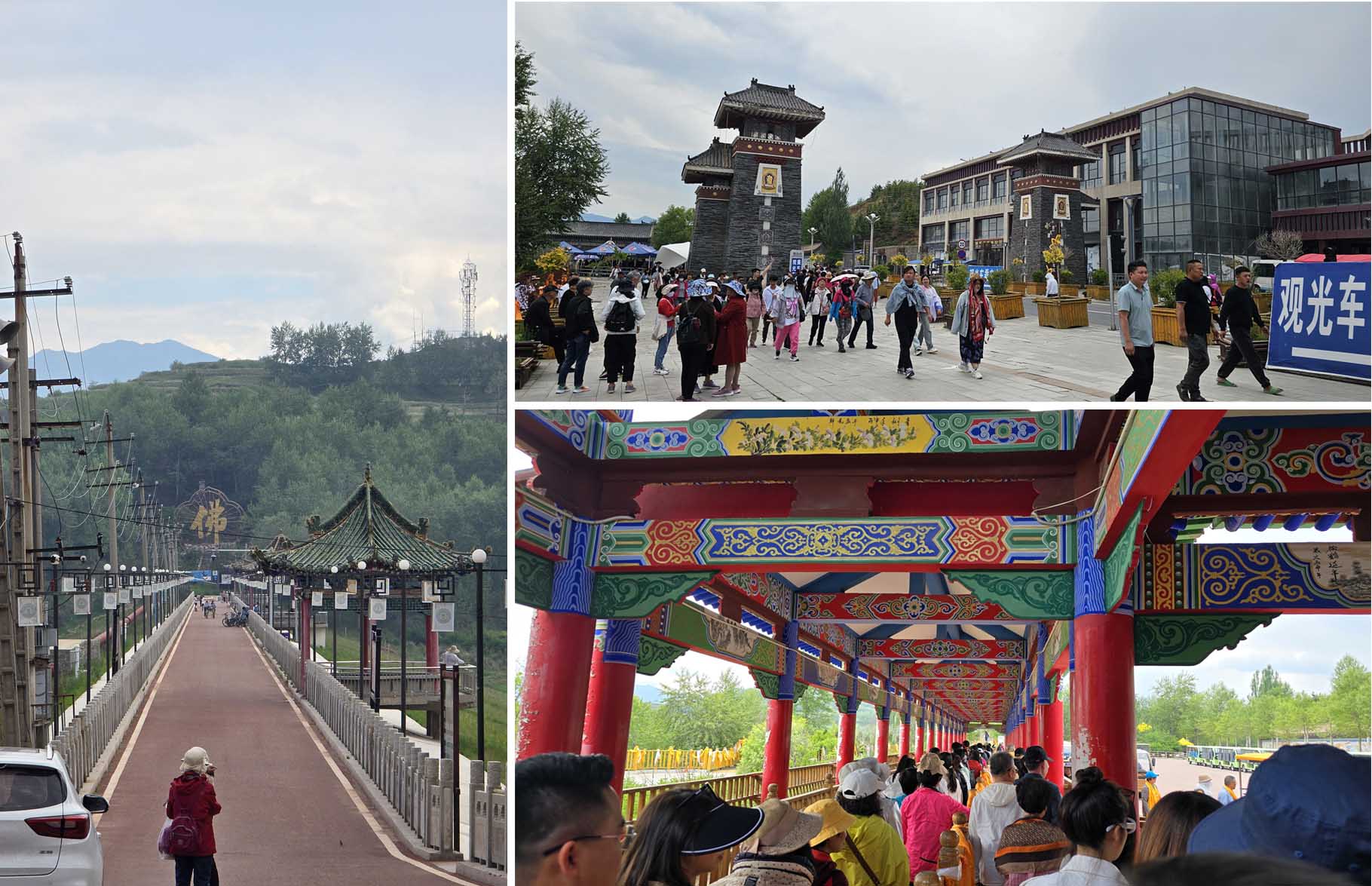
At the ticketing office our guide went in to get our entry tickets. These tickets could also be bought online on Trip.com.
Taer Monastery also known as Kumbum Monastery was the religious activity center of both monks and followers of the Gelupa Sect (Yellow hat Sect), a branch of Tibetan Buddhism. This monastery was build in 1577 to commemorate Tsobg Khapa (1357-1419) more than 150 years after his death. Tsobg Khapa was the founder of Gelupa Sect.

Apparently the site of Taer Monastery was the birthplace of Tsobg Khapa. Legend said that at the spot where Tsoby Khapa’s umblical cord was cut a white sandalwood tree grew sprouting a hundred thousand leaves each displaying an image of the Lion’s Roar Buddha (a representation of Sakyamuni Buddha).
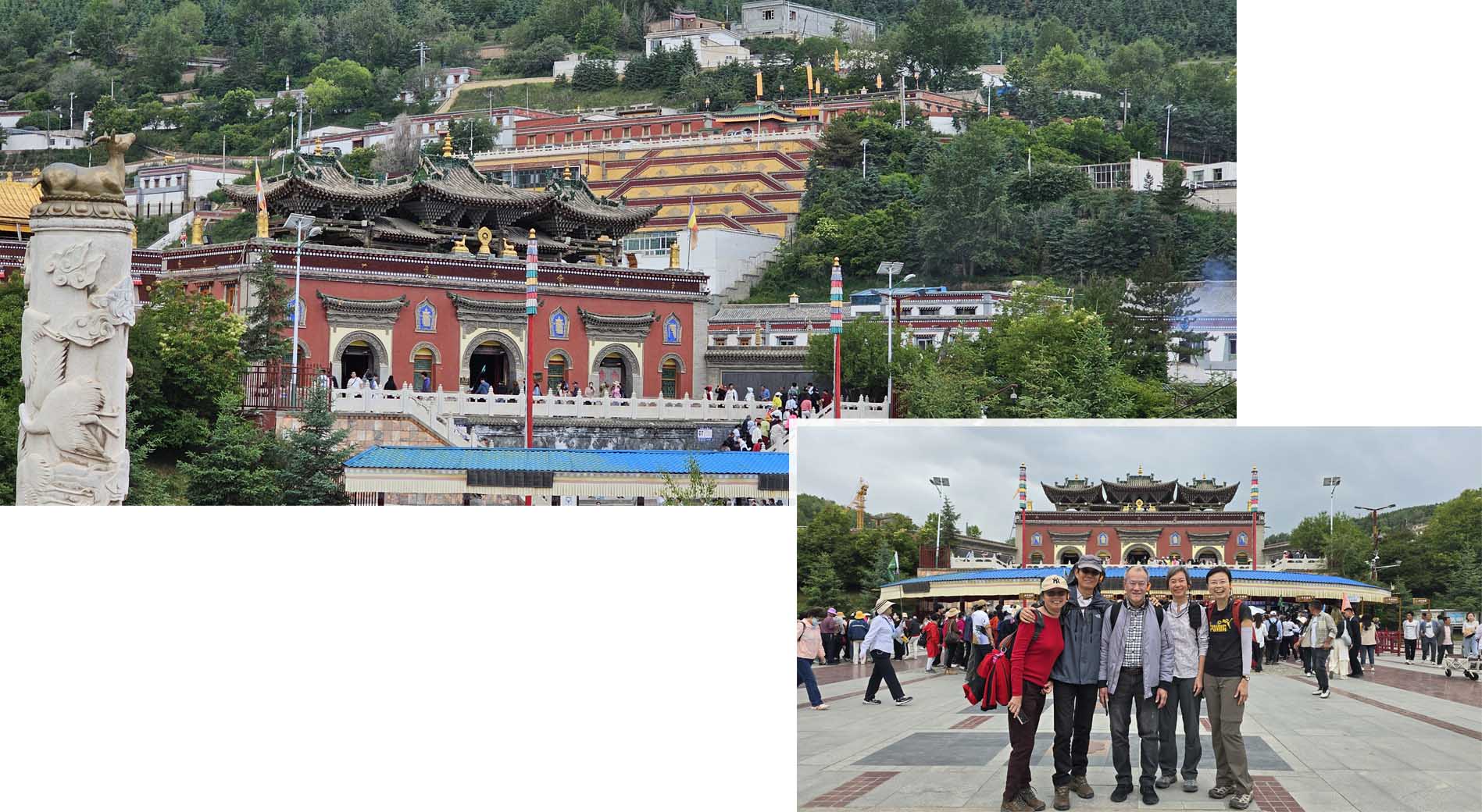
Kumbum Monastery wasa group of fine buildings in a combination of both the Han and Tibetan styles of architecture on the mountain slopes. There were temples, palace building, Buddhist halls, sleeping quarters, courtyards etc. Among so many buildings, the Great Hall of the Golden Roof and the Great Hall of Meditation were the most important.
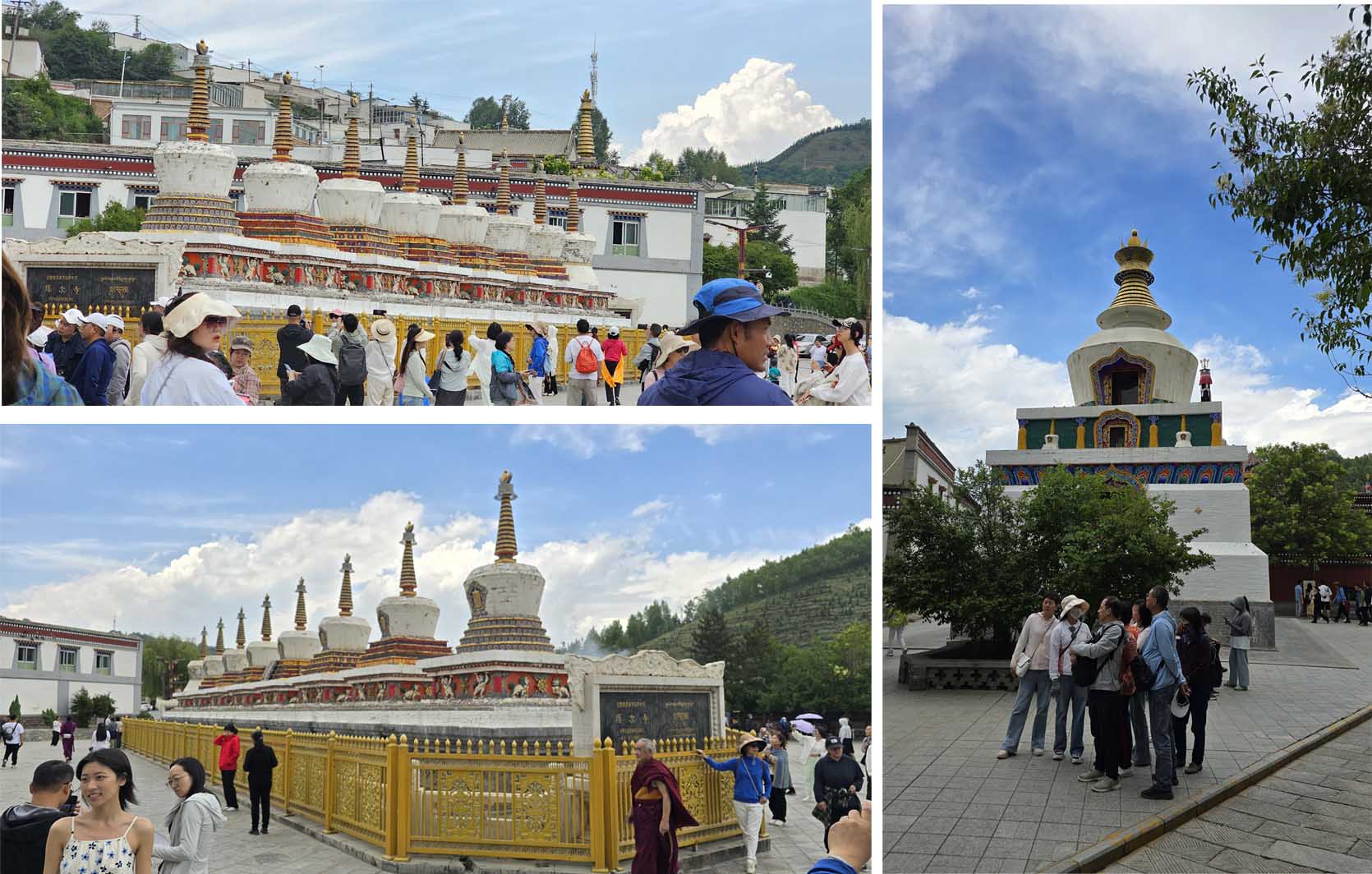
In the compound of the monastery, there were eight stupas. These were eight Auspicious Stupas to commemorate the eight great deeds of the Buddha, Shakyamuni. In the midsection of each stupa were decorative inscriptions and on the southern side of each stupa was a niche housing Sanskrit scriptures.
We were led in and out of several important halls. They were absolutely packed with visitors and the only way we could move was shuffling our feet against the feet of others in front of us.
Before we entered the hall, Sally, our guide would put us aside at to give us a briefing on the things we would see and the things to lookout for in each hall. Once in the hall we were sandwiched by the people around us and propelled forward and there was no way to stop and listen to Sally’s briefings.
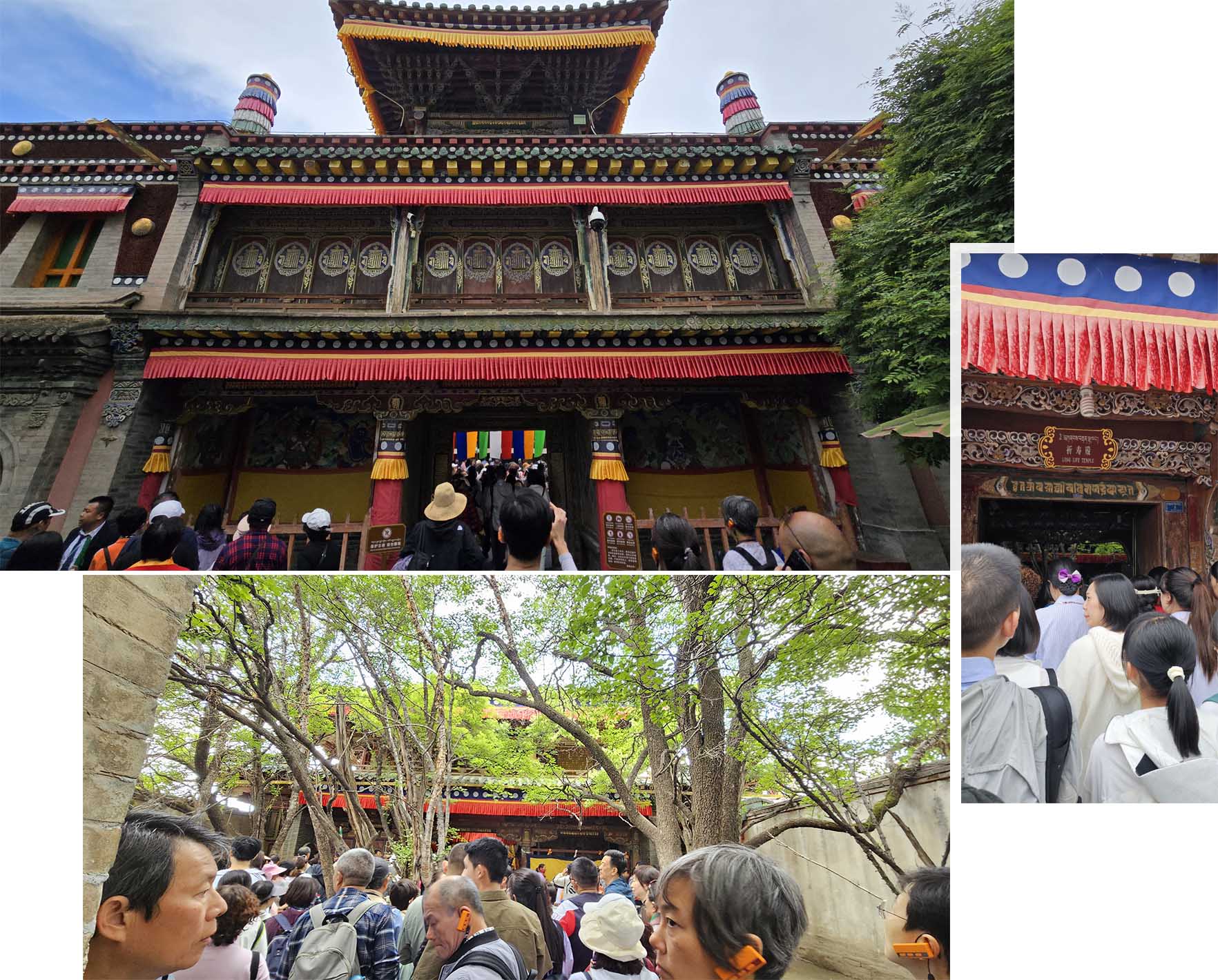
One of the halls was particular unique, it was a display hall of Yak Butter Sculpture. Every year after the Yak Butter Sculpture competition the wining pieces were unveiled during the annual Butter Lamp Festival on the 15th daty of the first lunar month and subsequently displayed in this hall the whole year round.
Each sculpture was huge, it was an assembly of delicatedly crafted pieces of figures, Bodhisativas, Tibetan mythological figures, landscapes featuring tiny animals, blooming flowers etc created by team if 40 to 50 monks.
Like all butter, yak butter melt so the monks had to work under subzero temperature and many suffered ill effects after years of such craft dedication. It was a pity that we were not allow to take photo of the exhibits for remembrance.
Though our walk we also saw a couple of golden roof halls. Being golden already “kind” of indicated that they were the more important halls. There were the Grand Golden Tiled Hall 大金瓦殿, the Small Golden Tiled Hall小金瓦殿, Grand Sutra Hall etc etc.
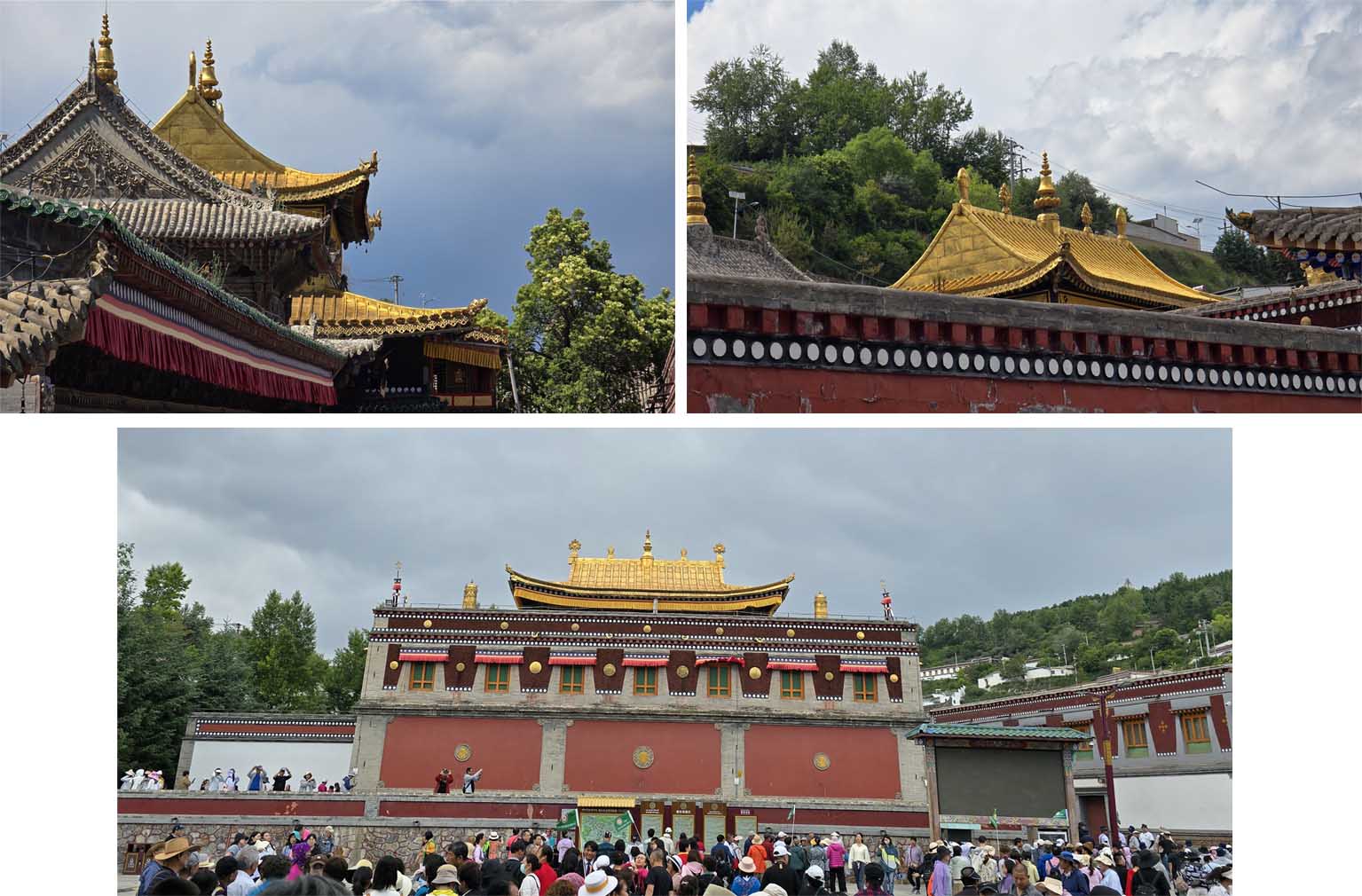
We did not enjoyed the visit to Taer Monastery because of the huge crowd. There were just too many people, we was no space to stop, to listen to the briefing about the various artifacts in the monastery. There were too many people and sea of heads blocked our view!
Mojia street
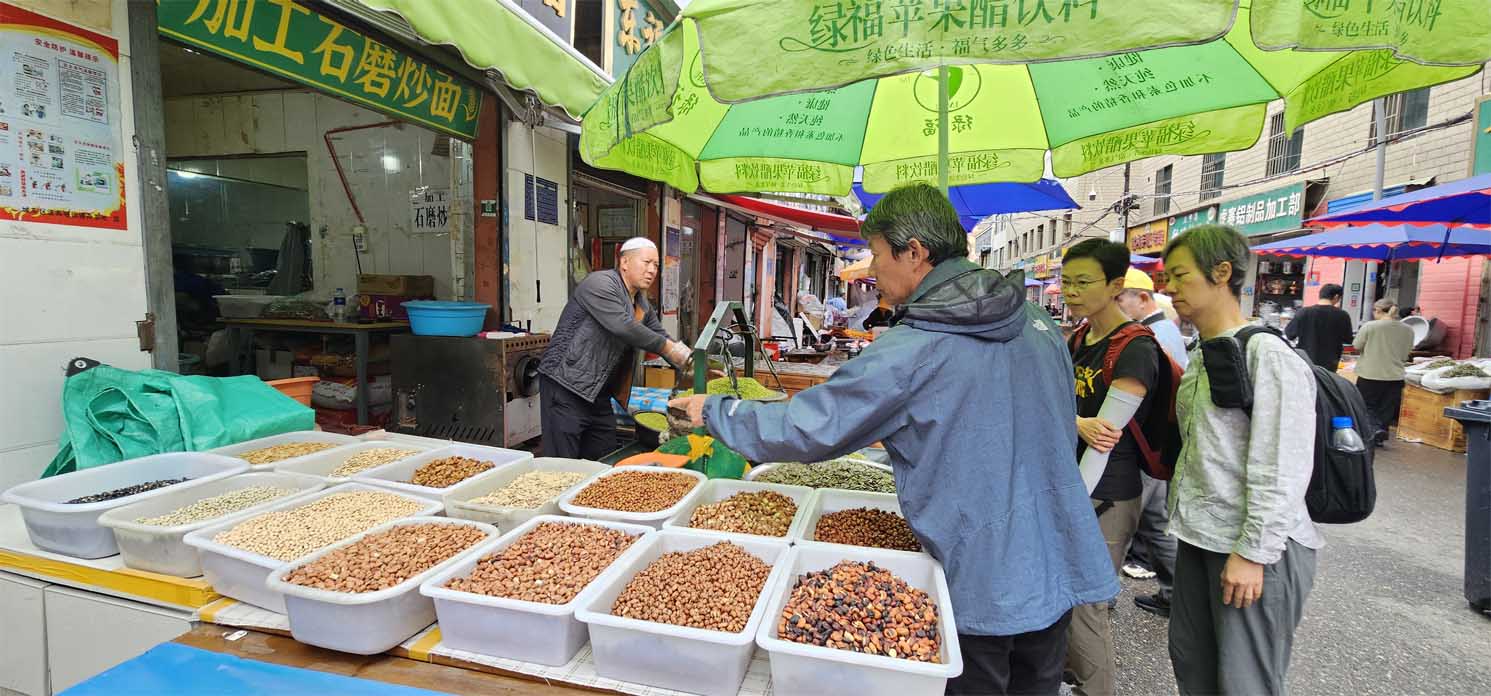
After Taer Monastery we visited Mojia Street. This was an street dated back to the Ming and Qing dynasties. Mojia basically meant “Mo family” it was named so as Mo was a promient Hui clan that settled in Xining.
It was a food street bazaar. All sorts of local food stores were set up on both sides of the street.
Dongguan Mosque
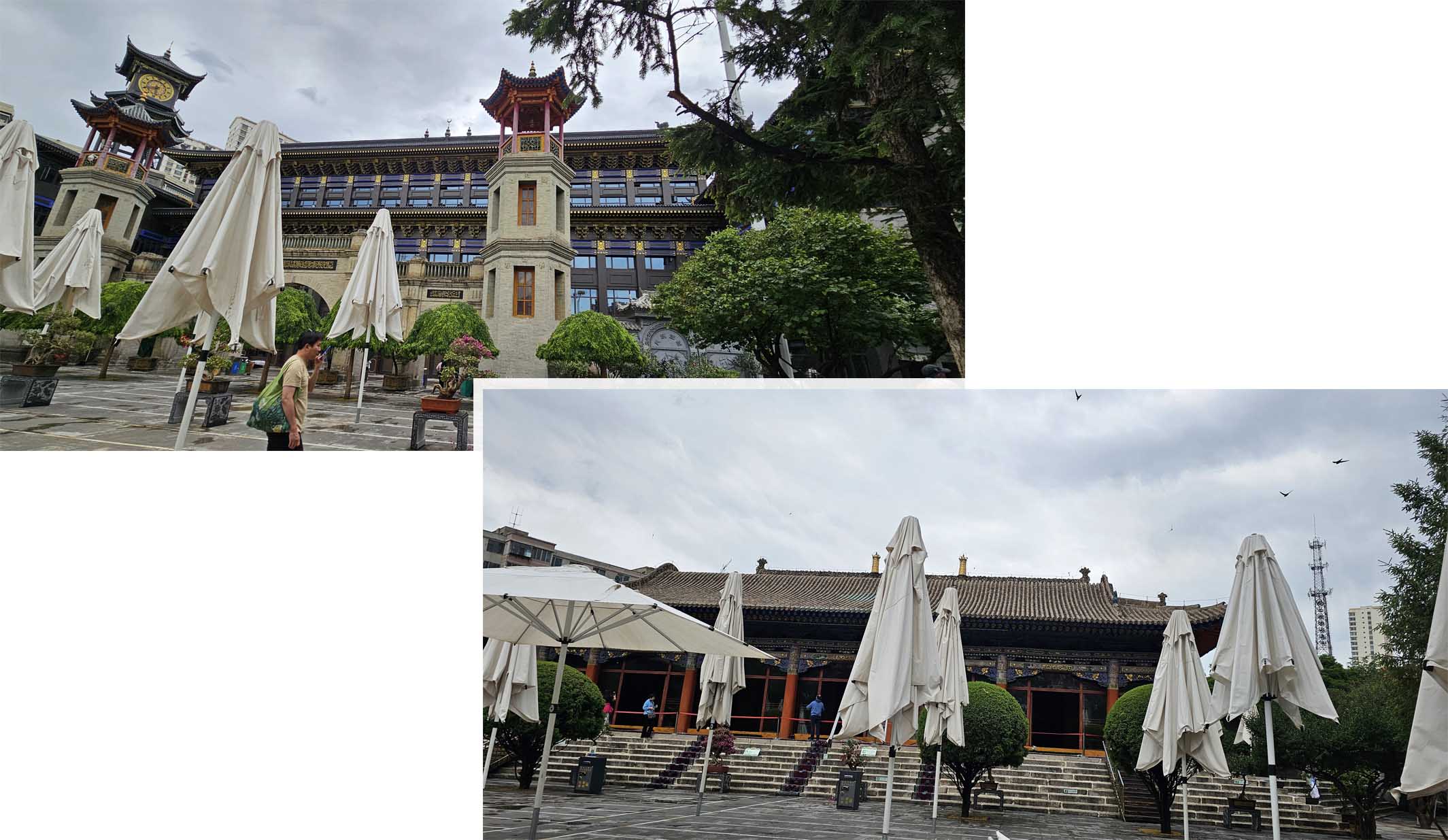
In the vicinity of Mojia Street was a mosque, Dongguan Mosque. We were very surprise that the mosque did not look “mosque – like”. Its structure were very similar to that of a Chinese temple.
Apparent Dongguan Mosque used to look “mosque like”. The authority felt that domes were evidence of foreign religious. influence and rebuilt them mostly in traditionally Chinese style to sinicize Muslim ethnic groups.
Dinner
We had dinner in a nice posh restaurant in Xining town and the cost came up to about ¥90 per person.

Our hotel at Xining
Our hotel was Sofitel Xining (西宁新华联索菲特大酒店) which was the same hotel we stayed on our first night in Xining. Lovely hotel with lovely breakfast.

Our room was huge, clean and cosy. The ensuite bathroom was large and clean.

Other Accommodation in Xining
