Getting from xi’an to Terracotta army museum
On our first full day in Xi’An we went to two attractions. They were the Terracotta Army and HuaQing Palace. Both attractions were near to each other and about 1 hour northeast of Xi’An central. We thought it would be best to visit both attractions in one go/day. The plan was to visit Terracotta Army in the earlier part of the day then walked HuaQing Palace in the afternoon. In the evening we would be back in HuaQing Palace to watch a “mega scale” performance – “Song of Everlasting Sorrow”. We had bought all our tickets online on Trip.com. This was essential as we did not want to come all the way to have the tickets “ran out” on us.

Just outside our stay in XiAn, we e-hailed (DiDi) for a taxis. On finding out that we were tourists the taxis driver quickly “sell” his services. He could help us to get our terracotta tickets, he could pick us up later to send us back, he recommended a “Qin army performance”. We decided to take up his recommended “Qin Army performance” and engaged his “cabbing” service for the rest of day. He would pick us up and take us to the “Qin Army performance”, he would send us to a restaurant for meal after the performance, he would send us to HuaQing Palace and pick us up after “The Song of Everlasting Sorrow” performance and drive us back to our stay. We agreed on a price for his extra “cabbing” service, it was ¥200.
One thing we realised that in China the cab drivers were very active in pushing out their services and recommendations so it was important that we focused on our “purpose of being here” or we might get “hijacked” into doing many irrelavant “stuffs”.
Qin Emperor Terracotta Army Museum
There were two parts to the museum, one was where there Terracotta Army were “stationed”, the other was the burial ground of Qin Shi Huang the Emperor. We had heard that the Emperor Burial ground had not been “excavated” or “opened” as nobody could be sure how to safely opened it without causing harm to the workers or damaging the burial ground. So till today it would still be a “hill mould” and we were not sure it there was anything to see.
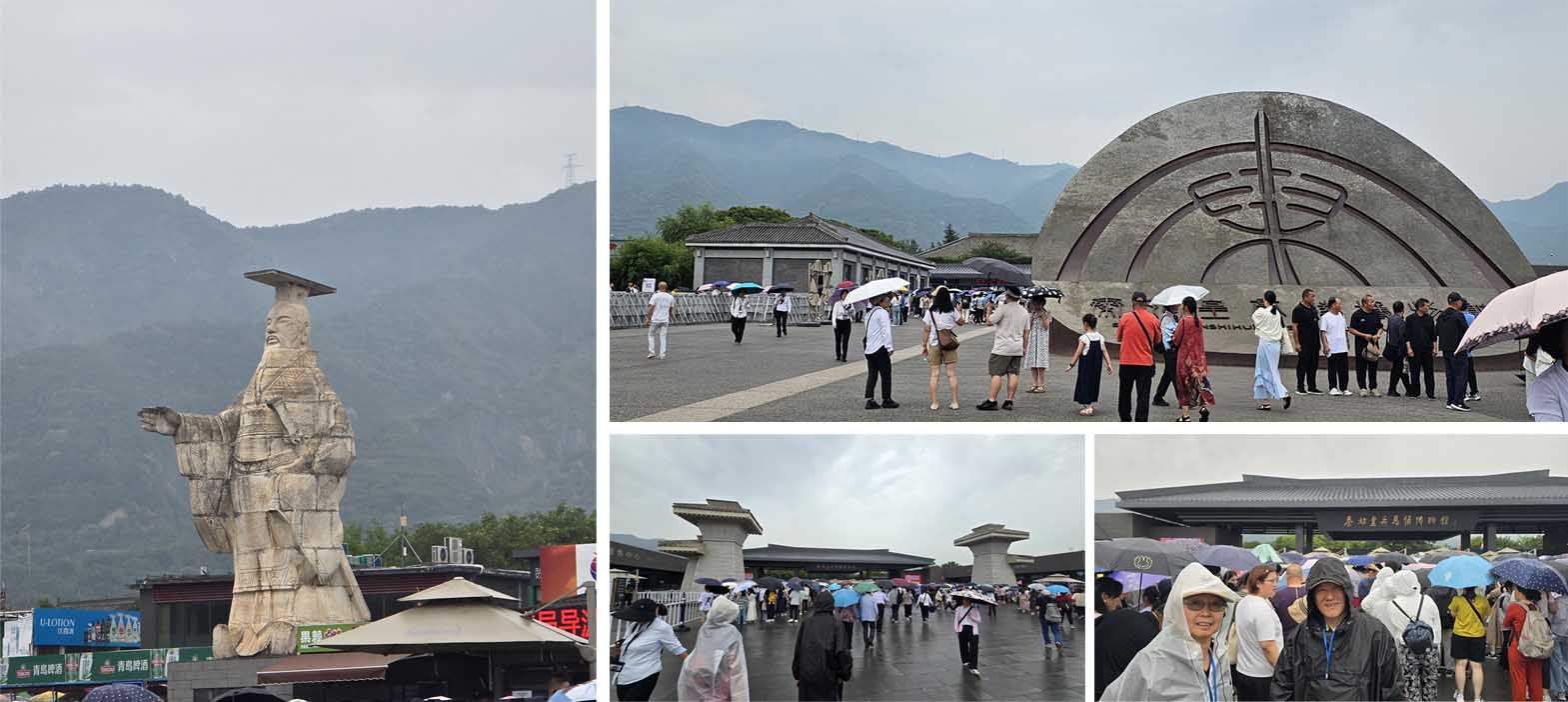
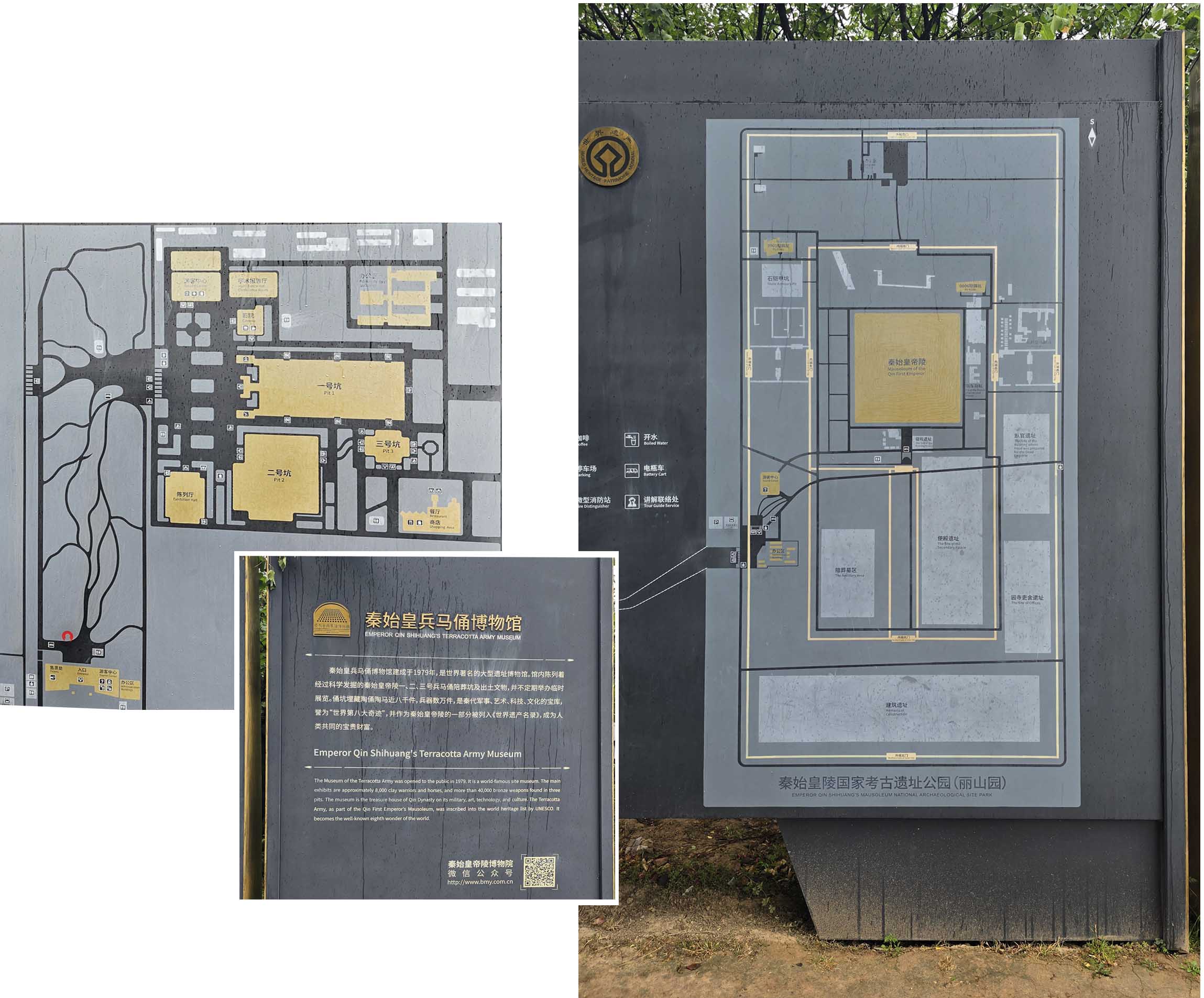
When we arrived at the Terracotta Army Museum it was raining. Since we had already booked our ticket online we just needed to use our passports to get through the gate gantry into the museum compound. The Terracotta Army museum had three excavation halls and one exhibition Hall.
Hall 1 was the largest and housed thousands of terracotta soldiers. It was a difficult push to get into the hall, there were just too many visitor. Even after getting into the hall we had to push our way to the front of the barricaded excavated ground before we could look down into a huge pit where we saw rows and rows of terracotta soldiers.
We had always wanted to visit this museum but we did not imagine doing it at the same time with thousands and thousands of other visitors. July was definitely the wrong month to be in China as it coincided with the July-August summer school holidays!!
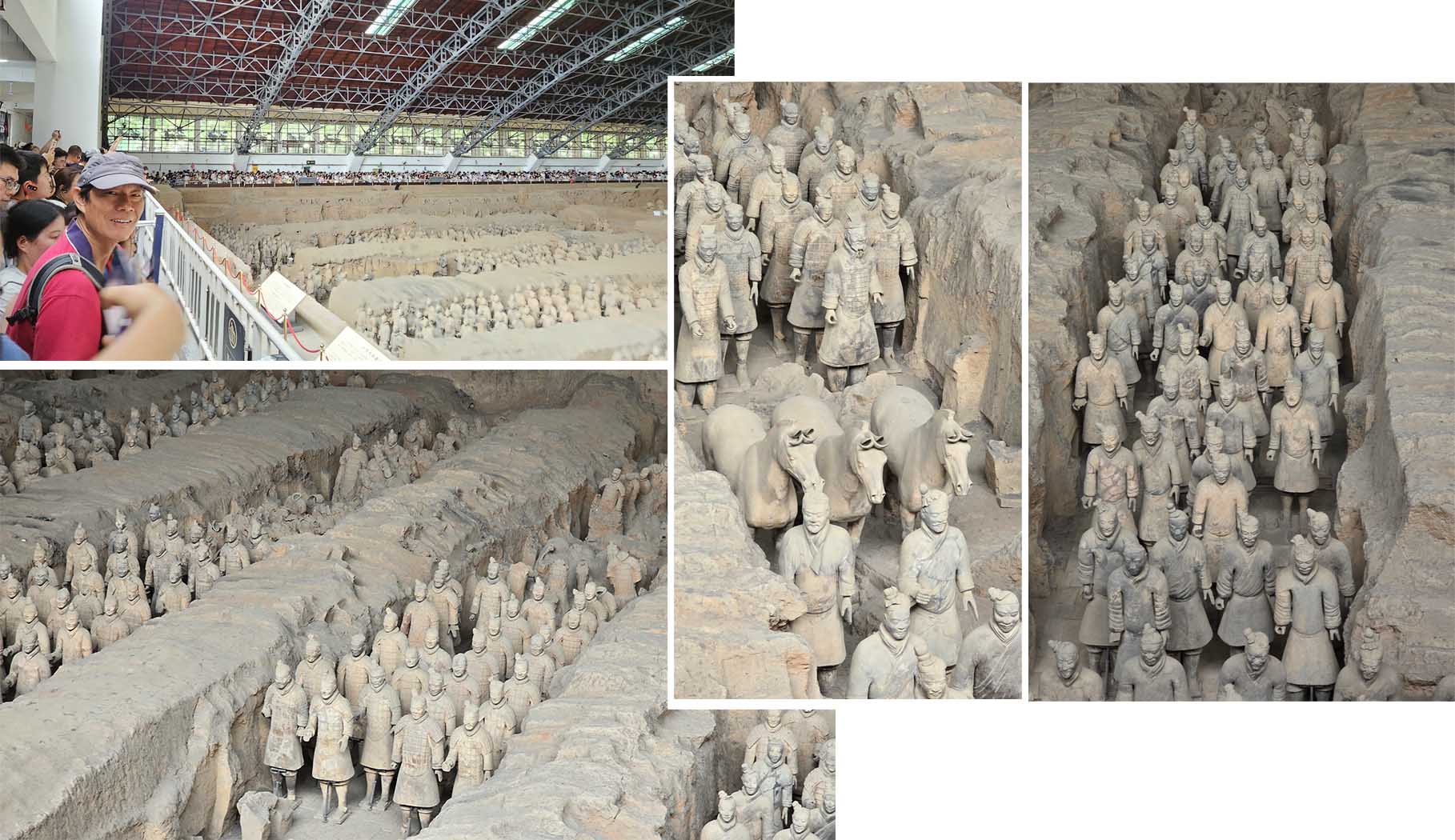
These terracotta figures were created in 210BCE and was discovered in 1974 near Xi’An. At the discovery site besides terracotta warriors there were chariots, horses, officials, acrobats, strongmen and musicians. Current estimates placed the number to 8000 soldiers, 130 Chariots with 520 horses, 150 cavalry horses. Hall 3 and Hall 2 were smaller than Hall 1 and the “pushing” around was also less intense.
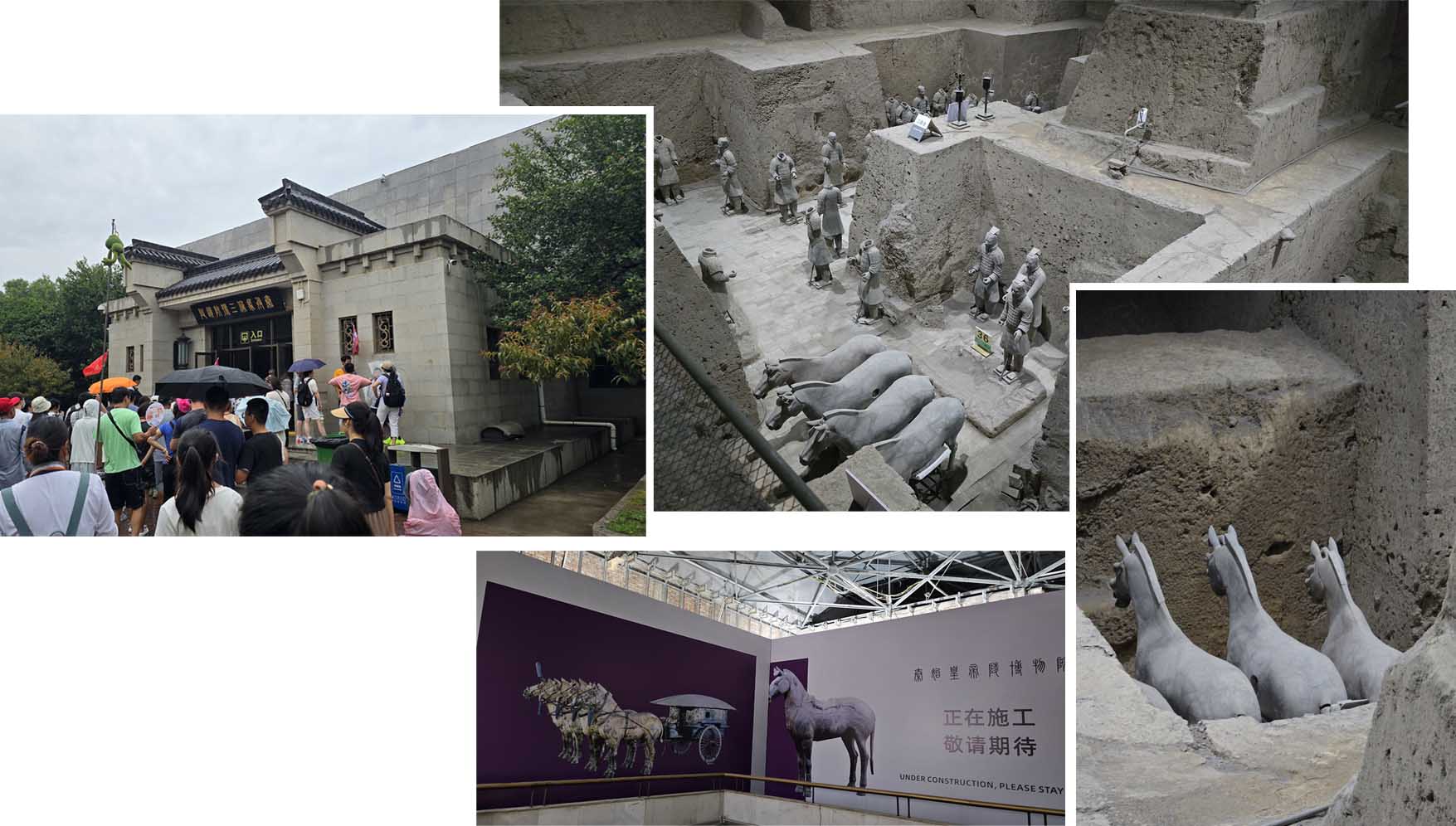
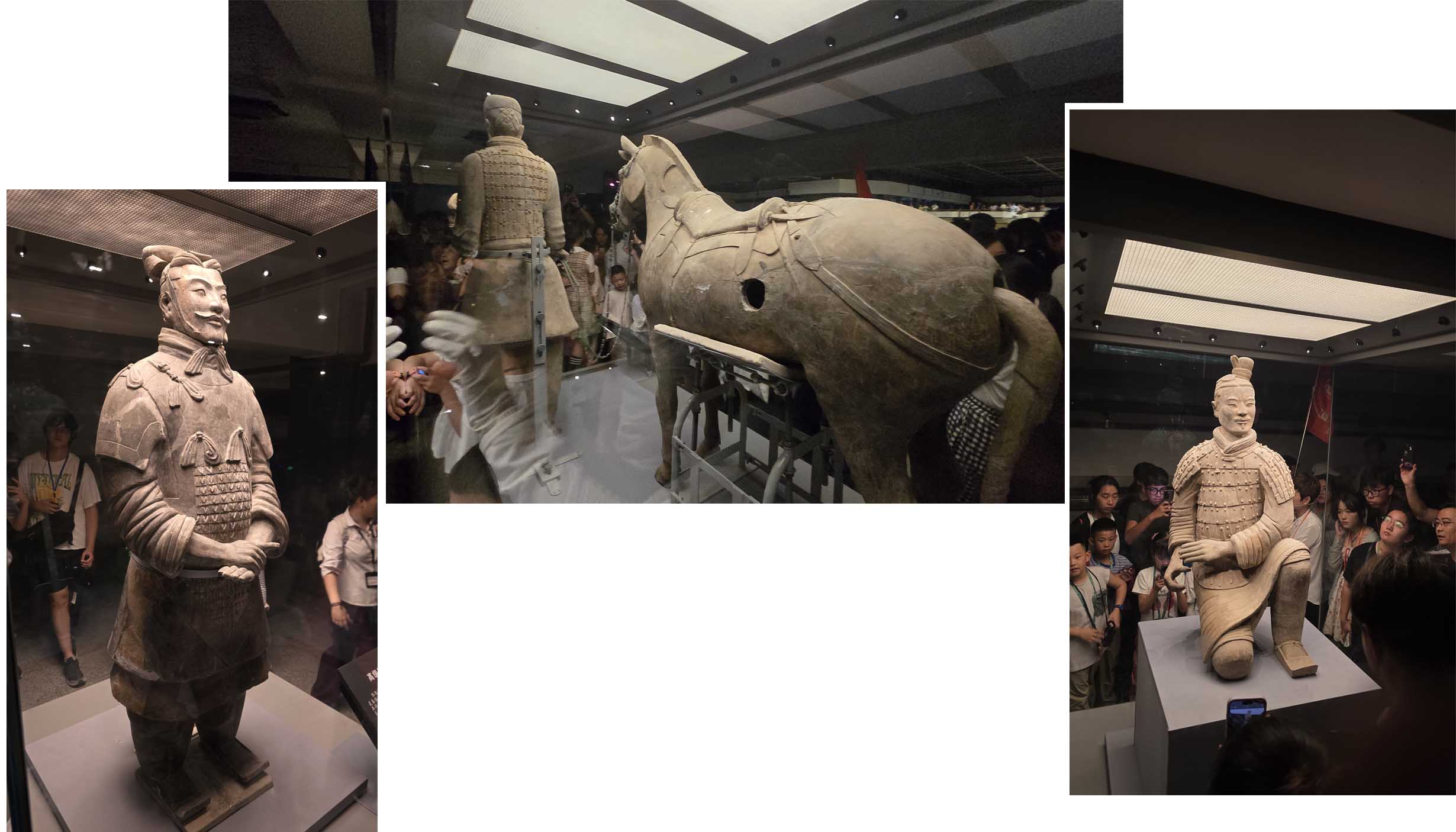
It was at the exhibition hall where we could see the terracotta figure closely. Again everybody was crowding around the exhibit. The pushing and jostling were terrible. We felt “bad” pushing our way to the front to see the exhibits. We had no other options because there was no queuing system in place, so it was either we pushed or saw nothing.
Mausoleum of emperor qin shi huang
We left ourselves one hour to visit the burial ground of Emperor Qin Shi Huang as we understood that the burial ground was till not excavated. Tthe mausoluem was just a big piece of land with a burial mould on the ground. Since there was not much to see we thought one hour was more than enough.
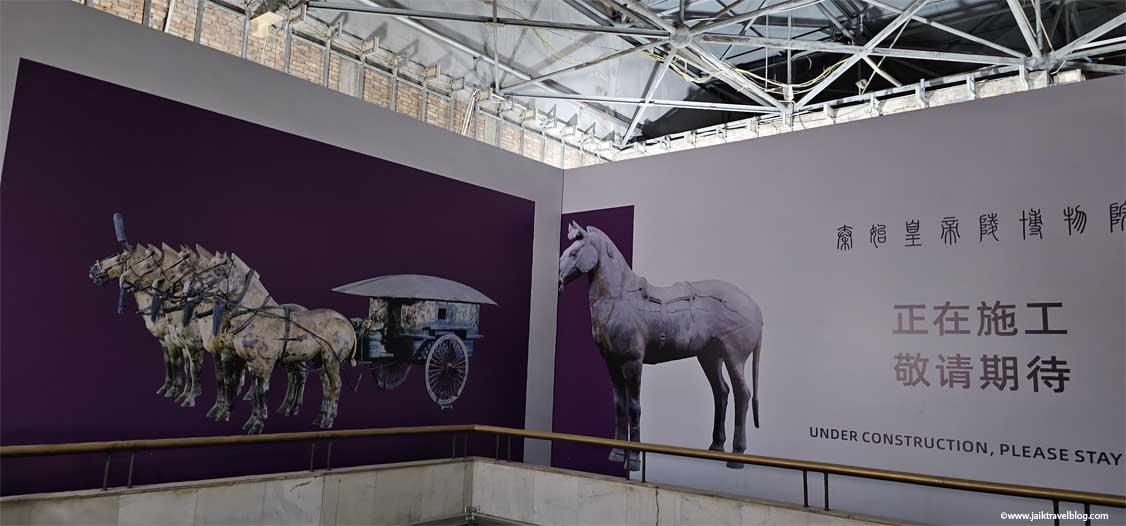
We realised too late that one of the major exhibits “Bronze chariot with four horses” was moved to the mausoleum. So instead of seeing the “real thing” in the exhibition hall, we saw only a picture.
Now we just have to get to over to the Mausoleum. Unfortunately to get there took a long time! We had to either queue with thousands of others for the tourist shuttle buses (free of charge) to bring us there or go there via a cab at our expense . Both options took too much time as the roads were jam packed with humans and traffic. We went to the Mausoleum by a cab, but by the time we arrived at the entrance of the mausoleum we found that it was still a long way to “any” hall. We walked for 15 minutes through a beautifully landscape garden and still saw nothing. In the end we had to abandon the mausoluem visit and return to meet our driver, to go for a 3pm performance which we agreed with him earlier on!
“Qin Army” performance
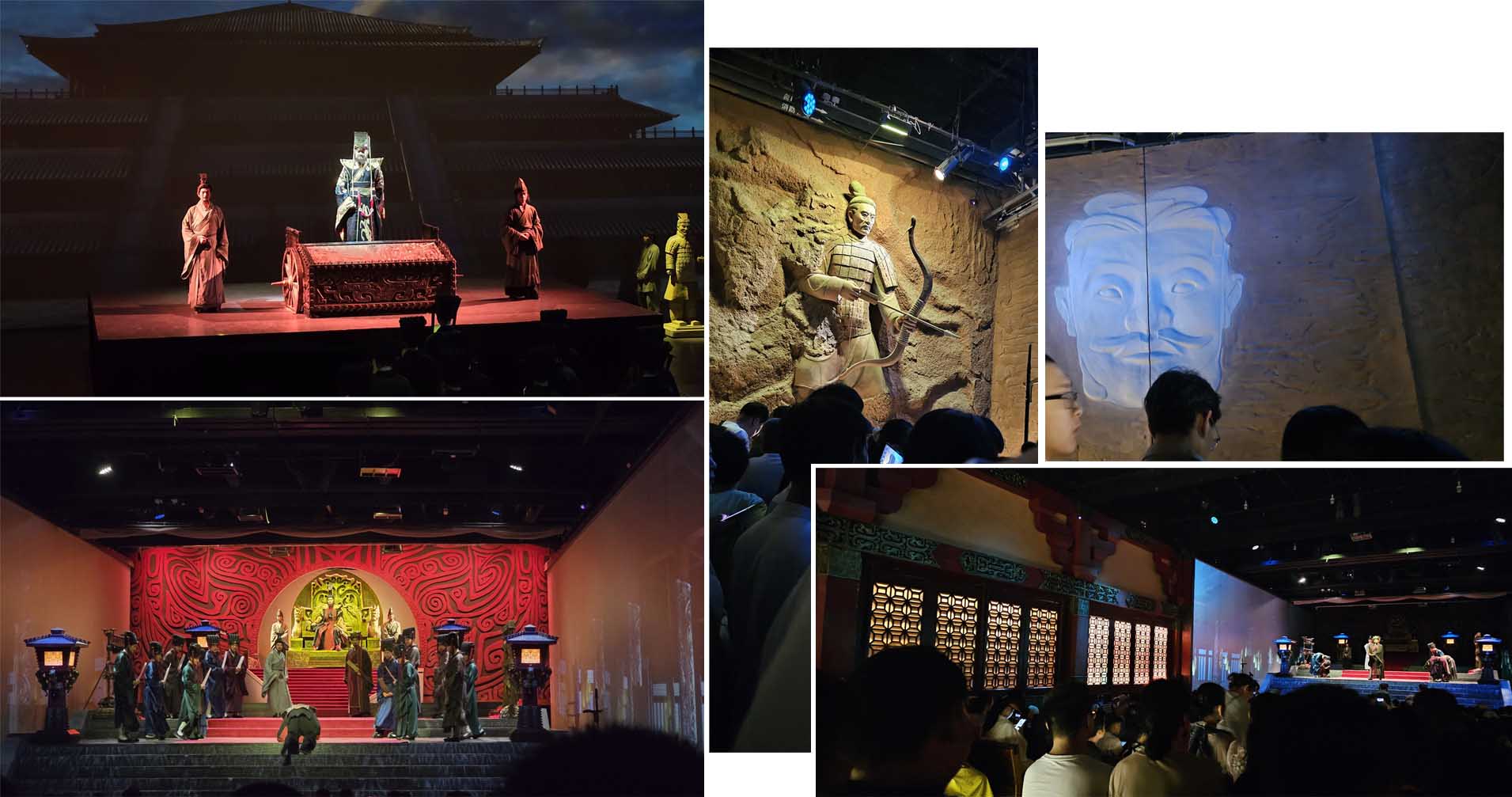
Our driver picked us up on time and drove us to a “theatre”. He had purchased our theater tickets. Ther performace was very interesting, the audience were channelled to move to a different hall after each “act”, so one moment we were in a “forest backdrop” and another moment we were in a “battle field”. Overall the performance was very entertaining.
Biang biang noodle
After the “Qin Army” performance we requested our driver to bring us to a restaurant that sold “Biang Biang” noodle. Biang Biang noodle also called Biangbiang Mian was a traditional Chinese noodle dish.
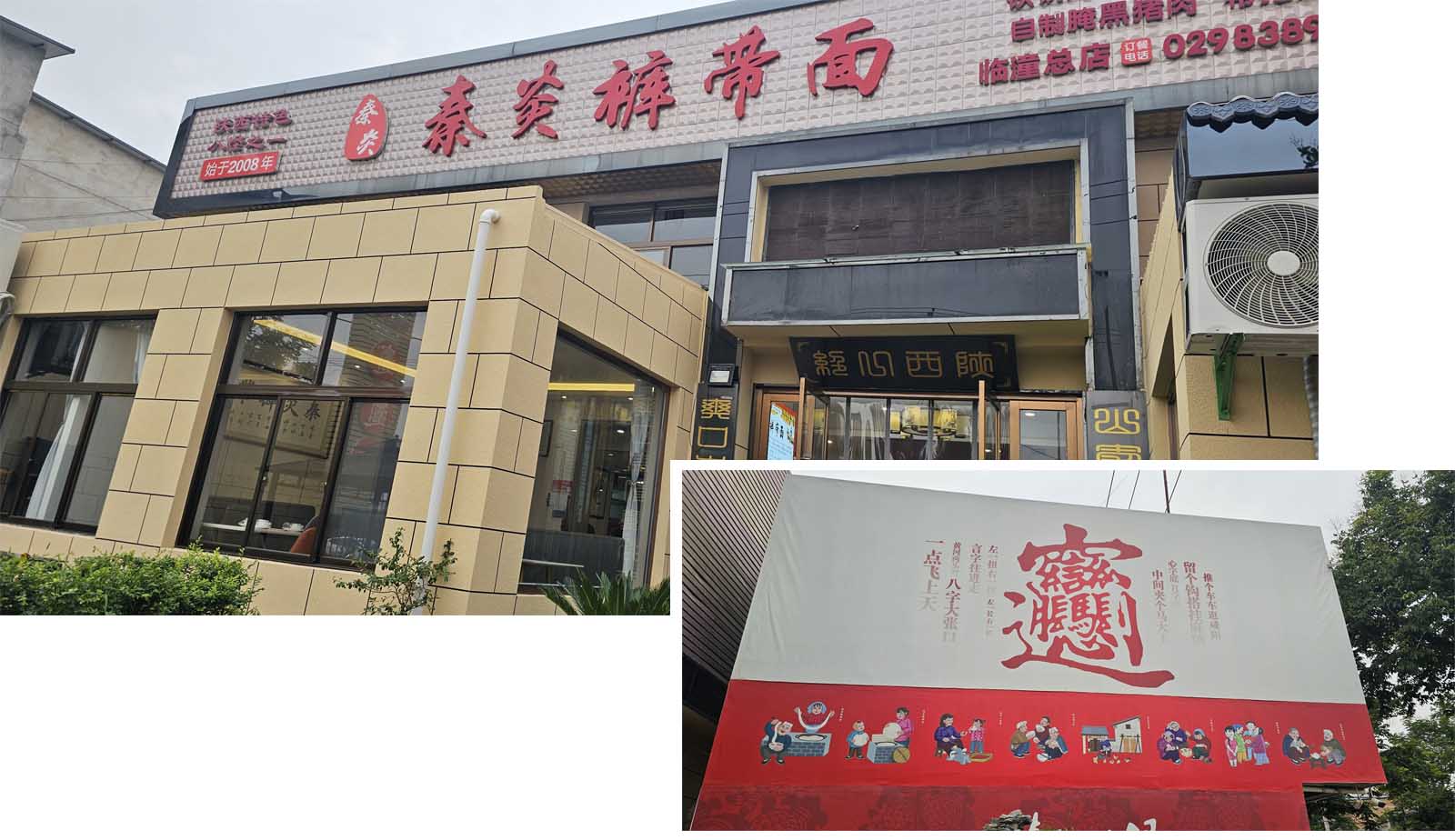
A single noodle strip was usually 5 centimeters in width and a length of around 1 meter, which required 100 grams of wheat flour in general to make. During the creation of the noodle, the dough was pulled and slapped onto a board. The slapping sound was mimicked as “Biang Biang”. “Biang” Chinese character had 56 strokes and was the most complicated Chinese character!
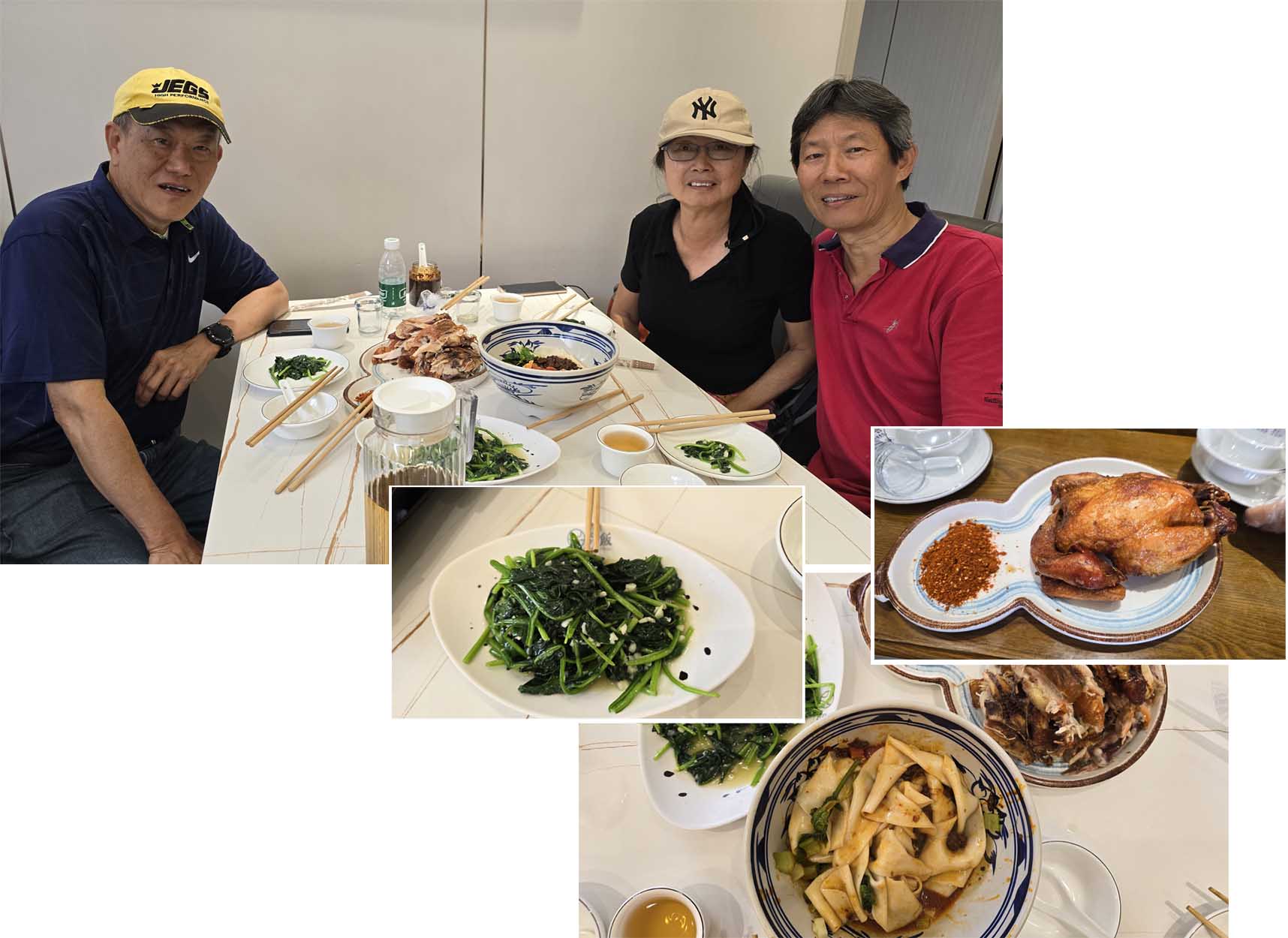
Yummy Biang Biang mealAt the restaurant we ordered green vegetable and chicken to go with a big bowl of Biang Biang noodle. The noodle were chewy and was served with fragrant chilli mixture and hot oil. The noodle went nicely with the chicken and green vegetable we had ordered. The meal for three was ¥150 for three of us.
HuaQing Palace
After a great meal, our driver sent us to HuaQing Palace entrance. We had bought combo tickets to visit HuaQing Palace (7am to 7pm) and watch the performance “Song of Everlasting Sorrow” (staged in HuaQing Palace) in advance on Trip.com. We understood that the performance was in “high demand” and tickets got snatched out as soon as they were made available online. We had been monitoring the ticket sales and bought the tickets as soon as they were put on sales.
The performance had multi lighting effects which was visually nicer when the sky turned dark, so we picked the 2nd performance (there were three a night) which started at about 9.35pm. We paid higher price for the seats in the central section near the front. The combo ticket costed ¥570 per person, the tickets came with pre-show refreshment.
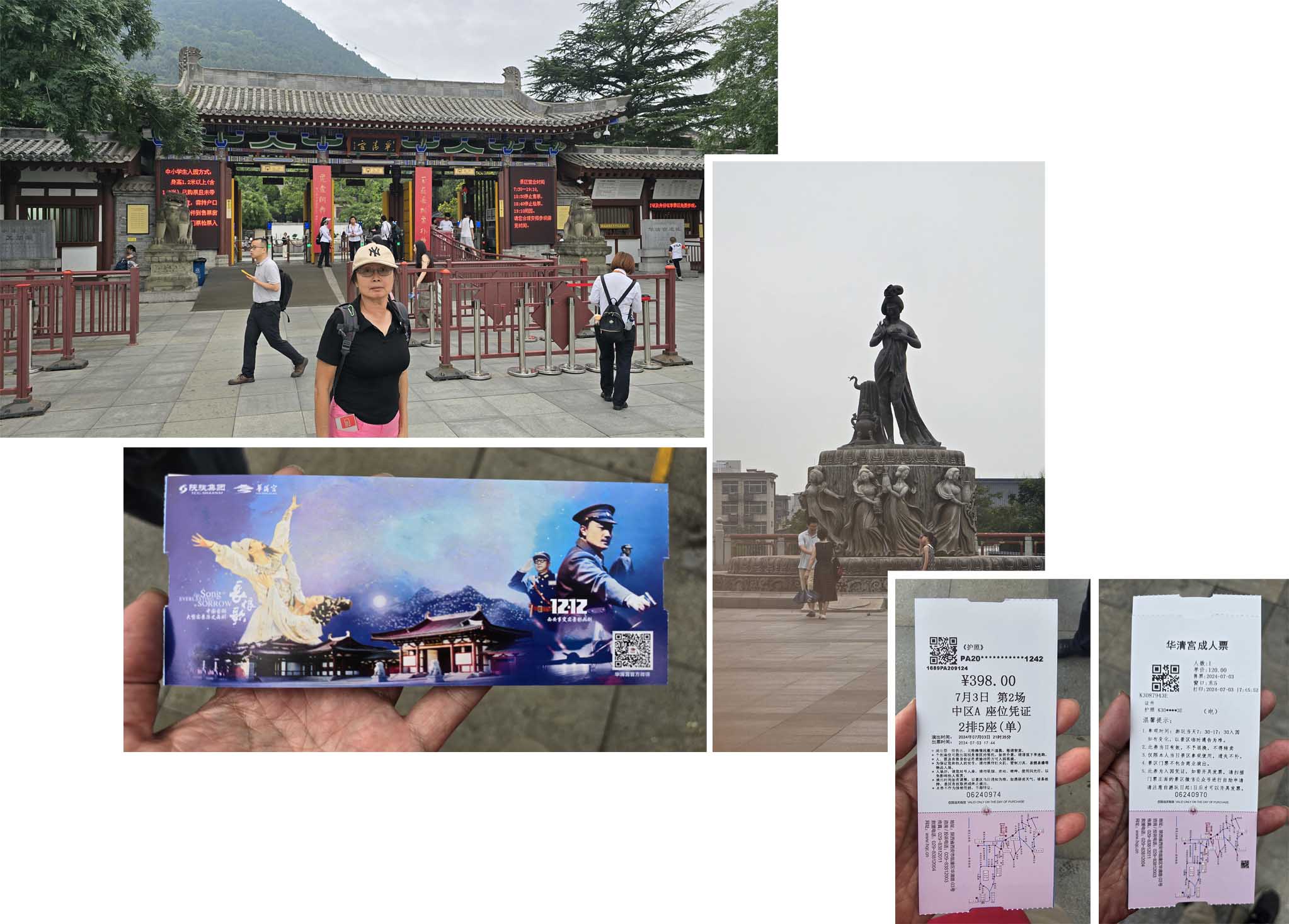
At the entrance counter we exchanged our “online ticket purchases” with two physical tickets per person. The first ticket was for entry into HuaQing Palace and the other was for the performance “Song of Everlasting Sorrow” with refreshment.
Once we entered into the compound of the palace, we were approached by a HuaQing Palace Guide offering to bring us about with “history explanation” as we moved. It costed ¥30 per person, the guide came equipped with guide-microphone-disposable ear-piece for us. This was cool as we could wander a bit away from her and still hear her explanation clearly.
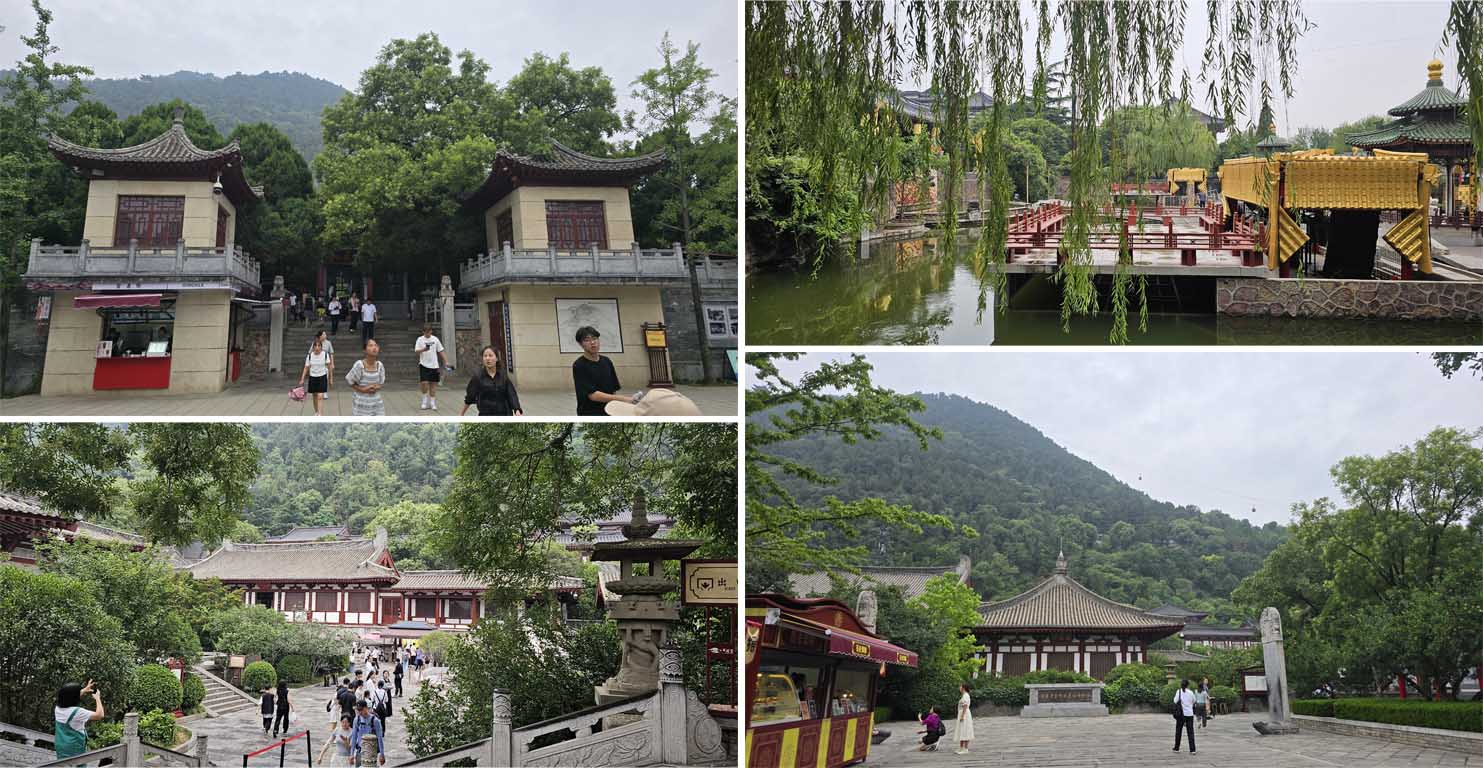
HuaQing Palace was also known as HuaQing Pool, it was one the four Great Royal Gardens in China, the other three were Summer Palace, the Old Summer Palace and the Chengde Mountain Resort. The Palace was build in the Zhou Dynasty (1046-771) by King You of Zhou and was named Li Palace. It was a retreat built on location where natural hot springs with therapeutic properties were in abundance. To us the most significant historical significant that we could relate to was that this palace was the retreat of Imperial Concubine Yang Gui Fei. Being Singaporean Chinese we were offen exposed to dramas (HongKong, Taiwan, China) featuring the famous tragic love of Yang Gui Fei and the Tang Emperor.
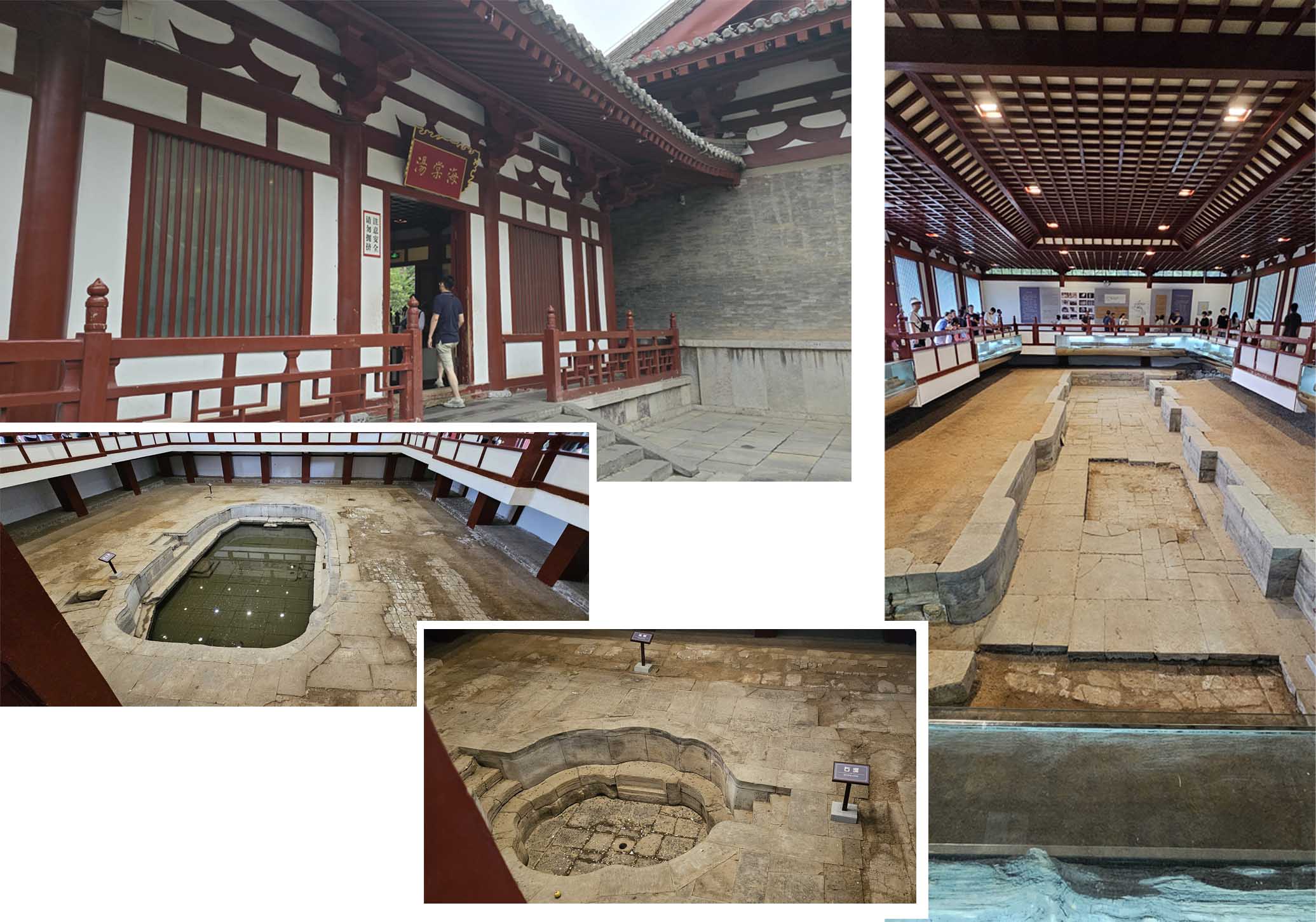
Our guide brought us to several spa pools housed in big single storey buildings. “This one was for the Emperor, this one was for Imperial Concubine Yang, this one was for the princes etc etc.
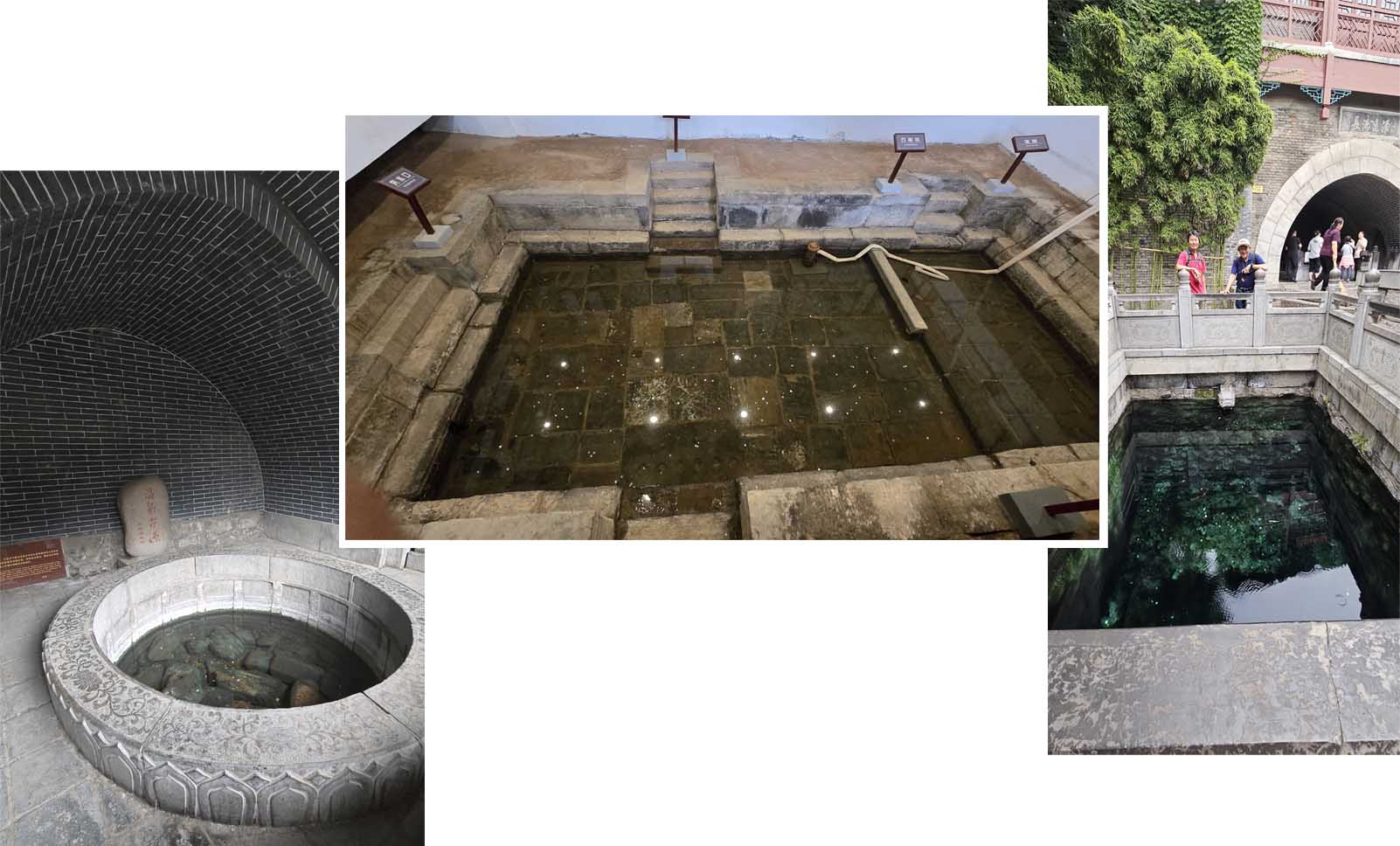
We arrived at HuaQing Palace just before 6pm which gave us only one hour to explore the ground. Our guide had to rush us through the ground telling us the history of this place etc etc.
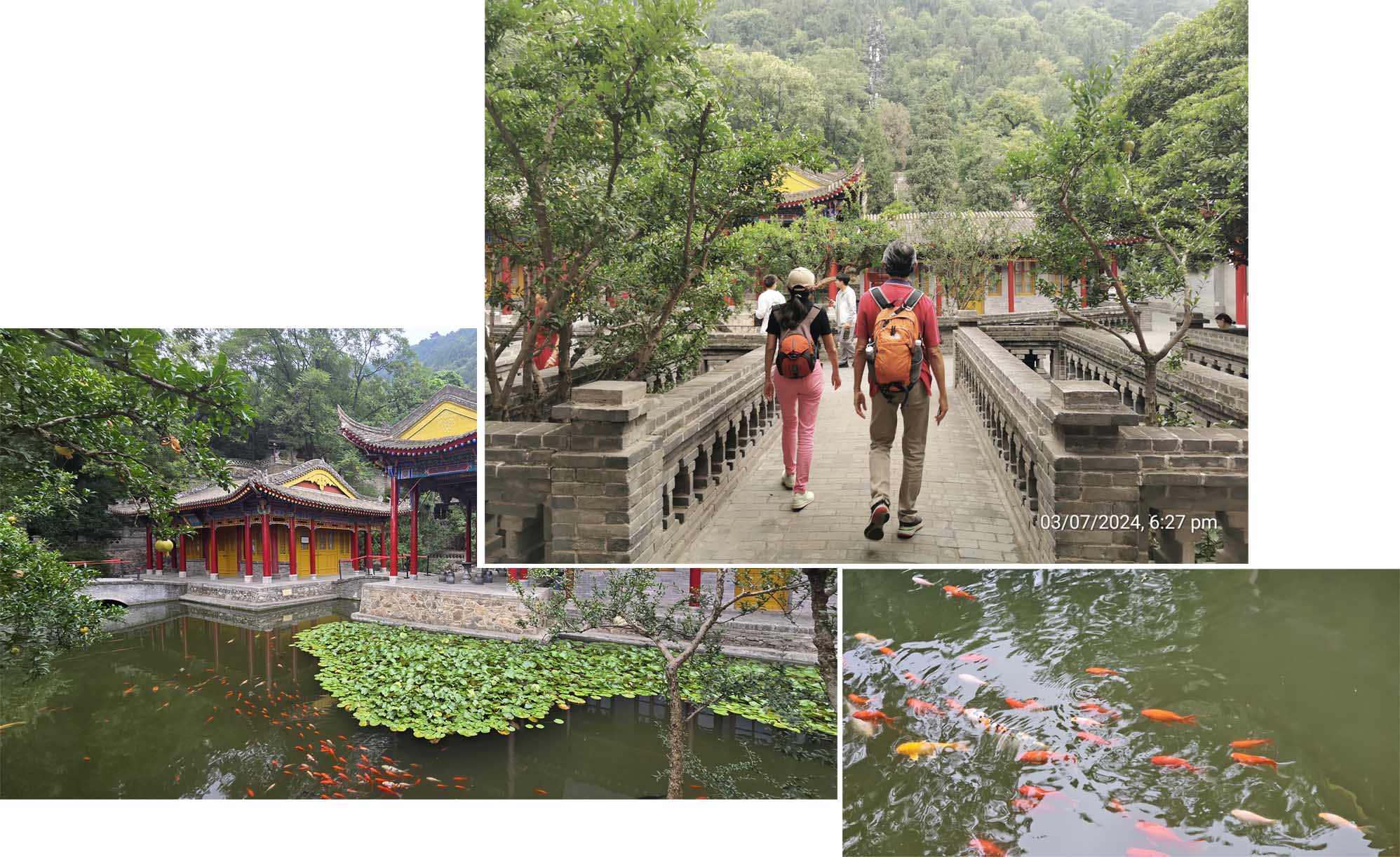
The weather in the late afternoon was just nice to walk through ground of the palace, the environment felt cool and breezy. This palace was certainly beautiful and tranquil and and it was easy to imagine it being a favourite retreat of past emperors and his imperial families.
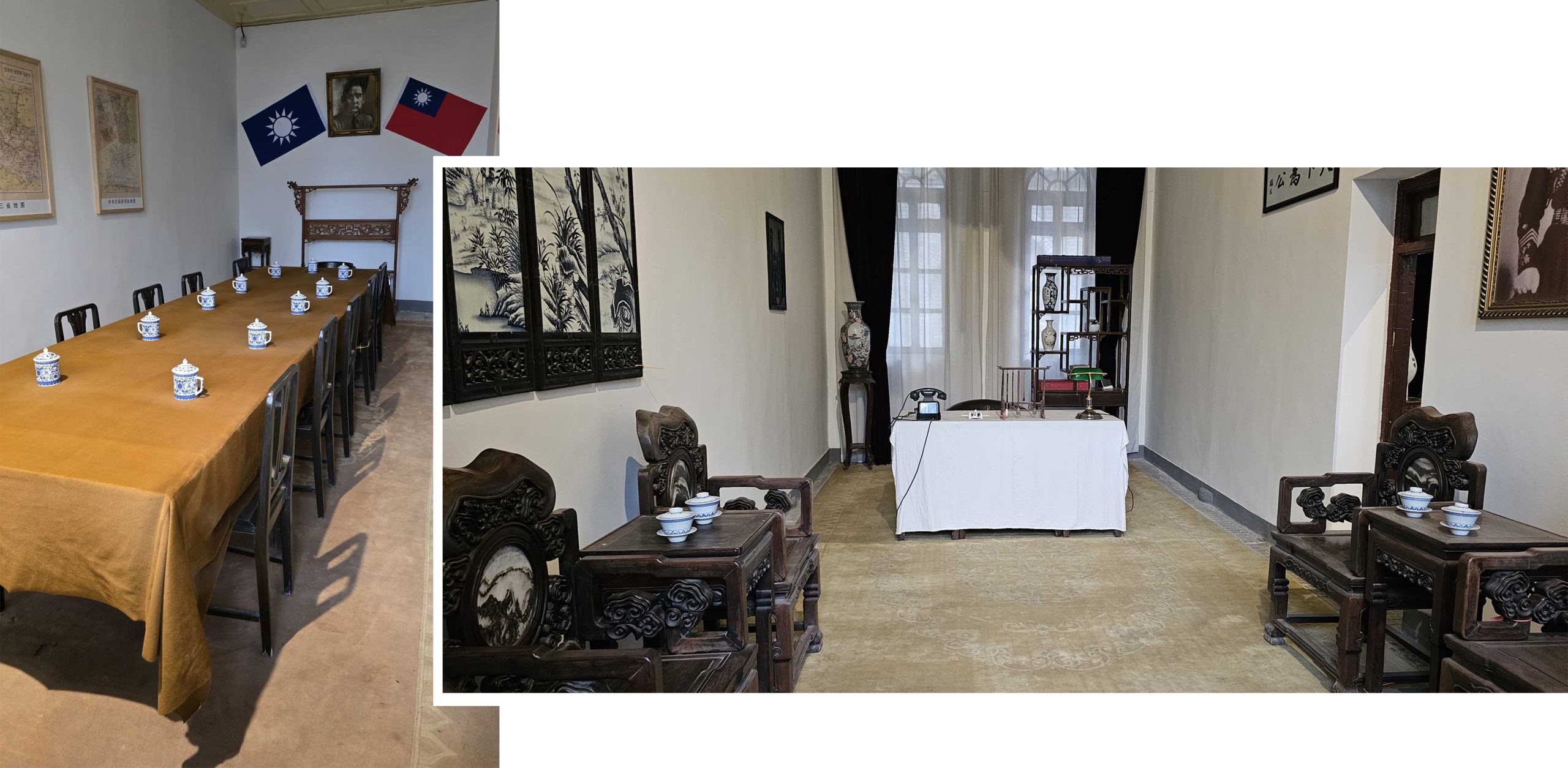
There was a couple rooms in the palace ground that was rather modern and we were told that the “Five-Room Hall” was where Chiang Kai-shek was detained. Our guided mentioned that CKS fell while trying to escape through a window.
Again for the second time in the day we released too late that there was a cable car ride up Li Mountain! It was too late to go for the ride as HuaQing Palace closed at 7pm. We missed the opportunity to go up high to look down on the city below.
Song of Everlasting Sorrow
There were several huge performances in XiAn, after reviewing them we decided to go for “Song of Everlasting Sorrow” which was staged in the compound of HuaQing Palace with Li Mountain as the stage backdrop.
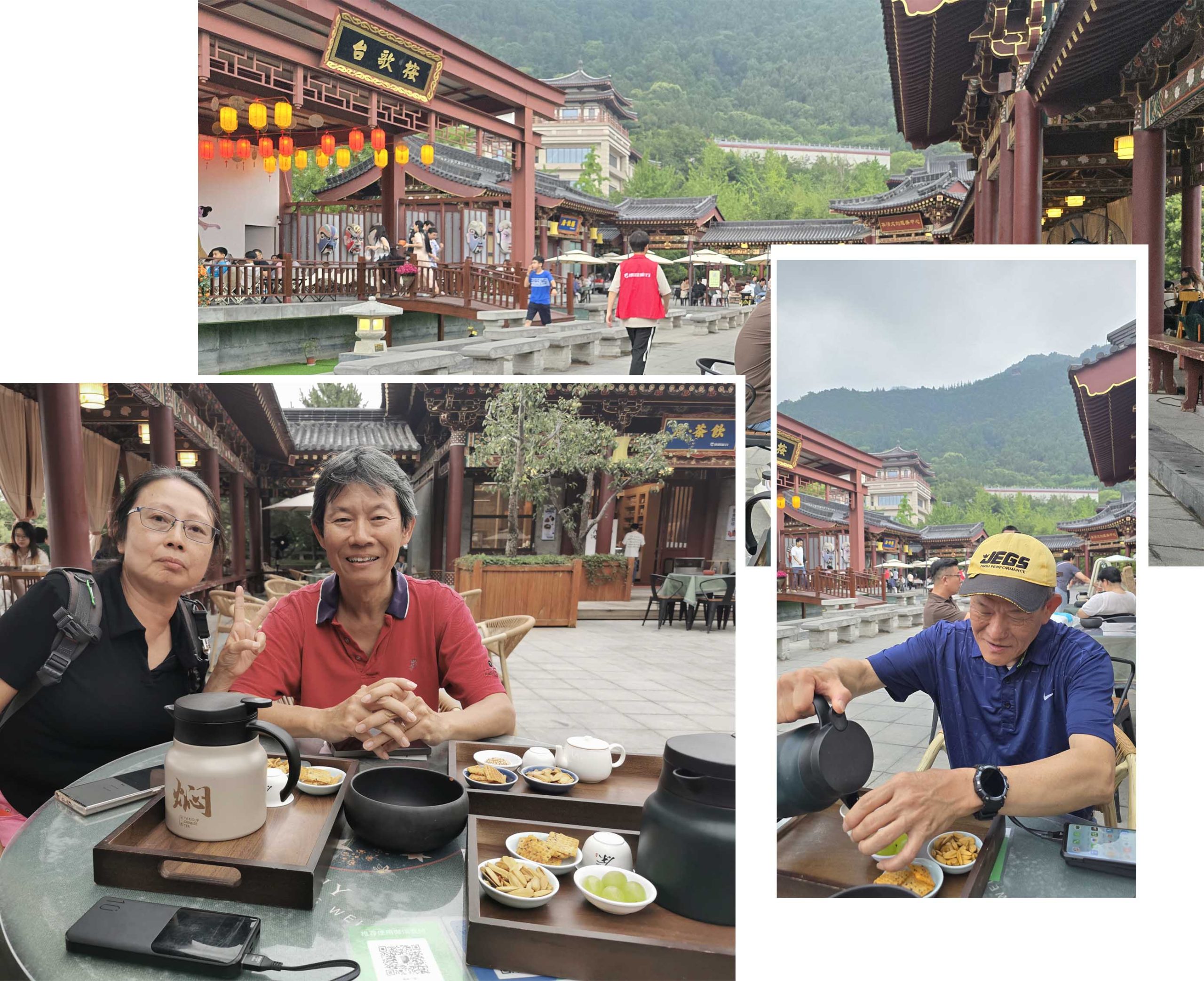
There were three shows a night and each lasted about 70 minutes. We had bought the 2nd show which started at 9:35pm. Our visit to HuaQing Palace ended at 7pm, so there was a 2 and a half hour wait. Our combo tickets came with preshow refreshment. So at 7pm we went to the “refreshment area” for some rest and relax. The refreshment area was a large compound with several beautiful pavilions with many seats to rest and relax. We were glad to have opted for the pre-show refreshment in our tickets else we would not know where to go and wait for 2 hours!
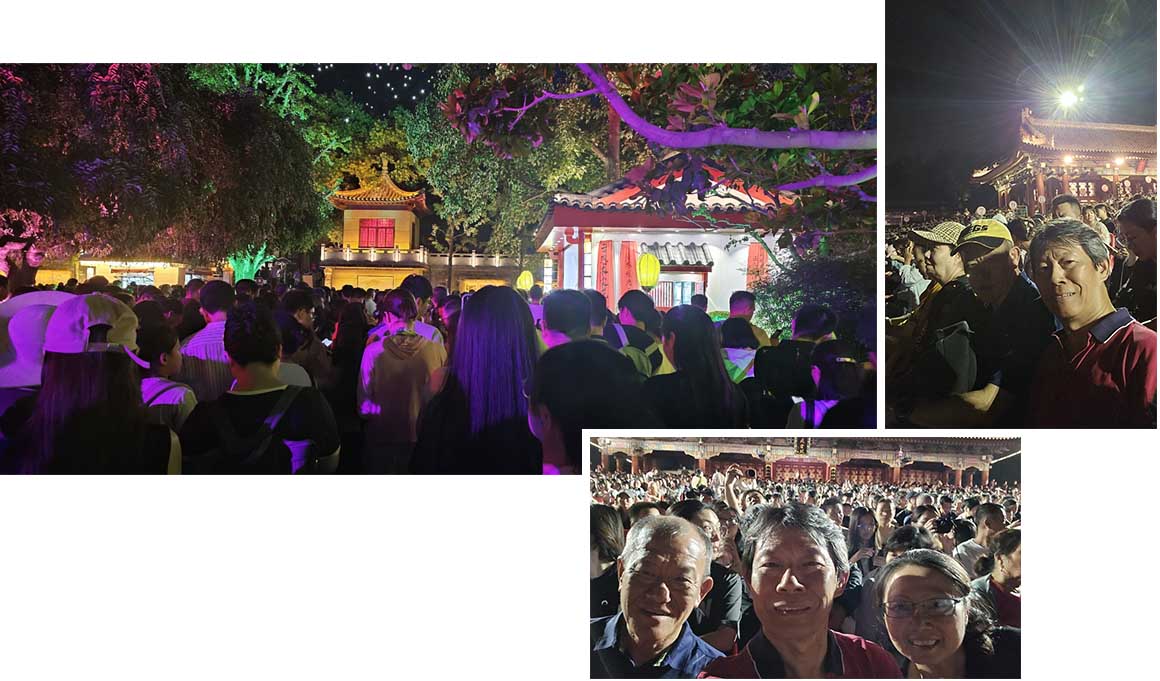
At about 9pm, we were assembled to go into an open air theatre. The crowd were huge but we were well managed by a group of staff who channelled us into the right sections, rows and seats. We had bought seats in the center section on the second row. They were in a great position with absolutely no blockage at all when looking down to the stage.
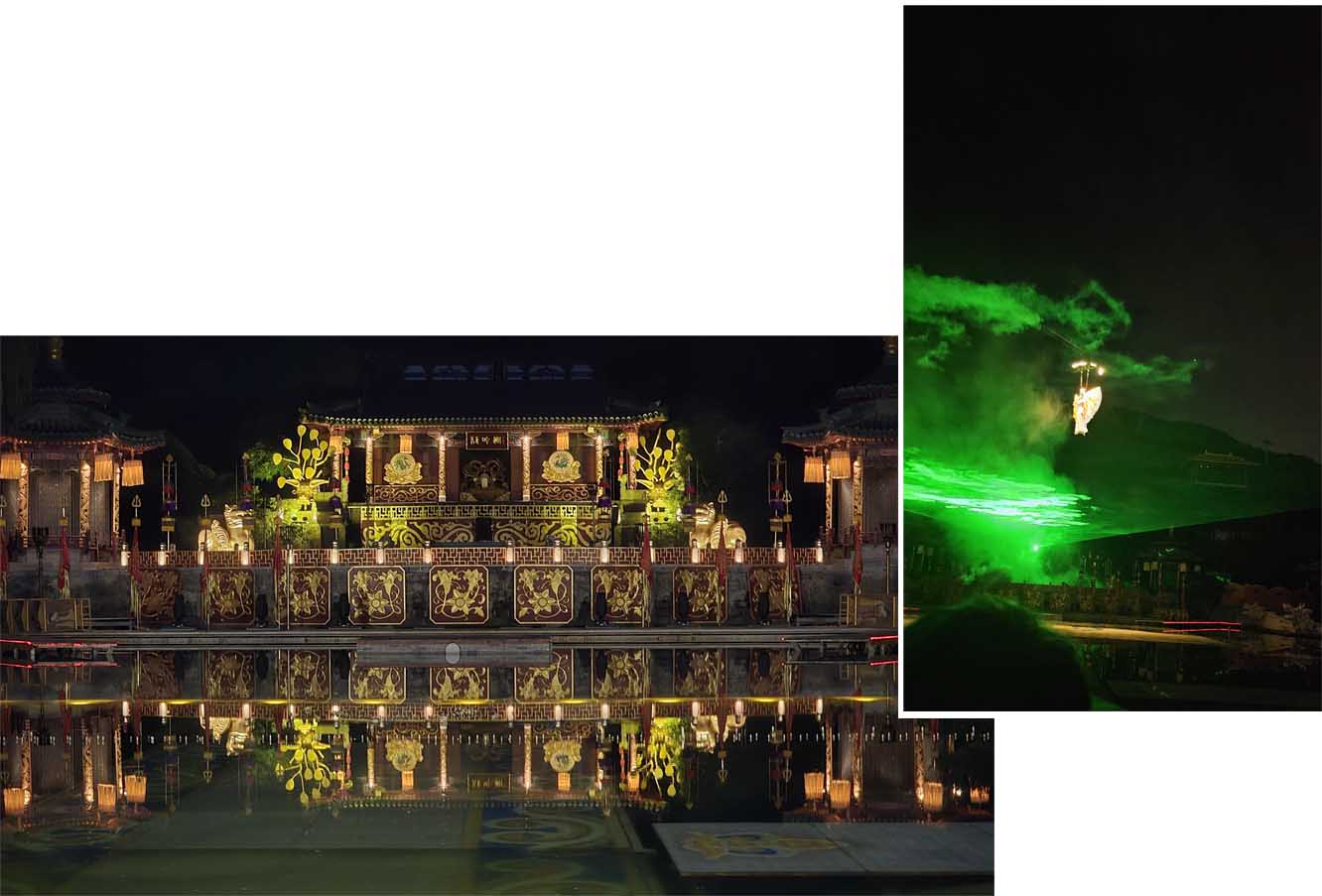
It was an open stage performance, with floating platform on water. Soon the performance started and a beautifully dressed lady/fairy floated down to the stage!. The entrance was magnificent.
Through songs, dances, stunning costumes, dazzling lights in the natural backdrop of the Li mountain the performers protrayed the sad love story of Imperial Concubine Yang and Tang Emperor Tang Xuan Zhong.
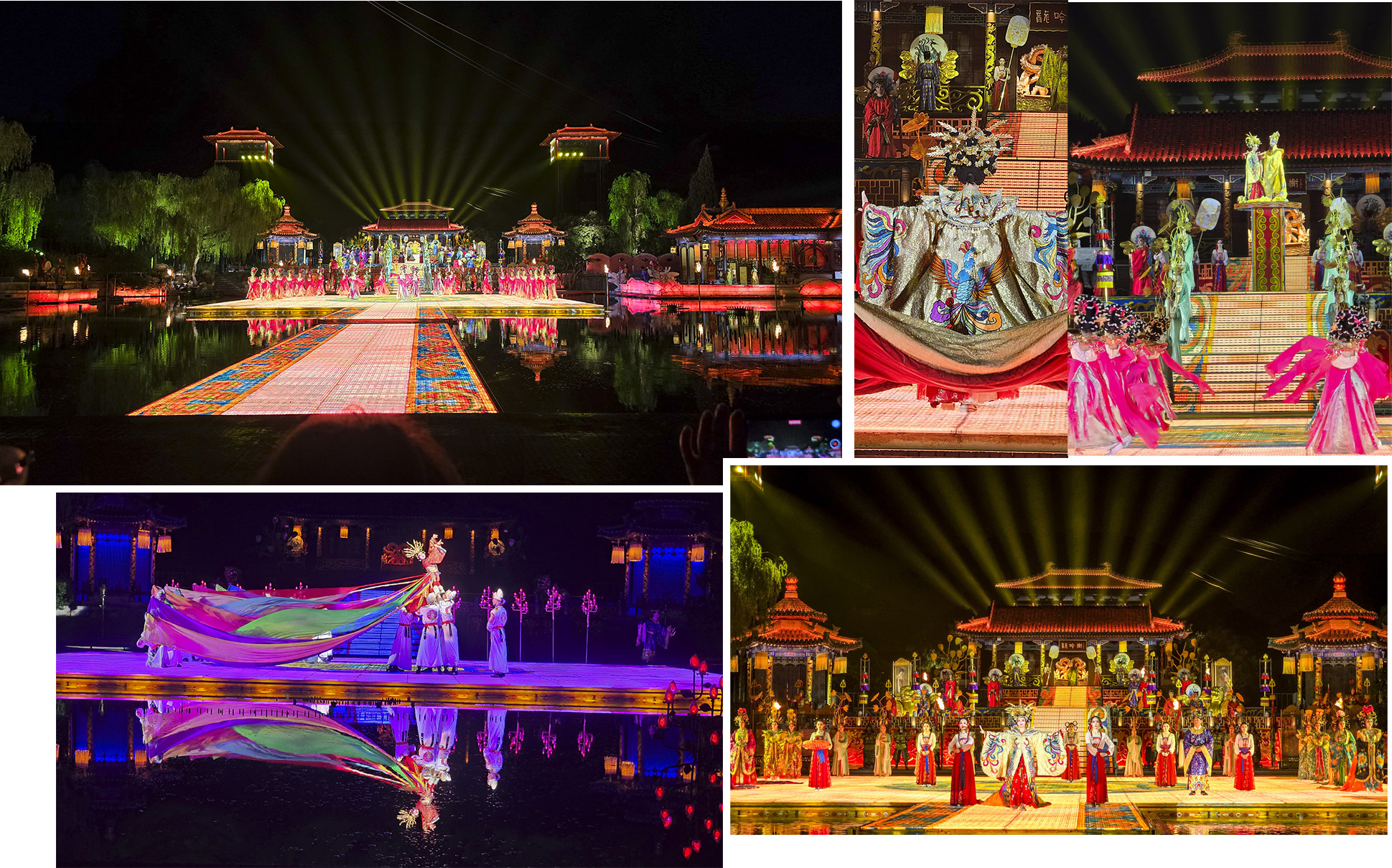
Imperial Concubine Yang (Yang Guifei) love story with her tragic end was the theme of this performance. Tang emperor Xuanzong was so captivated by the beauty of concubine Yang that he neglected his state affairs to be with his beloved concubine. Concubine Yang adopted son An Lu-shan, a general of the Turkic origin led a rebellion during a power struggle between him and Yang’s brother. The soldiers of the Emperor refused to counter the rebellion unless the Emperor executed Concubine Yang as they blamed her and her brother for the rebellion. The emperor executed Concubine Yang to safe “his skin”.
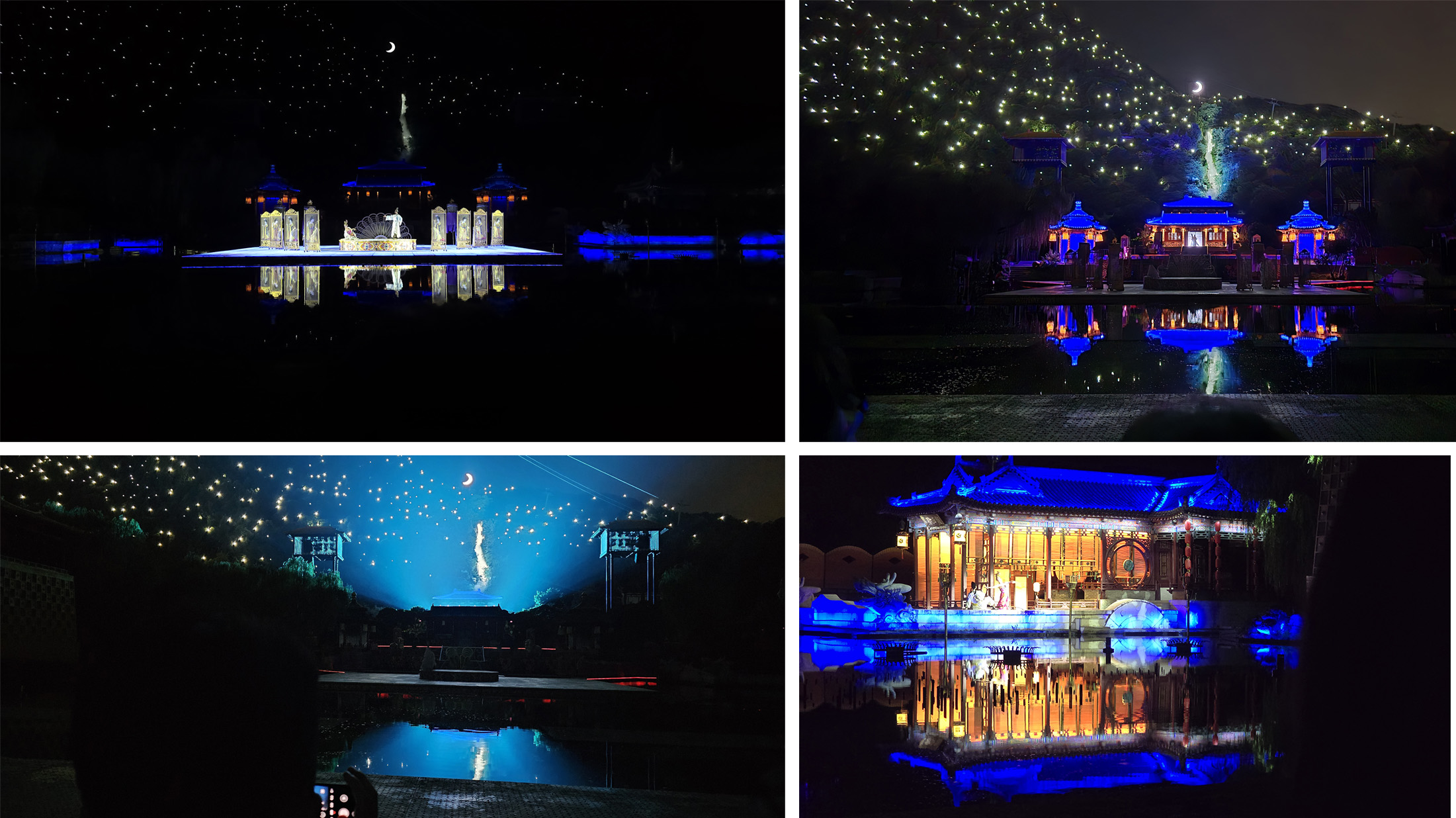
The rebellion scene was dramatically displayed with much firework. The entire performance was absolutely captivating and stunning. The story ended with the death of Concubine Yang and then a few years later the death of Emperor Xuanzong and the reunion of the two in their afterlives.
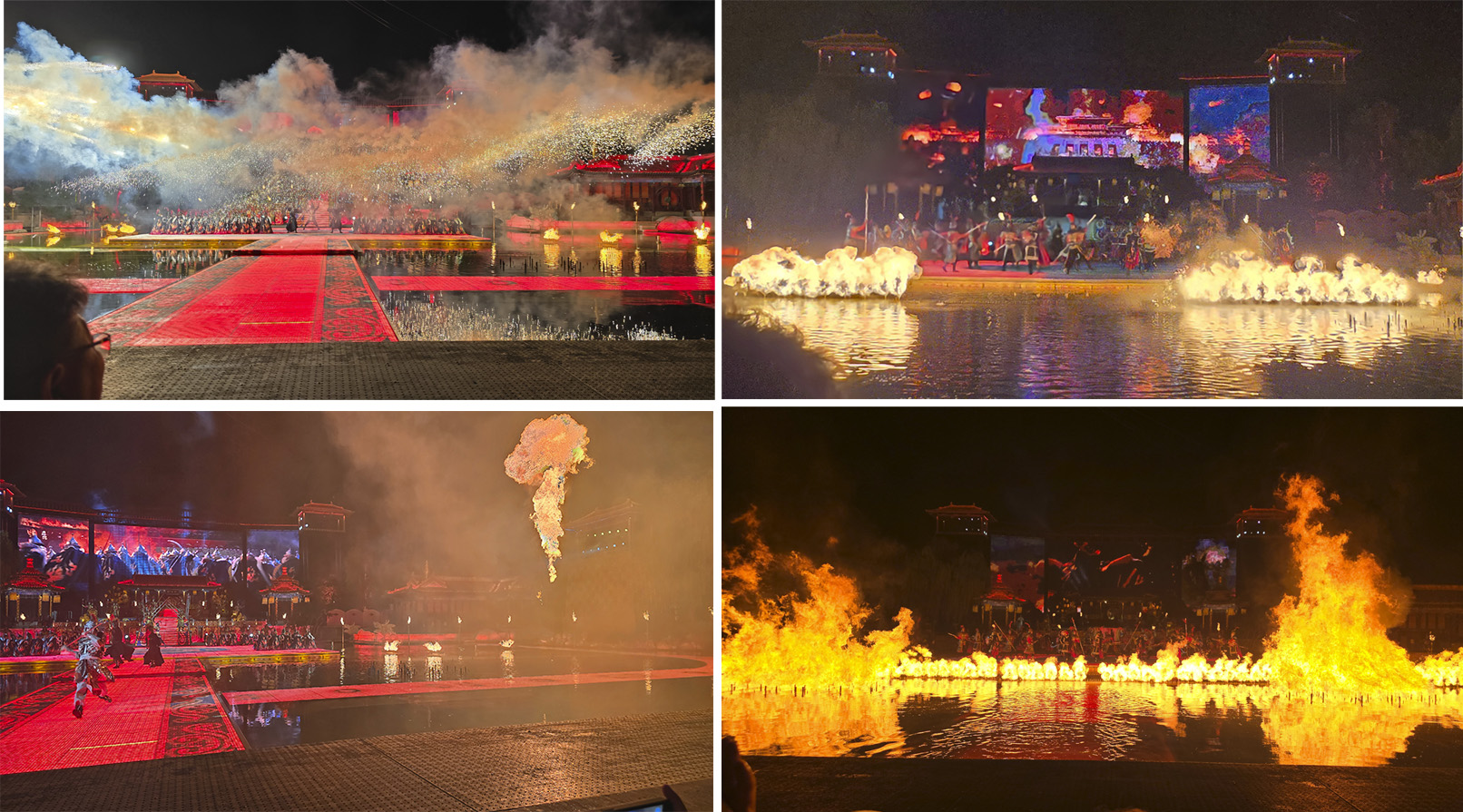
Finally after 70 minutes the show ended. We were left in awe to see such grand scale outdoor performance with so many performers dancing and singing their “best”. We were certainly going to remember this performance for a long long time!