Overnight Train to Lhasa
The train journey started at 12.50pm in Xining the day before and we would reached Lhasa by 10.25am in the morning. The purpose of a train journey was to enjoy the wonderful scenery that we had heard so much about and to give us more time to acclimatize before reaching Tibet. We had already spent three days around Xining which was at an altitude of 2200 m, and had visited Qinghai Lake( 3260m) and also Chaka Salt (3059m). All of us consumed prescibed altitude sickness medication (Diamox) daily. So far so good none of us experience any altitude sickness.
The train started at Xining Station at an altitude of 2270m, it rose up to 2982m at Dehingha Station and then dipped a bit to 2829m at Geermu Station. The last two stations before Lhasa Station was 4611m (Budongquan Station) and 4547m Tuotuohe Station.

By the time we reached Budonquan Station at 9.30pm last evening our train were already moving in the dark. The darkness stretched from 9.30pm all the way to near 6am in the morning. It was with sadness that we knew we were not able to view the beauty at Yuzhu Peak, Tanggula or Amdo.
We had specifically requested for a night train (train X8991) but was put on an afternoon train (Z8981) from Xining to Tibet. The tour agency (Discovery Dynasty) even told us that there was only one train a day to Tibet and that was train X8981. We really could not understand as on Trip.com there was a night train Z8991. On the night train we would be able to view Yuzhu Peak, Tanggula or Amdo. Regretful but we were unable to change the train ride.
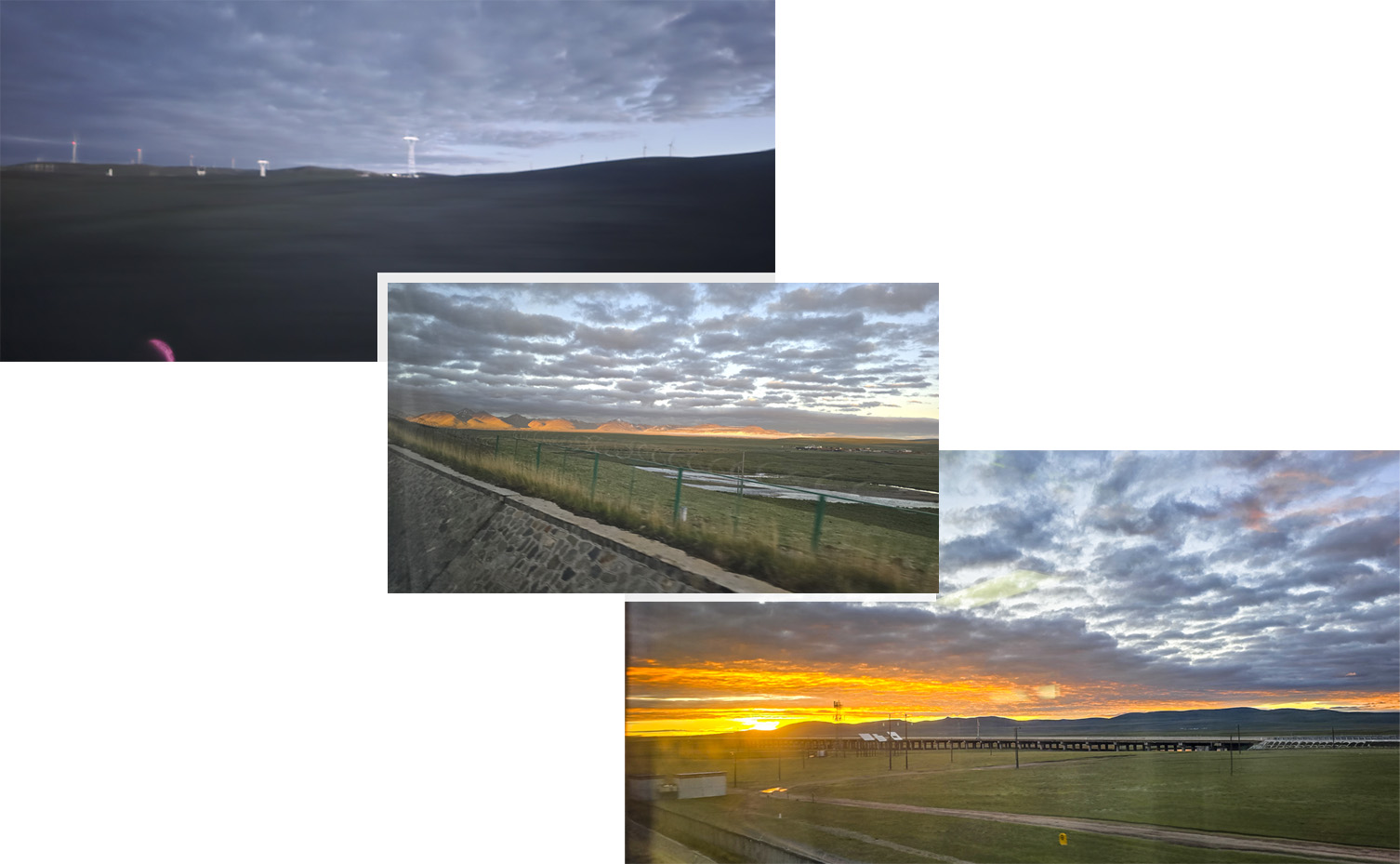
By about 6 am, the sky began to brightened up. Our train was on its way to Nagqu Station. The last station before the final station Lhasa Station.
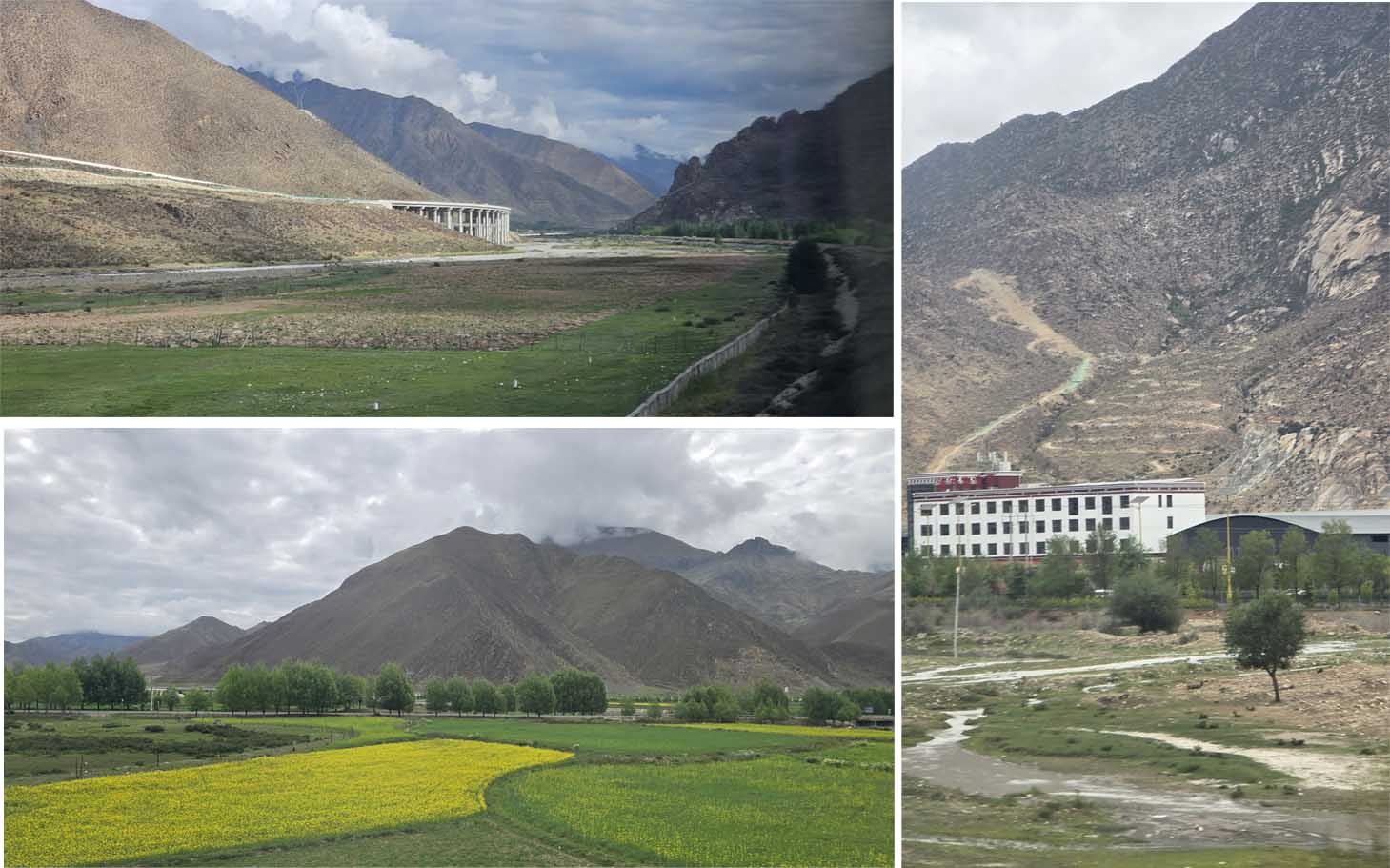
We were surprise see lots of green when our train moved nearer to Lhasa. The landscape was not as harsh as we imagined. Apparently the Chinese Government had implement a “Afforestation Project” in Tibet. The project started in 2014 and would end in 2030, focused on lands suitable for afforestation covering six major rivers in the region. It would help to conserve soil and water resources and prevent sandstorms.
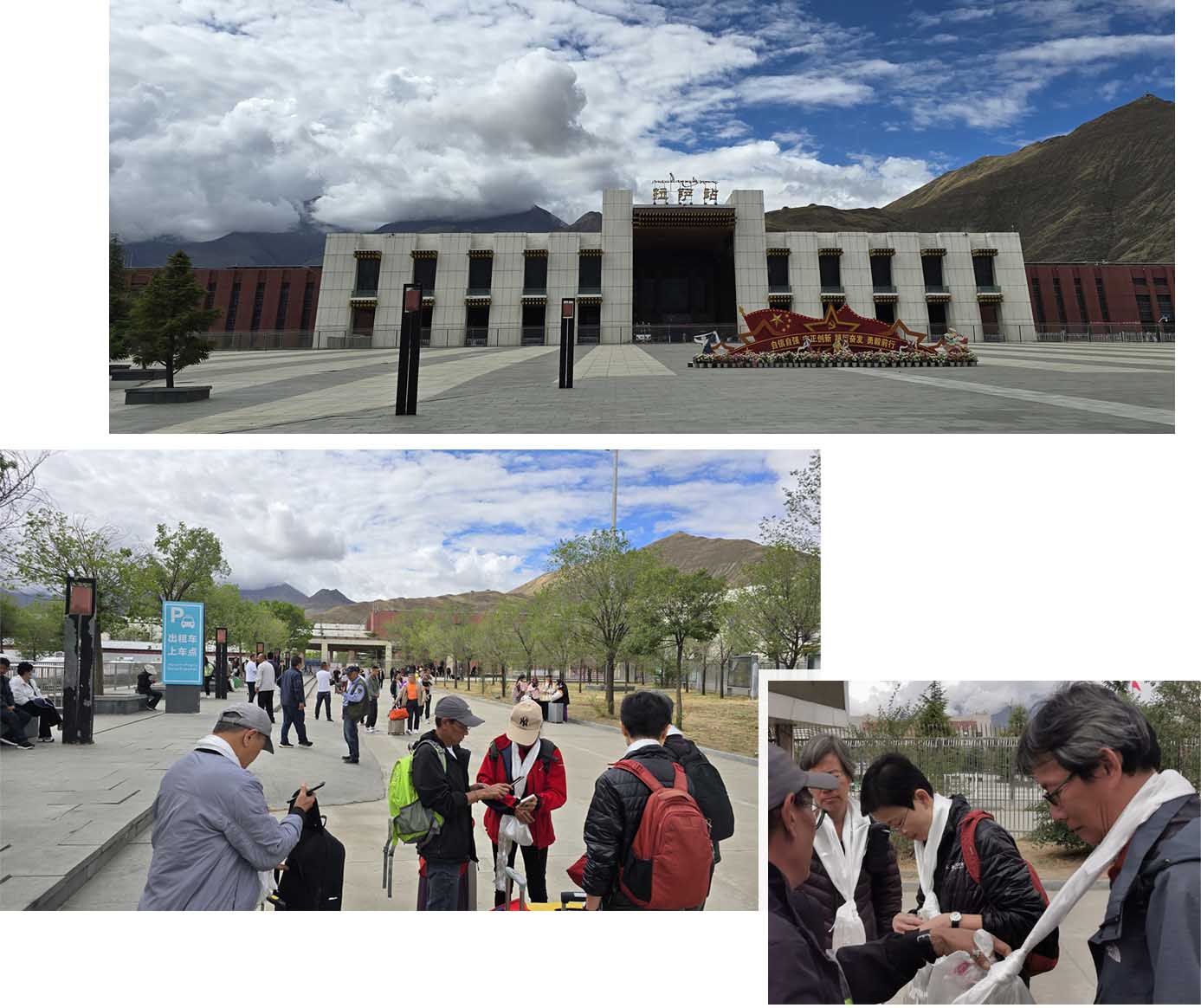
Our train reached Lhasa Station right on time. Upon exiting we were greeted by our English speaking Tibet Guide and driver who gave us a traditional Tibetan welcome (white scraves over our heads). Our tibet guide seemed to be a different person from the older one we were expecting, apparently the local agency did a last minute change. We could only hope that they were all as good guides.
From the train station to our hotel in the heart of Lhasa Town was a 30-minute drive over about 9km. Wow, we were finally in Tibet, a place with so much history and controversy. We wondered if we could asked our guide about “everything”, would there be any “off limit” questions? We would find out the next 9 days.

On the route to our hotel, our impression of Lhasa was – it was modern and also rustic, new and orderly. The roads were wide and there were many vehicles on the road, we certainly did not expect so many vehicles. It was not a rural area, it was a busy city!

Our guide helped us to check-in into the hotel and we had a short rest. Then we were out to a restaurant opposite the street for our first local Tibetan Meal. There was a pictorial signboard of items, we did not know which to pick so randomly pointed to four. It was rice with some vege and small slices of meat. We also tried out Tibet milk tea which was sweeten tea with milk and some sort of spice. Not our type of “tea”.

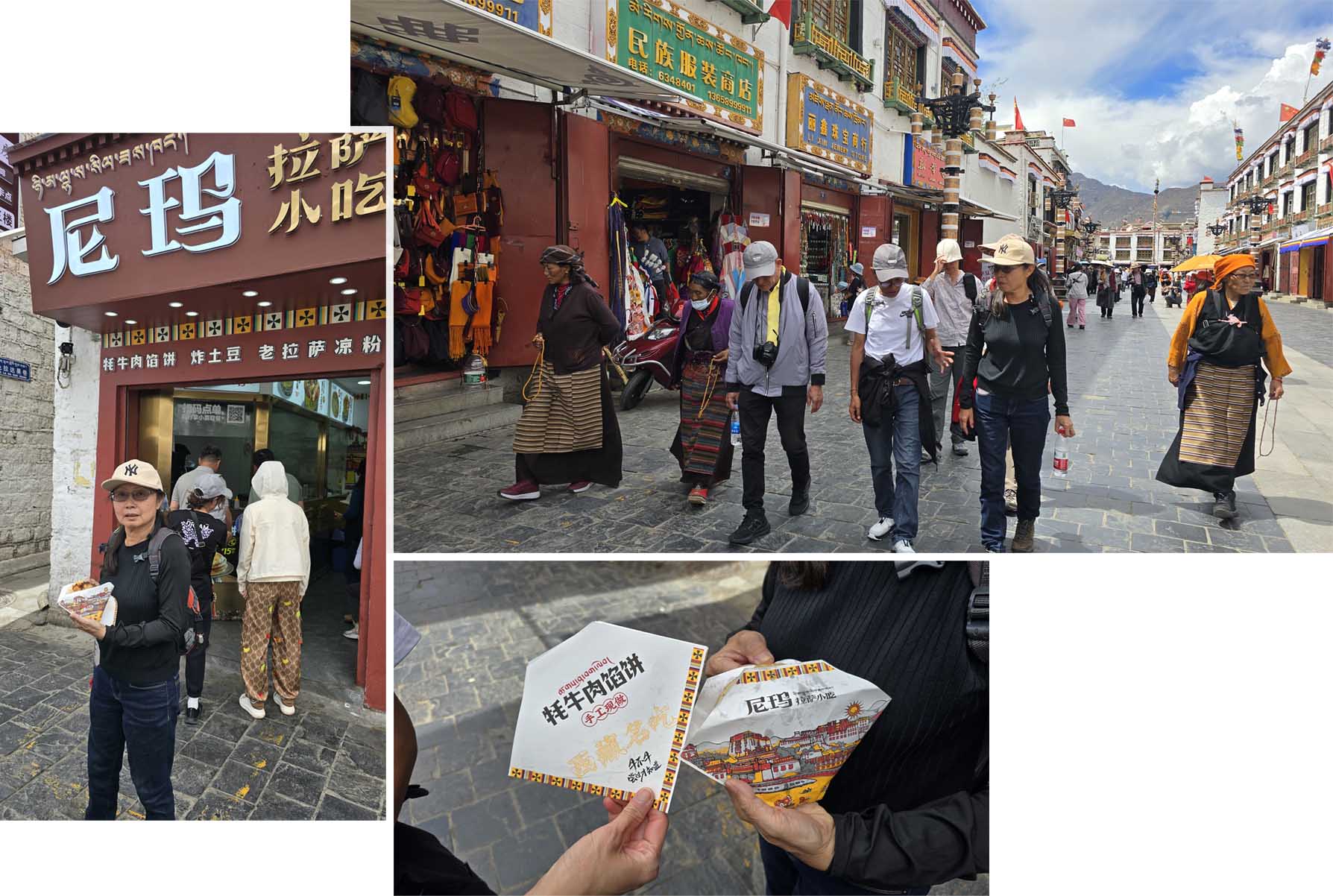
Our guide and driver met us at our lobby at 2.30 pm to bring us to visit our first “sight” (Yokhang Temple ) in the city central. The streets leading directly to Yokhang Temple (大昭寺 Dazhaosi) were off limits to vehicles so our driver let us down at a mainroad near to the temple. We walked through rows of shophouses to the temple we got very distracted by the colour local merchandises on display.

The shophouses were three-storey building, neatly painted with uniformly window shape and design. The streets leading to Jokhang temple were cobbled/tiled clean and wide. We reached Jokyoung Temple and our first impresssion was “what a beautiful golden roof”. There were many people kneeling, bowing and prostrating in a hall at Jokhang Temple. To enter the temple, we joined a queue to go through a ticketing barricade/gantry.
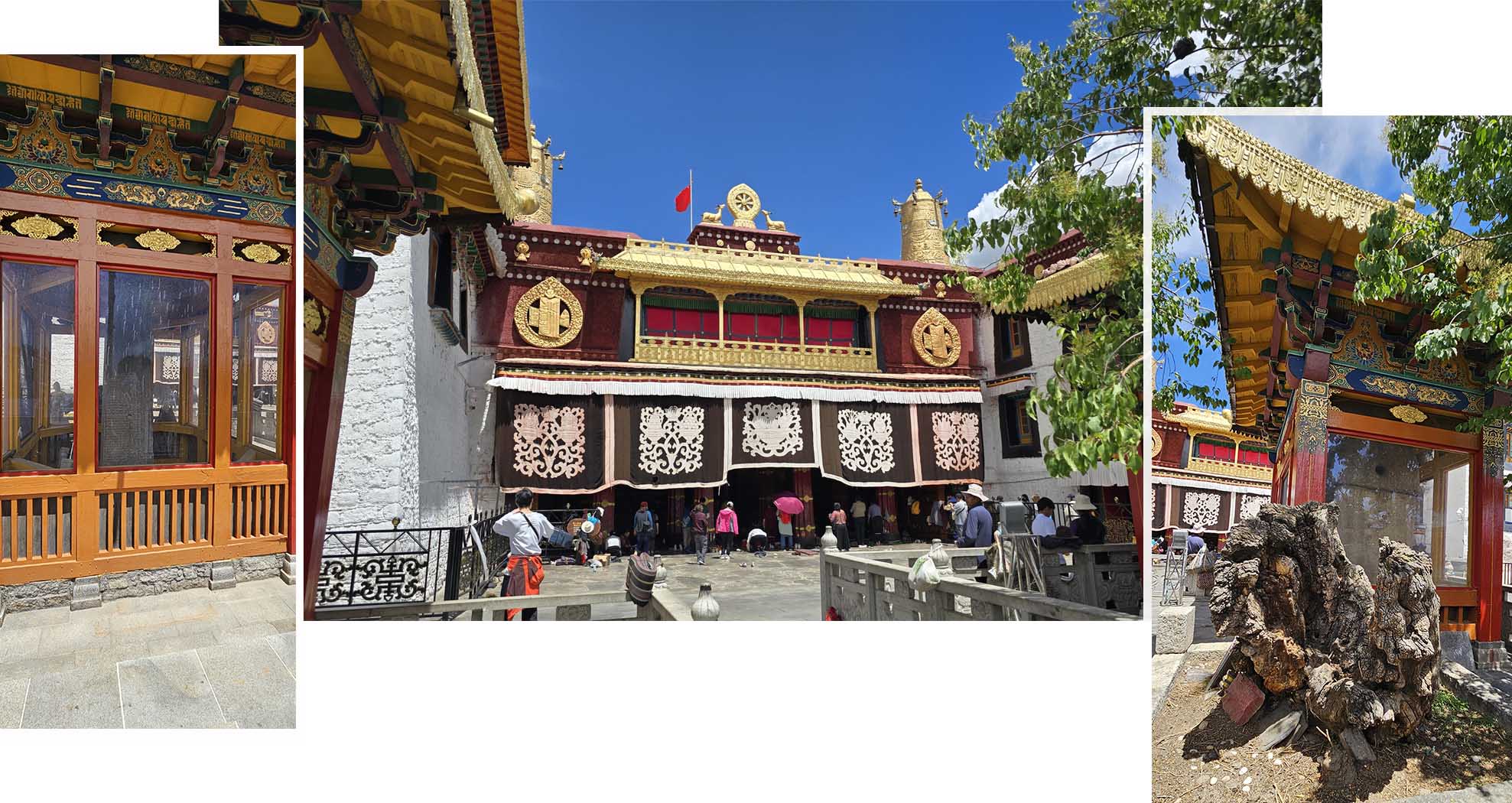
As usual to enter an attraction we needed to scan our passports to enter. Our entry tickets were bought based on our passport details. So at the entrance gantry our guide helped us to scan our passports at the scanner but it kept showing up “invalid”.
All five passports were invalid! After much “wondering what was going on?” our guide realised that the tickets were for next day 3.30pm entry! Wow our guide kind of “failed” on day 1, he was rushing us to reach Jokhang temple before 3.30 pm and then we were 24 hour too early!!
Apparently our guide did not read the itinerary, on arrival to Lhasa it was suppose to be rest and relax. Our driver had already left for the day after he let us down earlier on. So we just had to stroll around the streets and “look look see see” before going back to our hotel.
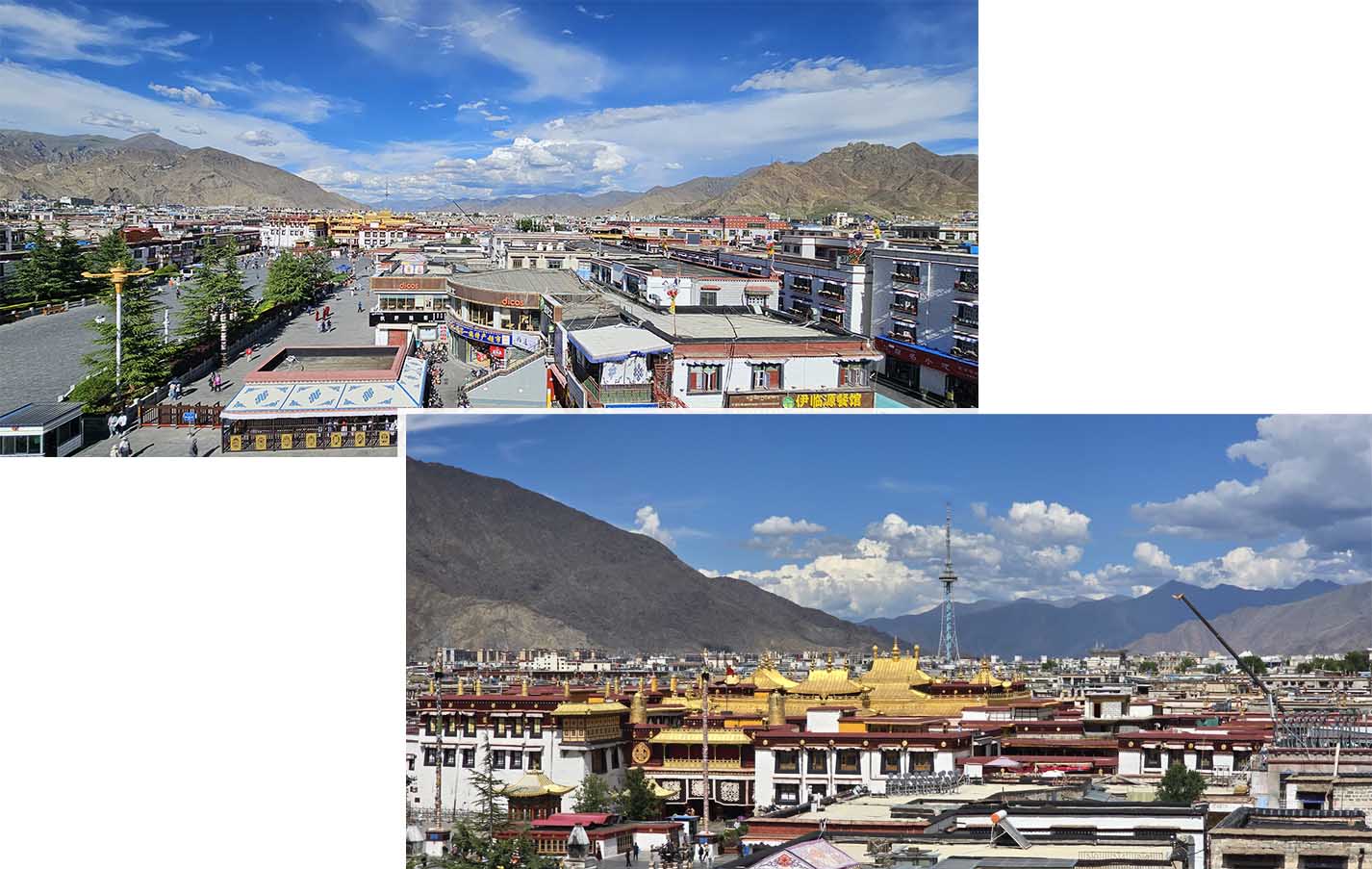
After a couple of streets we decided to look for a “high place” to rest & relax, to have coffee with a view. We found a nice roof top cafe, 山隐观景露天咖啡厅(北京东路店), and went up to have our cafe latte and a view.

Beside drinking cafe latte we were treated with a wonderful view of Potala Palace. The roof top even had a raised platform especially for customer to go up and take great shots of the palace.
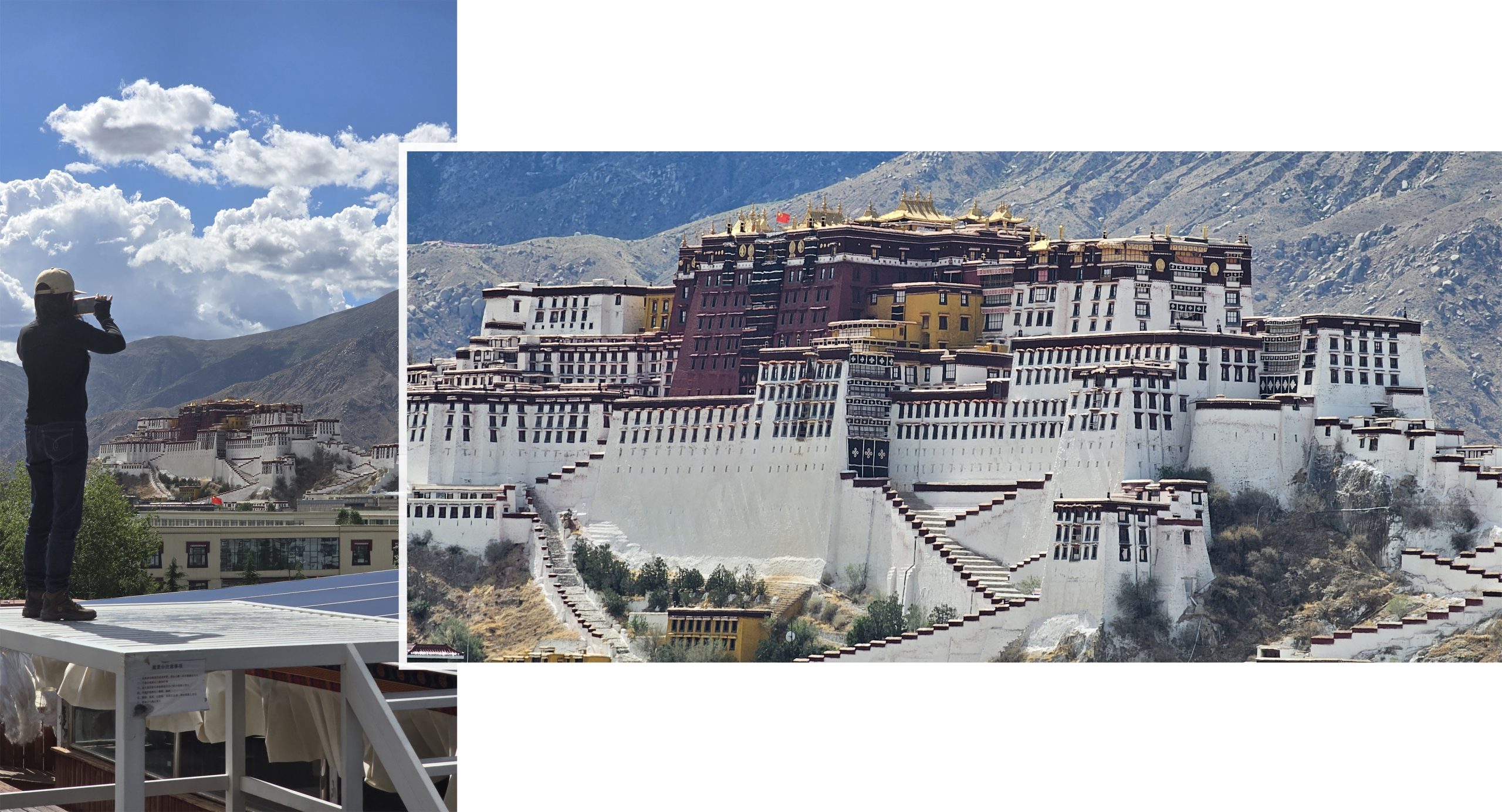
We sat at the cafe for about 1.5 hours doing not much but enjoy the view and breeze. The sky was so blue and clouds was contrasting white. It was a lovely day.
Lovely dinner in Lhasa town
We did a Baidu map search for a nice restuarant , 赞家一号藏餐-餐饮有限公司(北京中路总店), appeared and we took the walking route on the map to reached the restaurant. It was a bit confusing as we expected the restaurant to be on the ground level which would be very obvious. But on arriving on location there was no restaurant in sight. It was only on reading the sign board that we found out that the restaurant was on the 2nd level. We found a lift entrance and went up to the restaurant.

It was a large Tibetan restaurant with many tables and comfortable seats. We ordered meat, mushroom and noodle and three of us had a fantastic meal. The cost of the entire meal was ¥203.

After dinner was a slow walk to our hotel. It was a 1.2km colourful walk through the rows of shophouses to our hotel.
Our Accommodation in Lhasa
Our hotel was in Lhasa was listed as “Paradise International Hotel”, in our itinerary by our Tour Agency. Upon arriving a Lhasa we checked the internet and found that there were actually two hotels with the word “paradise” in their names, one was “Lhasa Snow Paradise International Hotel (Potala Palace)” and the other was “InterContinental Lhasa Paradise“. We had emphasized to our agency that we wanted five stars hotel so we were thinking that we would be “InterContinental Lhasa Paradise” which seemed the classier of the two.
Unfortunately we were assigned to “Lhasa Snow Paradise International Hotel (Potala Palace)” . Both the hotels were five stars but one was probably a “better five stars” than the other.

We would be staying in Lhasa Snow Paradise International Hotel (Potala Palace) for three nights. Our room was big clean and SMART. We had so much fun using our voice to control the lights, curtains, tv, flushing cistern etc etc. When we sleep at night we just said in Mandarin “Good Night XiowDu” and XiowDu would shut down lights and tv, close the curtains etc etc.

Actually Lhasa Snow Paradise International Hotel (Potala Palace) had a wonderful roof top cafe/restaurant with a wonderful view of Potala Palace, unfortunately it was not highlighted to us by the Chinese reception staff or our English speaking guide. So we did not went up the cafe throughout our three-day stay.