Breakfast at our Hotel
We had breakfast in our hotel, Lhasa Snow Paradise International Hotel (Potala Palace), it had a lovely spread and we enjoyed our breakfast leisurely a large dining hall of the hotel.

Potala Palace
We arrived at Potala Palace at about 10.30am, 30 minutes before our entry time. Our guide had already purchased our tickets. We queued to enter the gantry and showed our passports and tickets to enter. The tickets were bought based on our passports.
Tickets could be purchased 10 days in advance through the official WeChat mini program using identification/passport. There was also a limit placed on the number of visitors entering the palace a day. Ticket price was ¥200 per person for peak season and ¥100 per person during off peak season. 50% discount was given to senior age 60 and above.
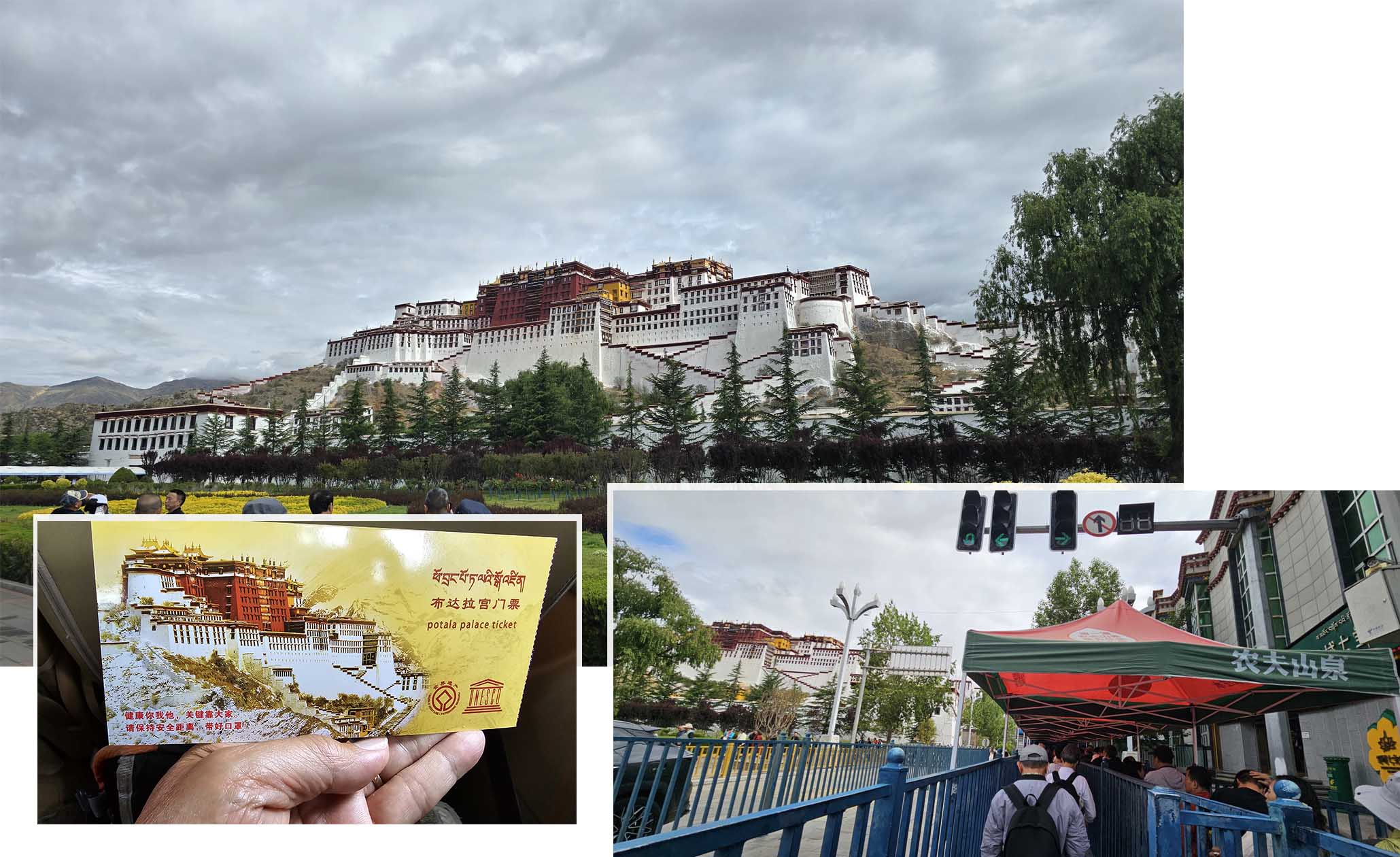
The palace was name after Mount Potalaka. Mount Potalaka was the mythical abode of the Bodhisattva Avalokitesvara. The palace was constructed in 1645 by the order of the 5th Dalai Lama on a site of an earlier palace. Potala was built at an altitude of about 3700m, the palace measured 400m east to west and 350m north to south.
Its sloping stone walls average 3m thick, 5 m at the base. It rosed 13 stores and had more than 1000 rooms, 10,000 shires and 200,000 statues.
The Potala Palace served as the winter palace/residence of the Dalai Lamas from 1649 to 1959. After the annexation of Tibet by the People’s Republic of China and the fleeing of the Dalai Lama (14th reincaration) and his government to India, this palace was later turned into a museum.
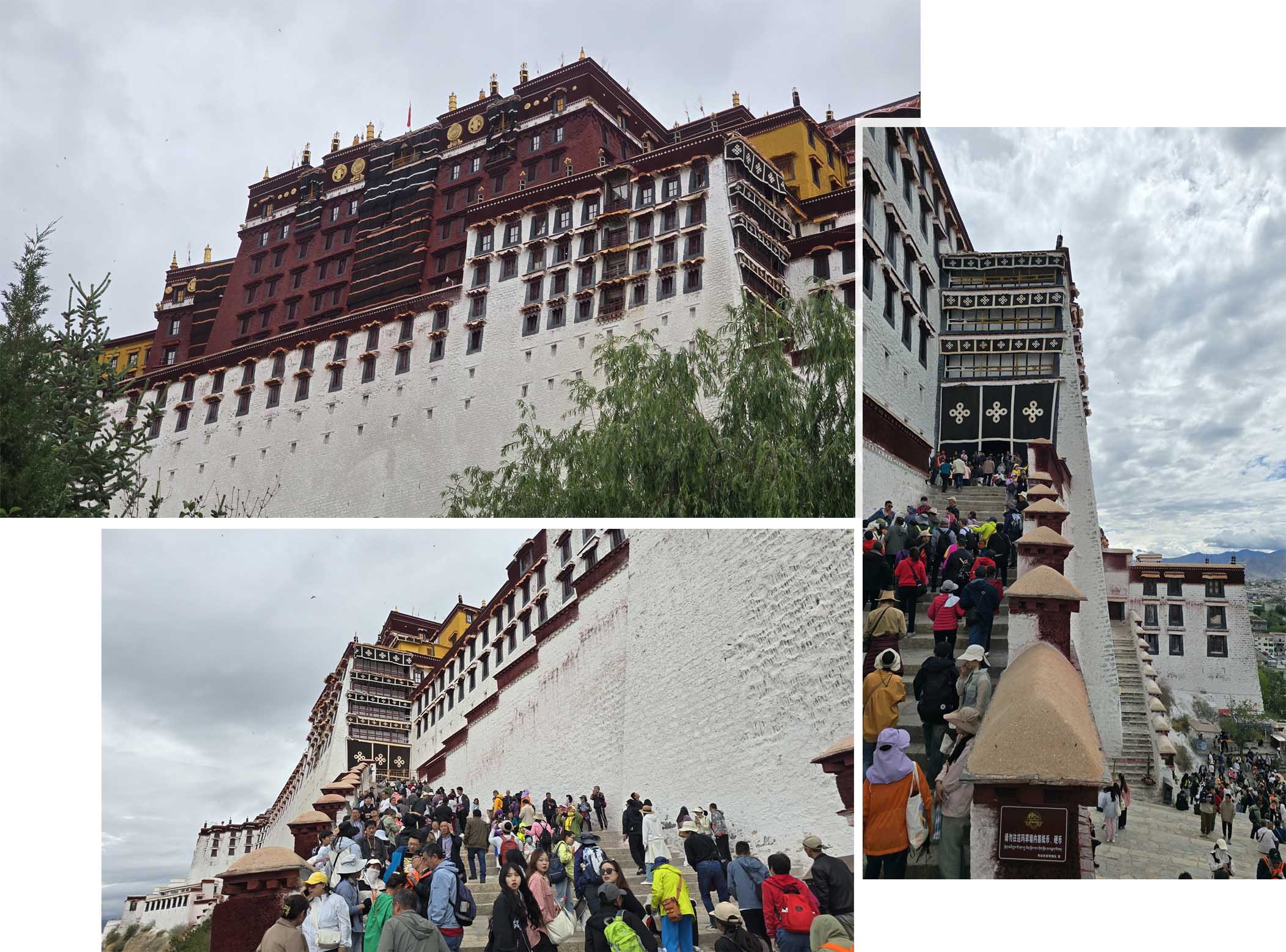
We spent two hours exploring Potala Palace with our guide. Listening to his briefing on “this and that”. We entered and exited rooms after rooms, halls after halls, went up and down stairs, walked through corridors all the time listening to our guide explanation on Dalai Lama sleeping here, reading there, in consultation with his team in this hall, waving to his worshippers/citizens from this window. This was his bed, that was his chair, over there was his car etc etc. We could only see and hear strictly no photography!
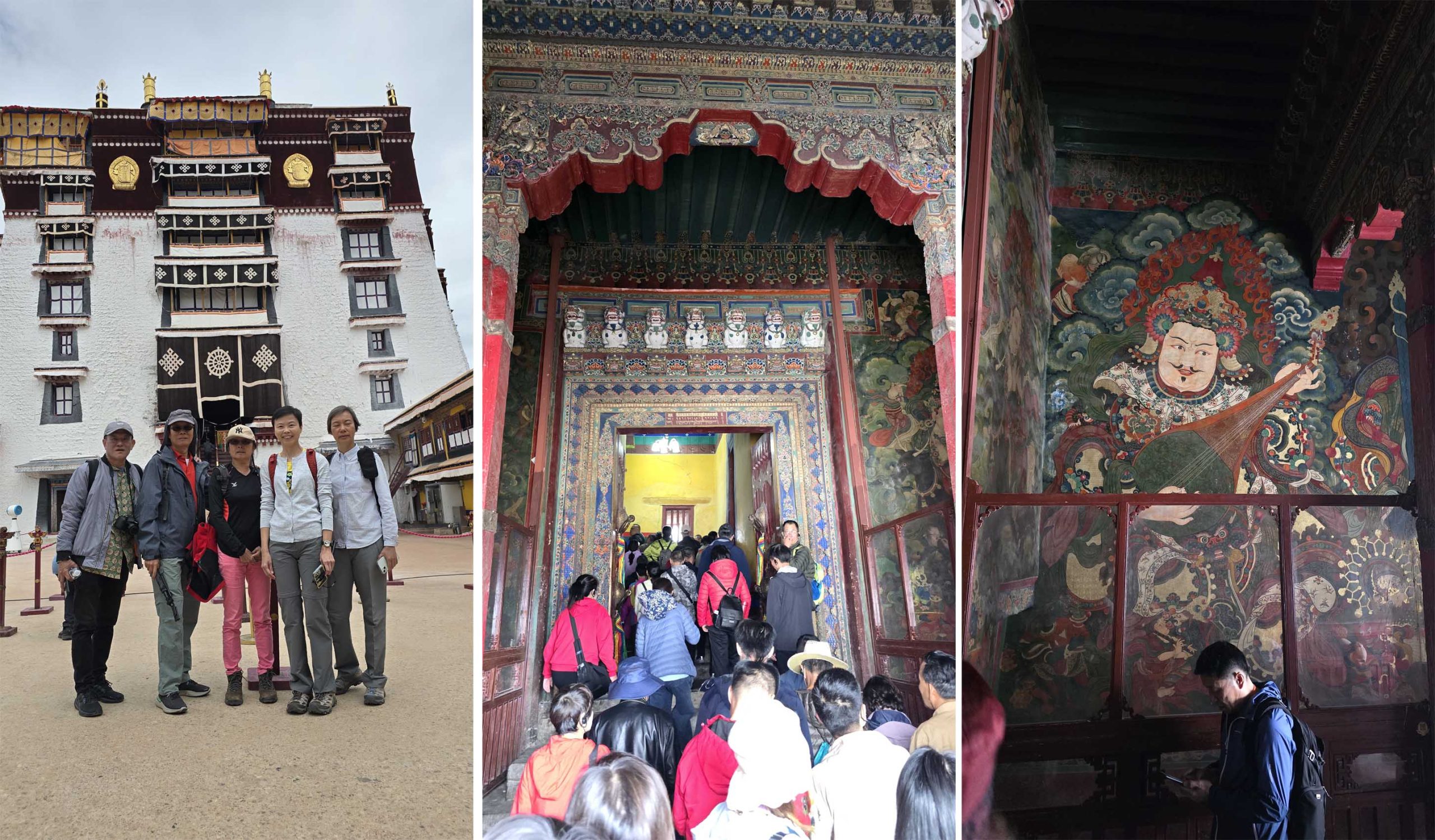
Generally the interior environment was very gloomly and dark, the displays/artifacts were covered with dust. There were many butter lamps with lighted wicks floating in a small saucer liked bowls fill with butter oil. We saw some locals/visitors pouring the butter oil they brought, into these bowls, to keep the wicks burning. The place were also littered with 1 yuan notes, they were stuck on shrines, on artifacts etc, these were offerings. For those without cash they could “offer” via Alipay or Wechat QR codes that were displayed everywhere.

Potala Palace certainly looked grand and majestic from the outside. It was an item in our bucket list of places to visit in our lifetime. We did feel sad visiting the interior as it was a symbol of a replaced government, a government that was forced to flee, a government that lived in exiled and still trying hard to return. A government that might be forgotten by the locals that stayed behind.
Certain sectors of the Tibetan society were “thankful” to the new government as there were more opportunity to grow and to improve to advance to be inline with modernisation. While certain sectors were very unhappy because the society were not living a daily life tightly revolving around all religous matters.
In the morning just outside Potala Palace we saw many old tibetans spining hand held prayer wheels slowing walking outside the palace, we were told by our guide that they were walking round the palace which was a religous rituals practiced daily.
View of Potala Palace from afar
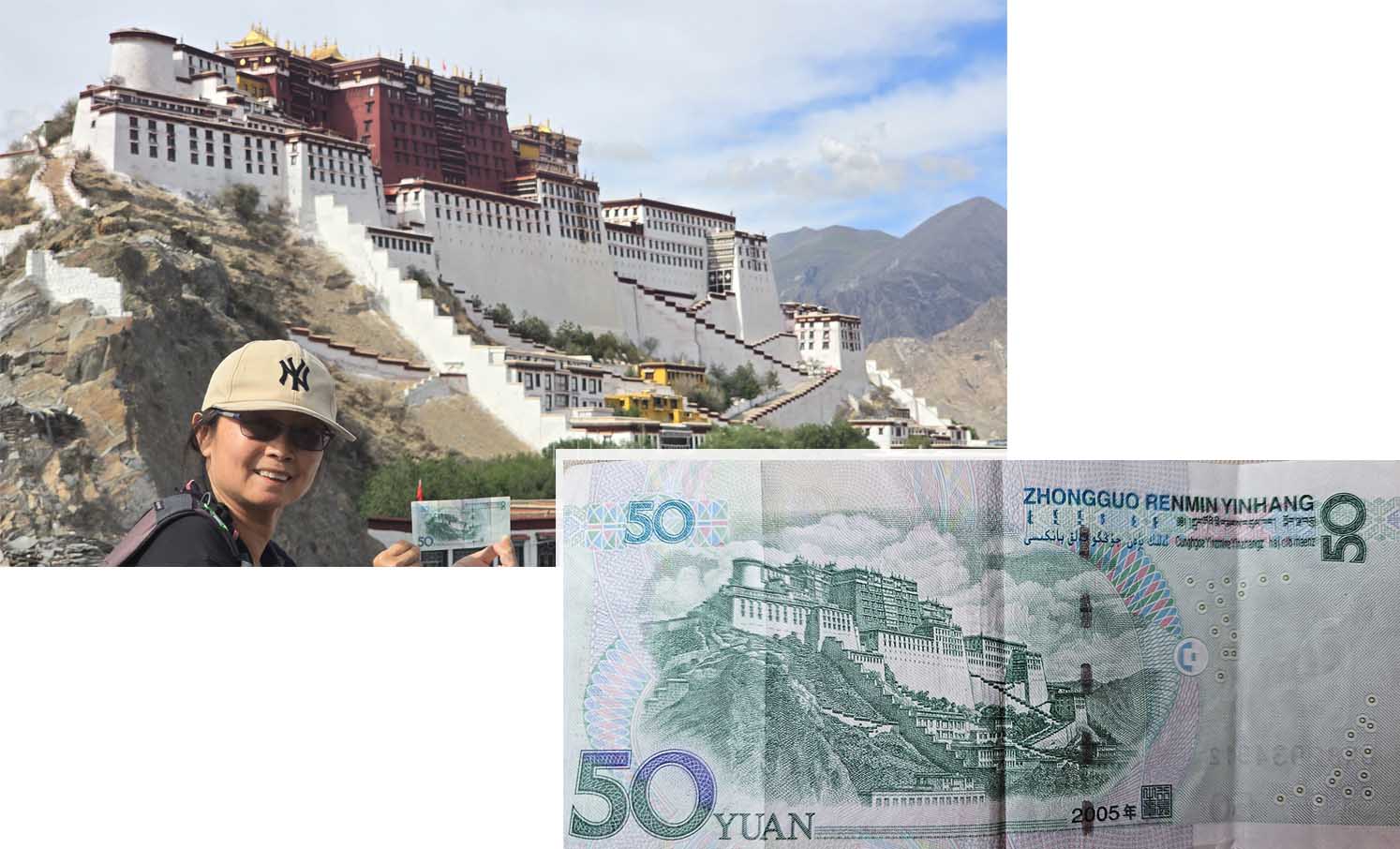
We showed our guide a picture of the Potala Palace printed behind the 50 dollar yuan bill and requested that he brought us to that location where we could see the palace from that angle. He was familiar with the location and brought us there. It was a viewing platform on a highground, we went up the stairs and found many visitors queuing to take the iconic shot!
We had fun taking photo of Potala Palace with the 50 dollars bill!
Jokhang Temple
For the 2nd time in two days we queued outside Jokhang Temple to get in. Our guide made a mistake and brought us to the temple the day before when all our passports/tickets were “invalid” for entry. One thing for sure their ticketing checking system was very good.
Entry tickets were available on Trip.com. The price printed on our ticket was ¥85 per person.
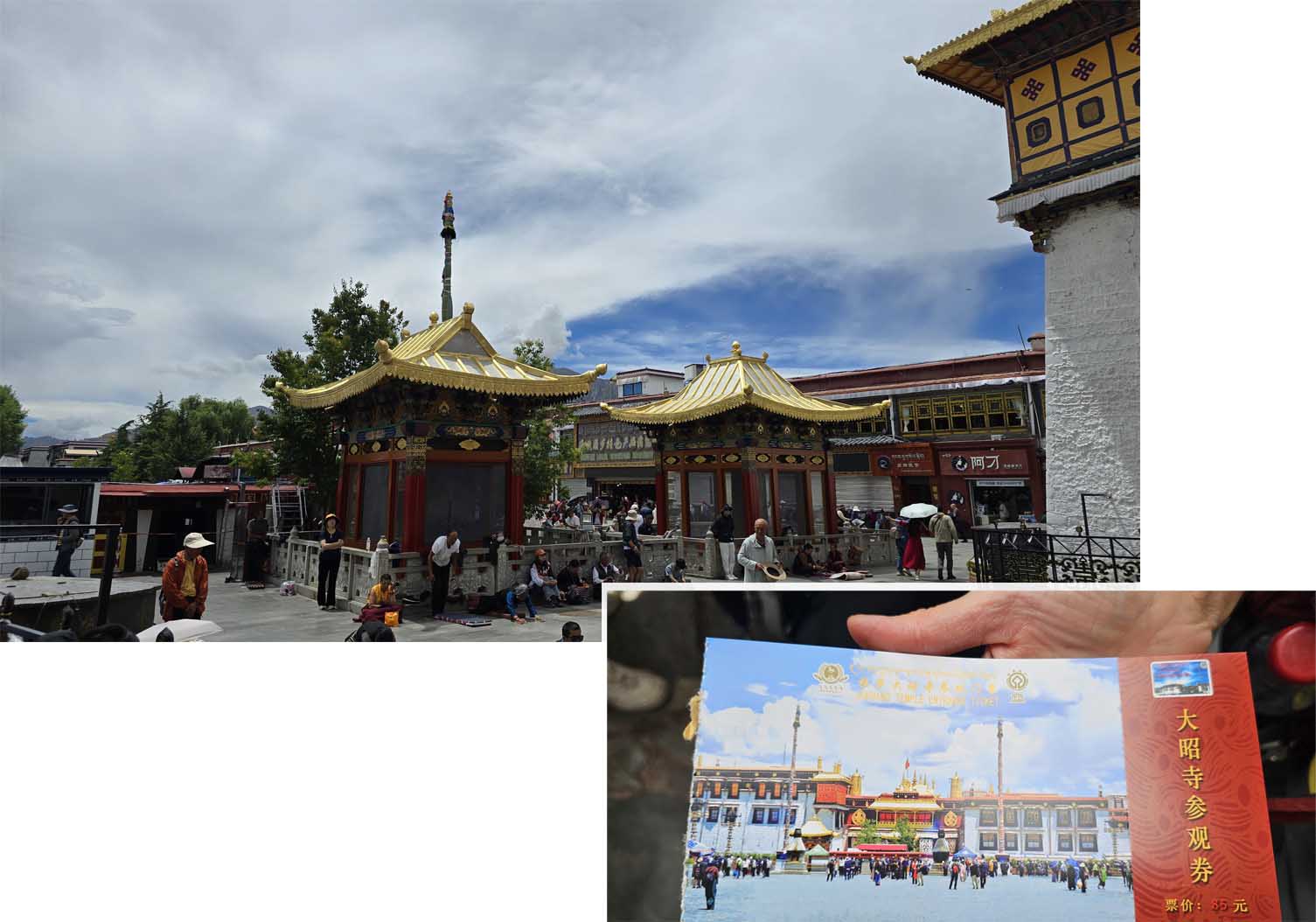
The physical ticket was not needed to enter the temple, entry was done by scanning our passport. During the purchase of the tickets our passport details were used. So the physical ticket was a souvenir to bring home.
The Jokhang temple was a Tibetan Buddhist temple and a Gelug school monastery. It was built by King Songsten Gampo in AD 640 to house a statue of Akshobhya Buddha, brought to Tibet by his Nepalese queen. The same temple also housed another statue, the Jowo Shakyamuni brought in by his Tang Chinese queen Wencheng.
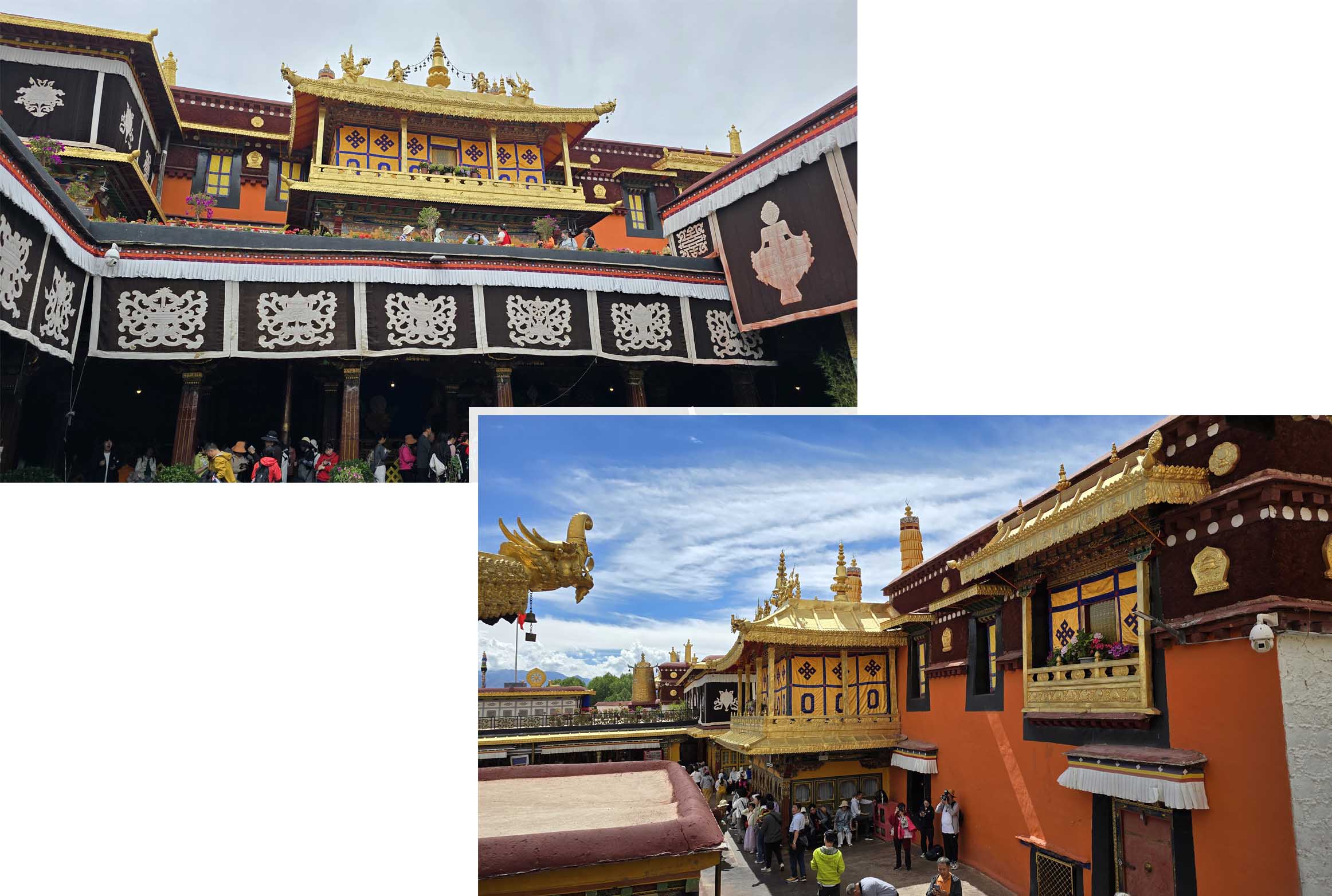
During the Chinese Cultural Revolution, the temple was attacked by the Red Guard. in 1966 and for a decade there was no worship at the temple. The temple underwent renovation from 1972 to to 1980 and in 2000 Jokhang Temple became UNESCO World Heritage Site as an extension of the Potala Palace.
As usual photography in the interior (rooms and halls) of the temple was strictly prohibited.
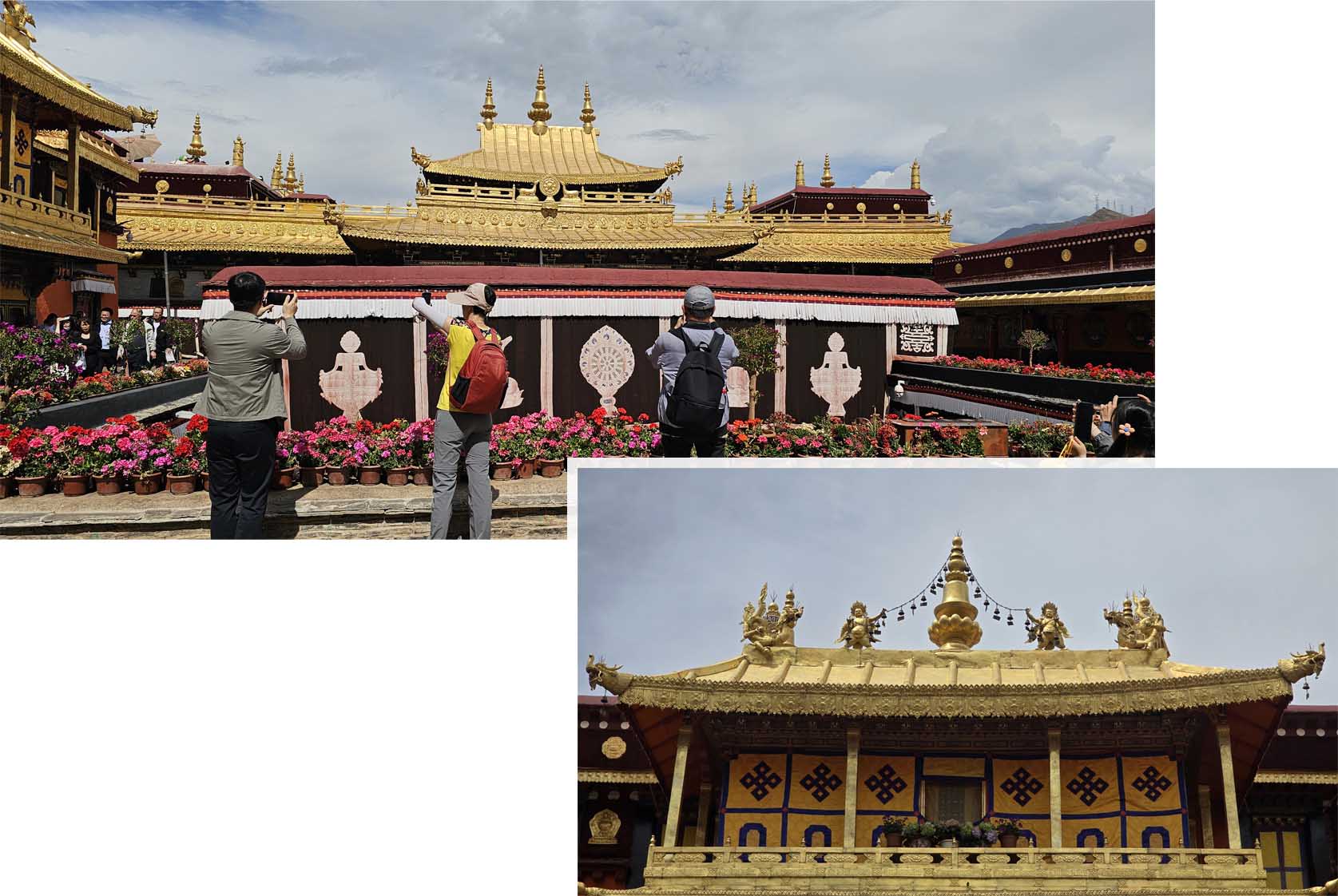
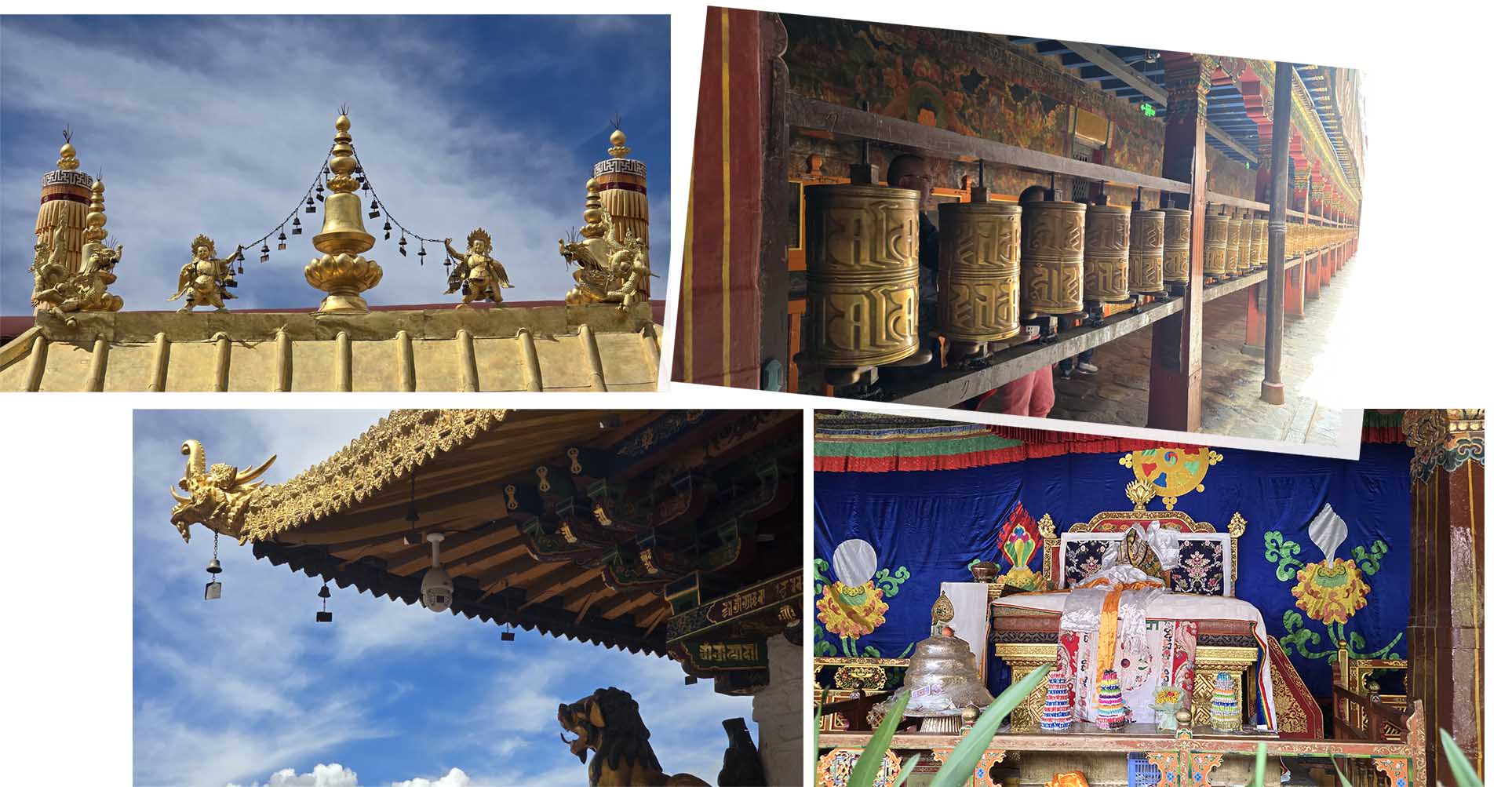
Jokhang temple was full of “Gold” not sure if they were gold or bronze. The most important relic/treasure of Jokhang Temple was the stutue of Sakyamuni Buddha (brought in by Princess WenCheng). It was made of gilded bronze 1.5 meters in height, It represented the Buddha when he was a 12 years as prince. The Buddha weared a bejeweled crown and dress superb and luxury clothes.
Dinner
It was really difficult getting restaurant recommendation from our Tibetan guide or driver. When we asked where could we go for nice food, they had no idea. Which restaurants were good where should we go for good dinner? Everything … no idea! It was very unimaginable. that being in the tourist industry they could not give us any recommendation!
We could only depend on Baidu Search to get us to a nice restaurants to have our dinner. In the meantime our driver and guide were off-work for the day. After dinner we “Di-Di” back to our hotel. Luckily we were familiar with “Di-Di”a taxis using Alipay and Wechat.
