Three Attractions in one day
We visited three attractions for the day. Two monasteries and one Park. The attractions were not very far from Lhasa Central all within a 6 km radius. The entrance tickets to Drepung Monastery was ¥60, Sera Monastery was ¥50 and Norbulingka Park was ¥60. Our guide purchased all our entrance tickets on site. Everytime he purchases the tickets he needed to show our passports and our Tibet Entry Permit to the ticketing counter staff. This was the requirement for foreigners visiting Tibet.

Drepung Monastery
Our first visit for the day was Drepung Monastery (哲蚌寺, Zhébàng Shi) it was located at the foot of Gambo Utse Mountain about five kilometers from Lhasa. It was one of the “great three” Gelug monasteries of Tibet. The other two were Ganden Monastery and Sera Monastery.
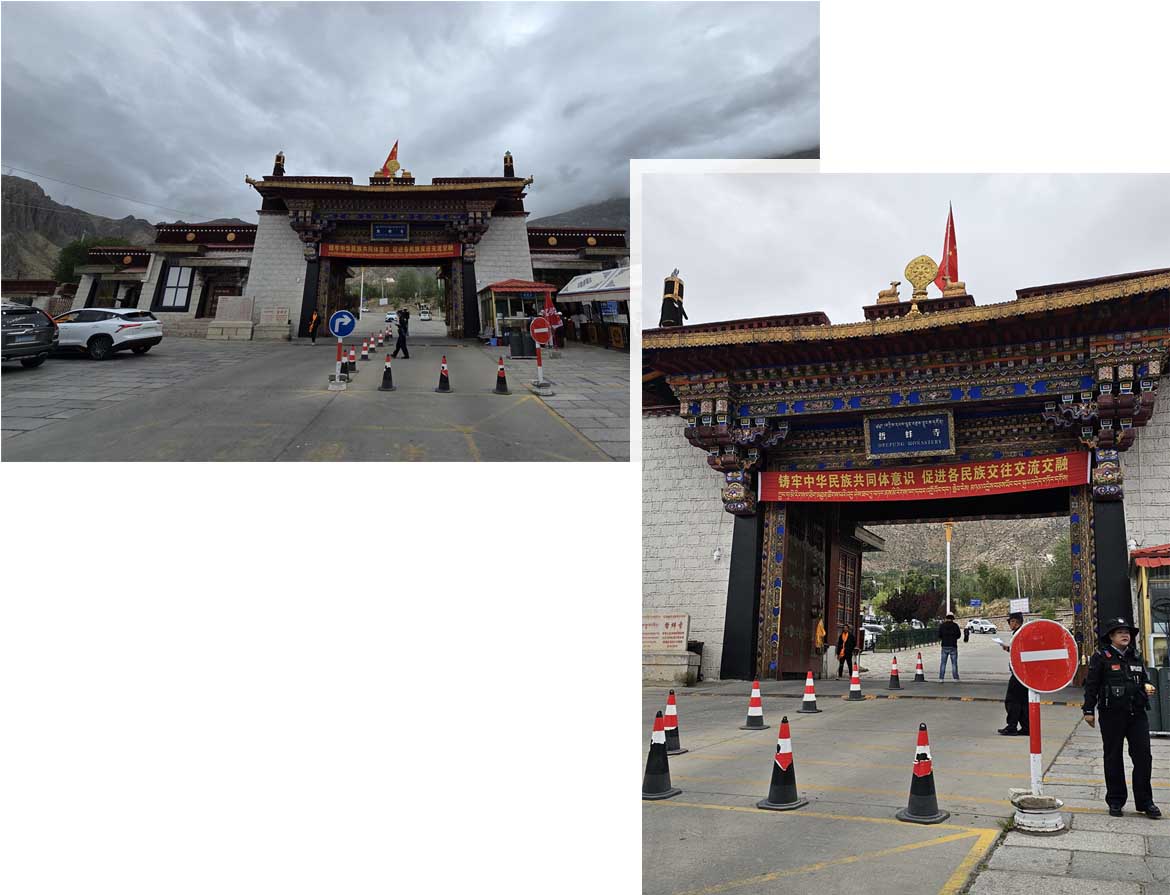
We arrived at the entrance of the monastery at about 9.30am. There we alighted from our van and trekked uphill to a white monastery complex. Our our way uphill we saw many red-robe nuns going uphill too.
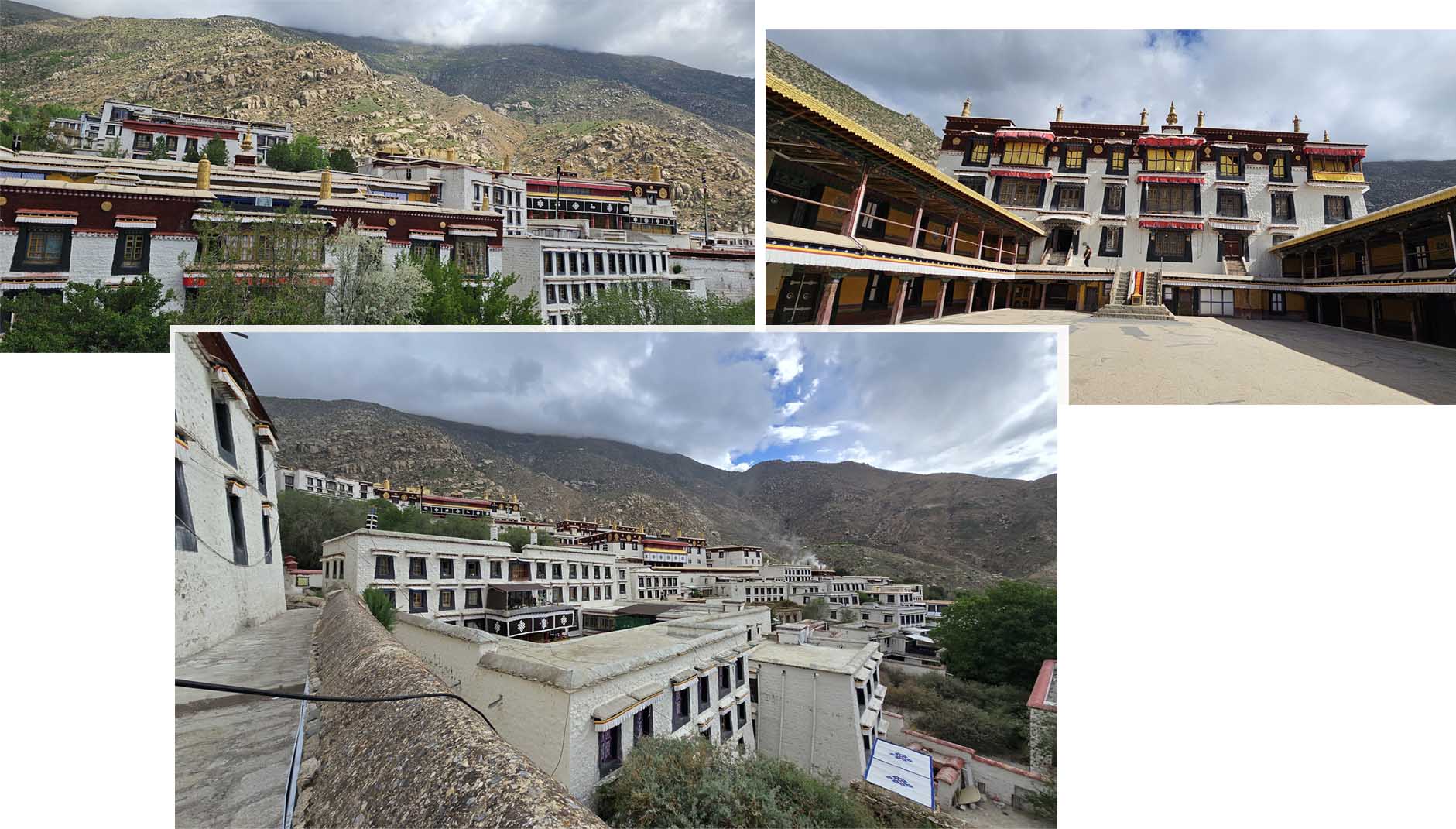
The monastery complex was spread out over the lower hillside of Mount Gambo Utse and could be seen from afar. The stunning white buildings of the monastery stood out against the stark mountain landscape.
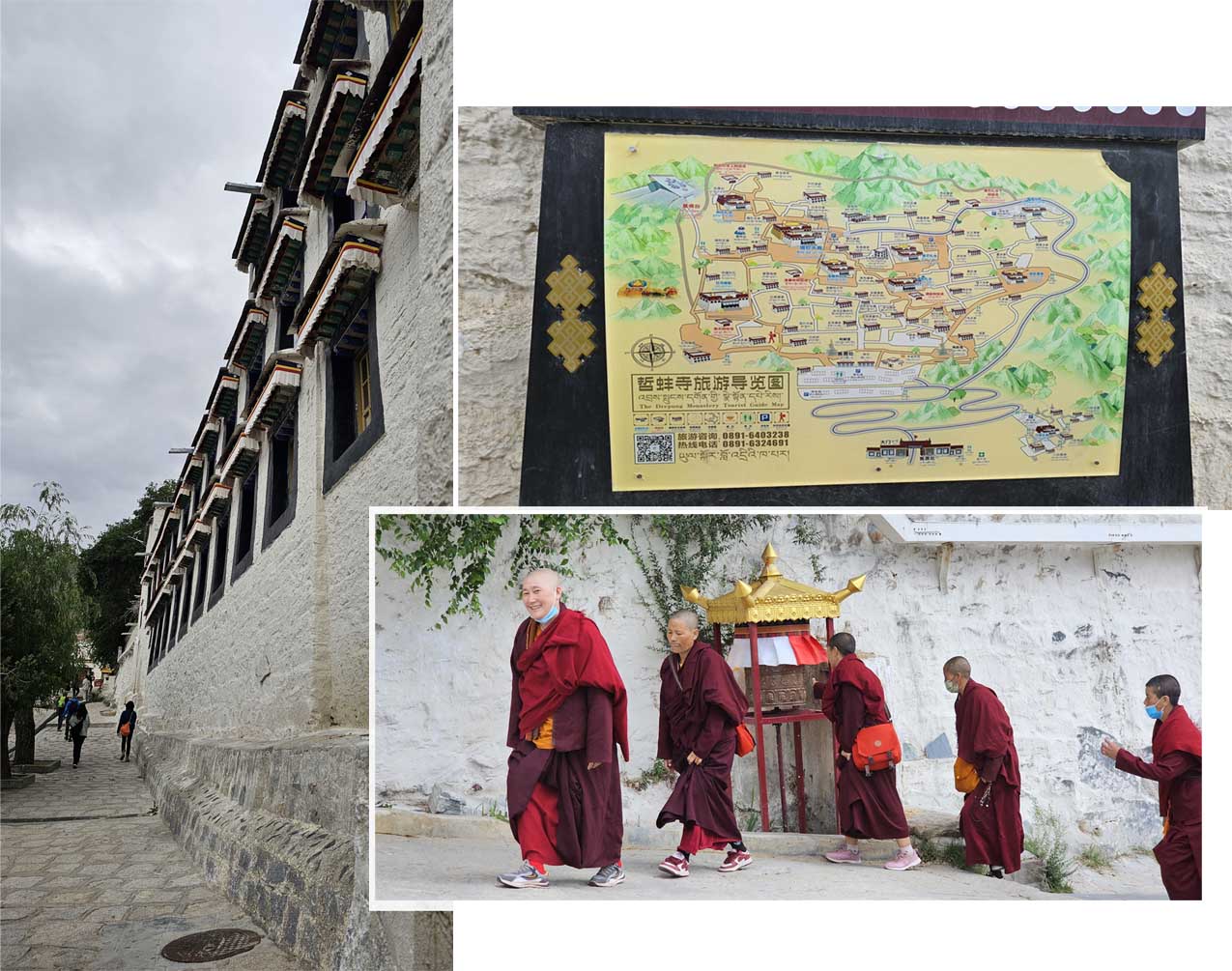
Drepung Monastery was Buddhist architecture on a grand scale, covering more than 250,000 square meters of ground. At the peak of Buddhism in ancient Tibet, this monastery held around 7,700 monks, the largest collection of Gelug monks, lamas, and initiates in Tibet.
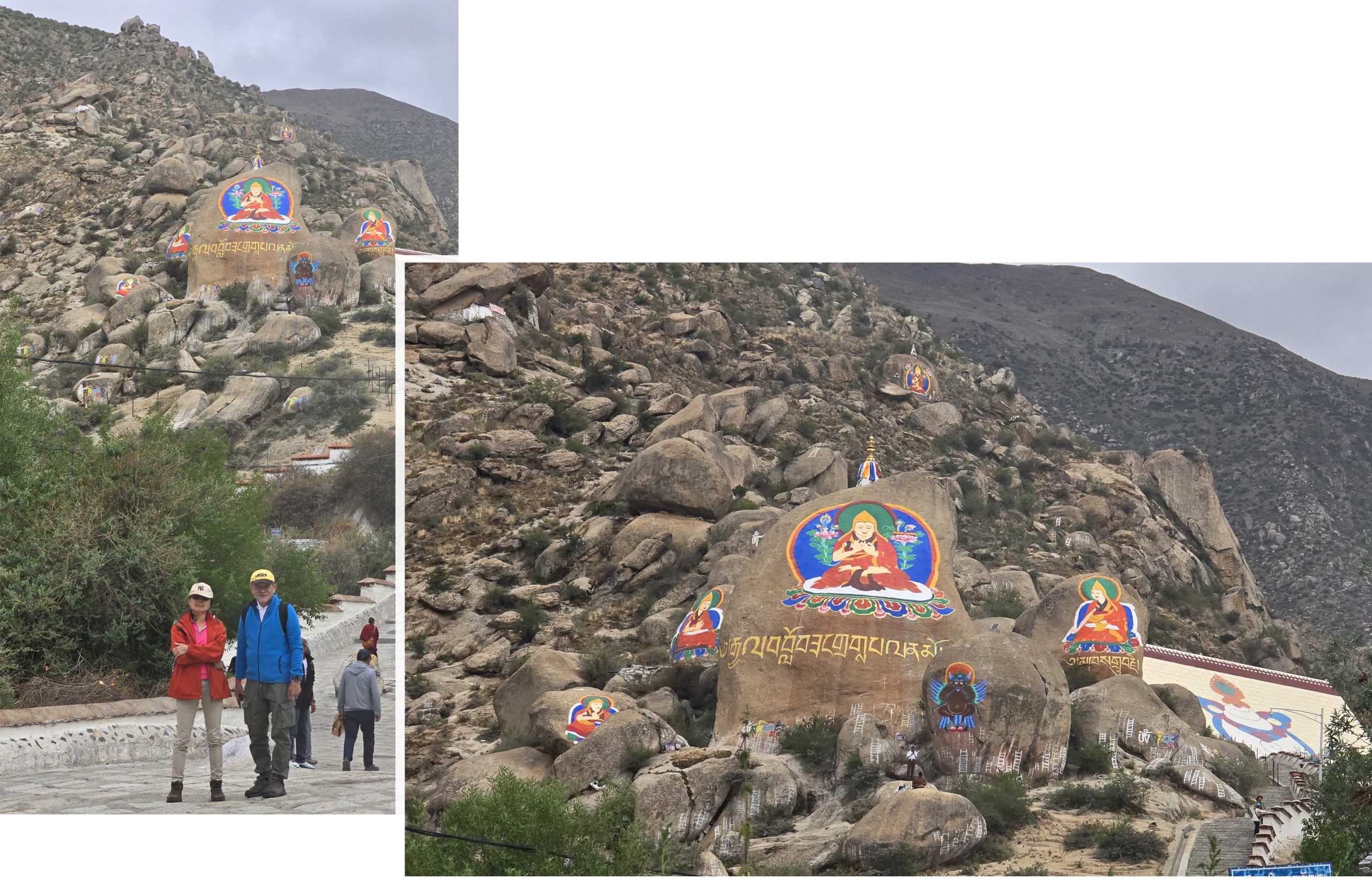
As we walked uphill we saw some rock paintings. It looked like a painting of a lama. The colours in the painting were brilliant and fresh, we suppose these paintings were repainted frequently?
The monastery was founded in 1416 by Jamyang Choge Tashi Palden, the disciple of the great Tibetan Buddhist teacher, Je Tsongkhapa, the founder of the Gelug School. The monastery was named after the sacred temple of Shridhanyakataka in southern India.
Drepung Monastery was the principal seat of the Gelug School, and still retained its place as the primary monastery of the Gelugpa. After its construction, it became the home of the Dalai Lamas, until the move to the Potala Palace in the 17th century.
Religious activities were the lifeblood of Drepung Monastery. Throughout the year, monks engaged in daily prayers, meditation, and scriptural studies. The most famous religious festival held here was the Shoton Festival which took place in summer. During the festival, a huge thangka (a religious painting on silk) of Buddha was unfurled on the hillside, drawing thousands of pilgrims and tourists who came to pay homage and seek blessings. The air was filled with the sound of chanting monks, the smell of incense, and the vibrant colors of traditional Tibetan costumes.
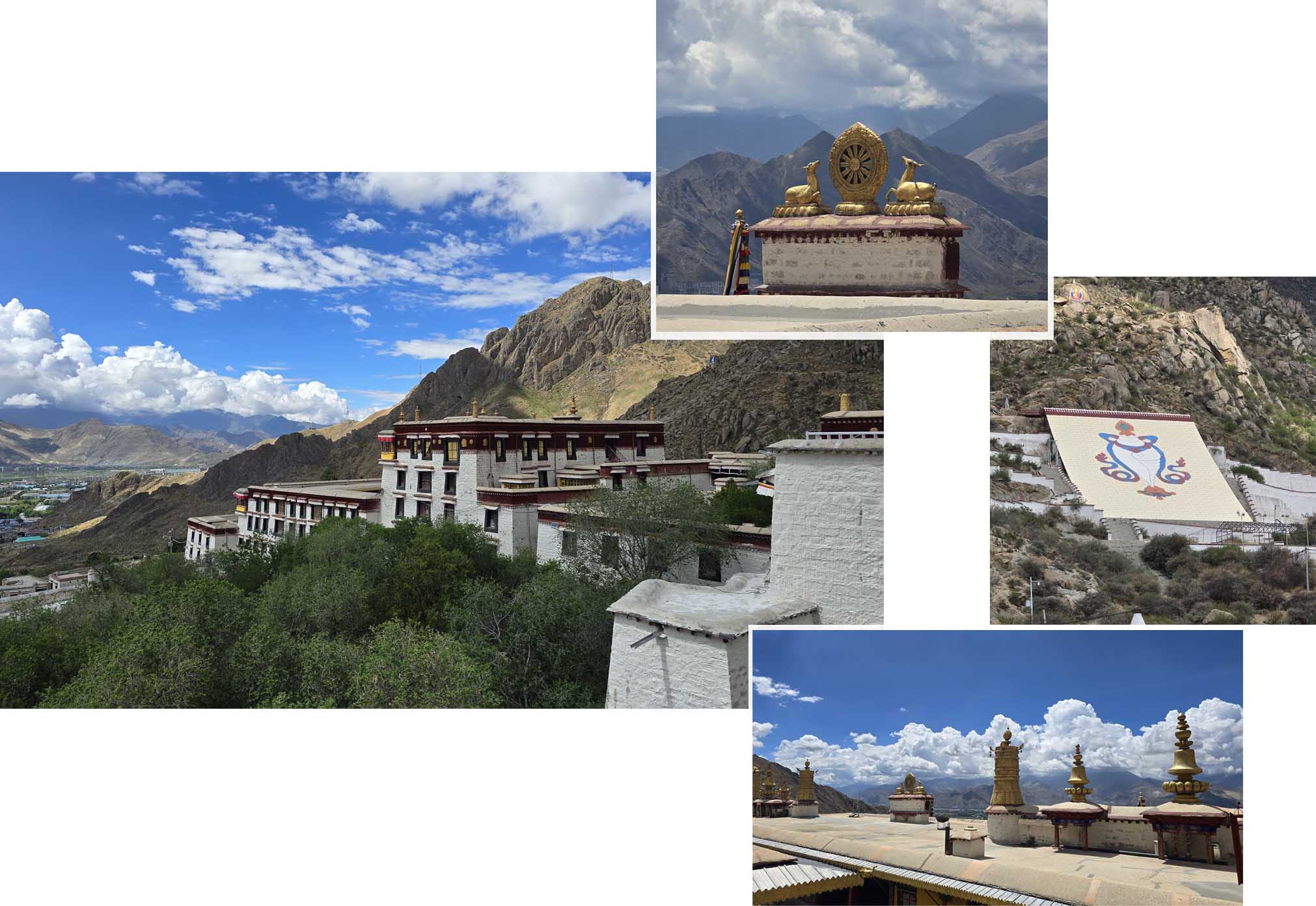
As like other monasteries, photography inside the halls and rooms was prohibited. We walked through the complex, in and out of halls and rooms, looking at shrines, furnitures and statutes, courtyards and corridors, moving from one building to teh next. Generally the interior of Drepung Monastery was less gloomy compared to the interior of Potala Palace.
Norbulingka Park
For the last two days we frequently drove past a park called Norbulingka Park. Our park visit was not due till today. Norbulingka Park was also called the “Summer Palace of Lhasa”, this Tibetan park sited in the western suburbs of Lhasa and was 2 km east of Potala Palace. It was once the Summer Palace of the Dalai Lamas. In the park were many palace buildings some as old as 200 years old.
There was entrance fee to Norbulingka Park and the tickets were available on Trip.com.
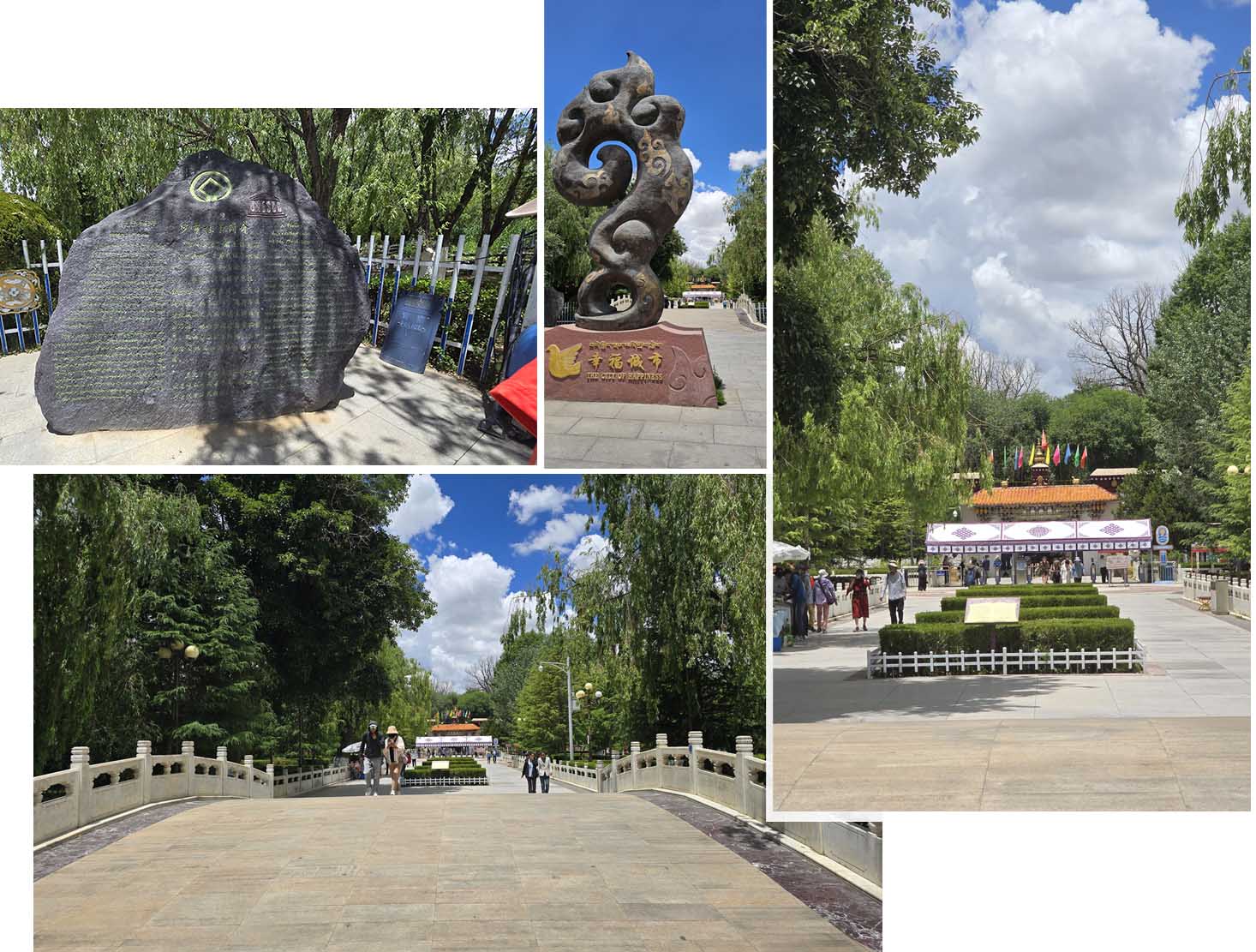
Norbulingka Park or 罗布林卡 (in chinese) meant Jeweled Park. It was built by the 7th Dalai Lama and served both as residence of the Lama, administration centre and religious centre. It was the summer residence of successive Dalai Lamas from the 1789s until the 14th Dalai Lama before his exile in 1959 to India.
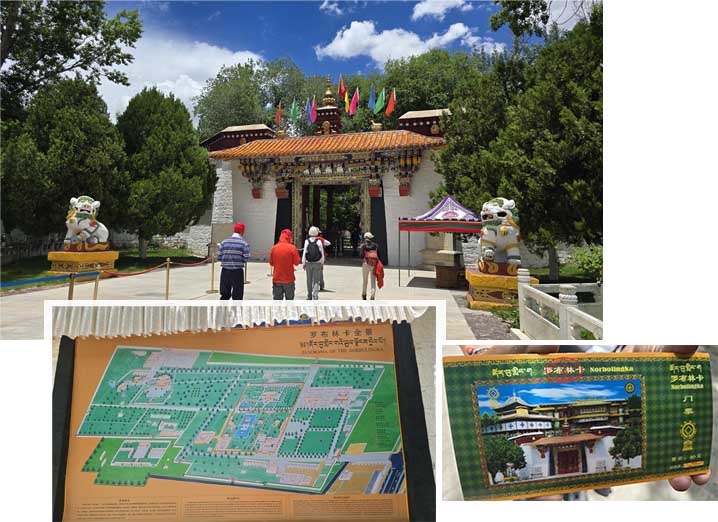
Norbulingka Park covered an area of 360,000 square meters. The main buildings are Kelsang Phodrang, Tsokyi Phodrang, Golden Phodrang, Xia Dian Lhakang, Dadan Mingjiu Phozhang (New Palace), with 374 rooms, and was the largest man-made garden in Tibet.
We visited several Phodrangs (palaces), all had entry doorways leading into a beautifully landscape garden before the main building/palaces.
Daden Mingjiu Phozhang (Takten Migyur Potrang, (达旦明久颇章) was the most recent palace. It was built by the 14th Dalai Lama in 1954 and was the most elegant and largest palace with a fusion of a temple and villa in present Tibetan architecture.
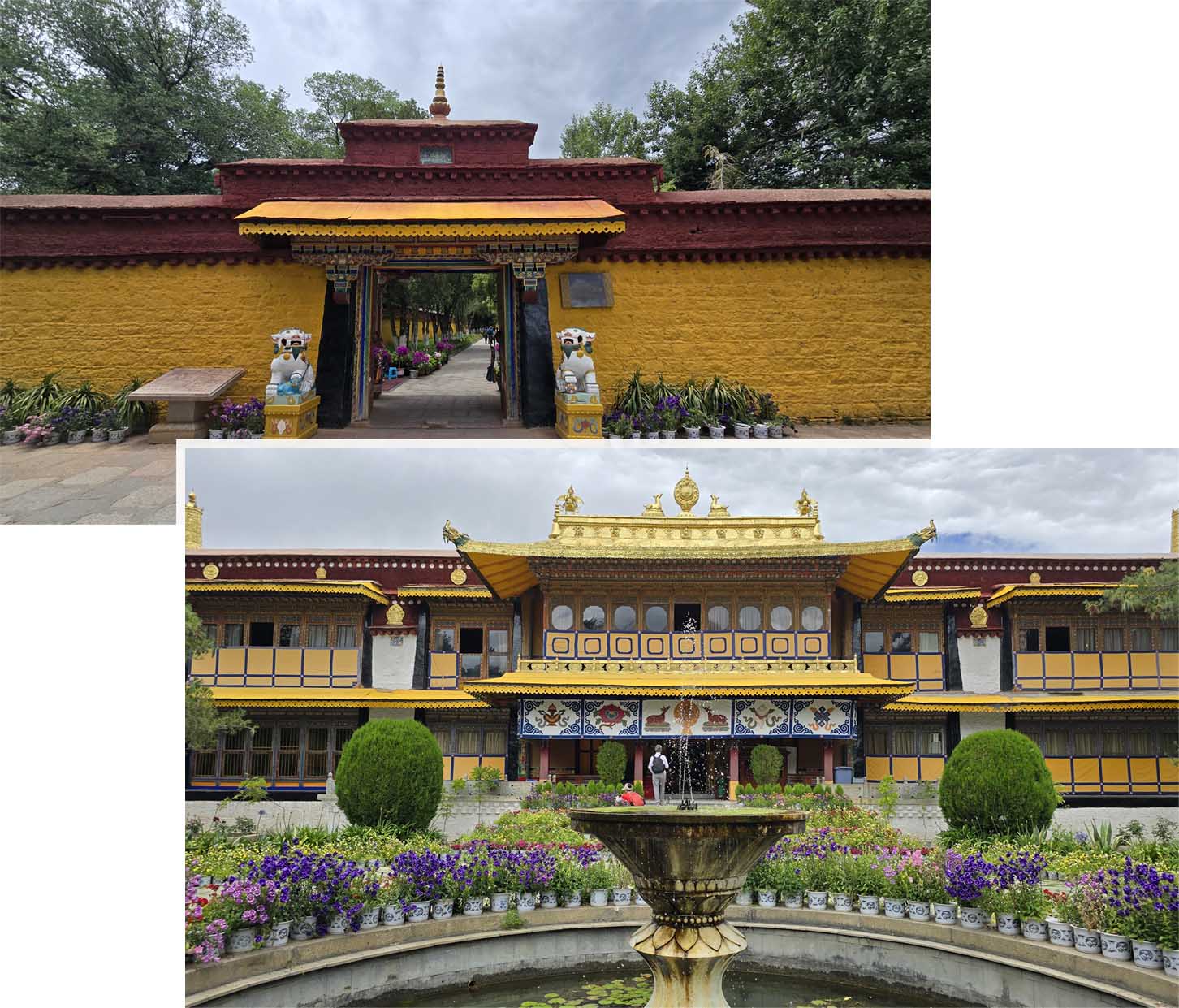
Kelsang Phodrang (格桑颇章) was the first palace built in the park, it was named after the 7th Dalai Lama, Kelsang Gyatso (1708 – 1757). In the hall there were various Buddha statues.
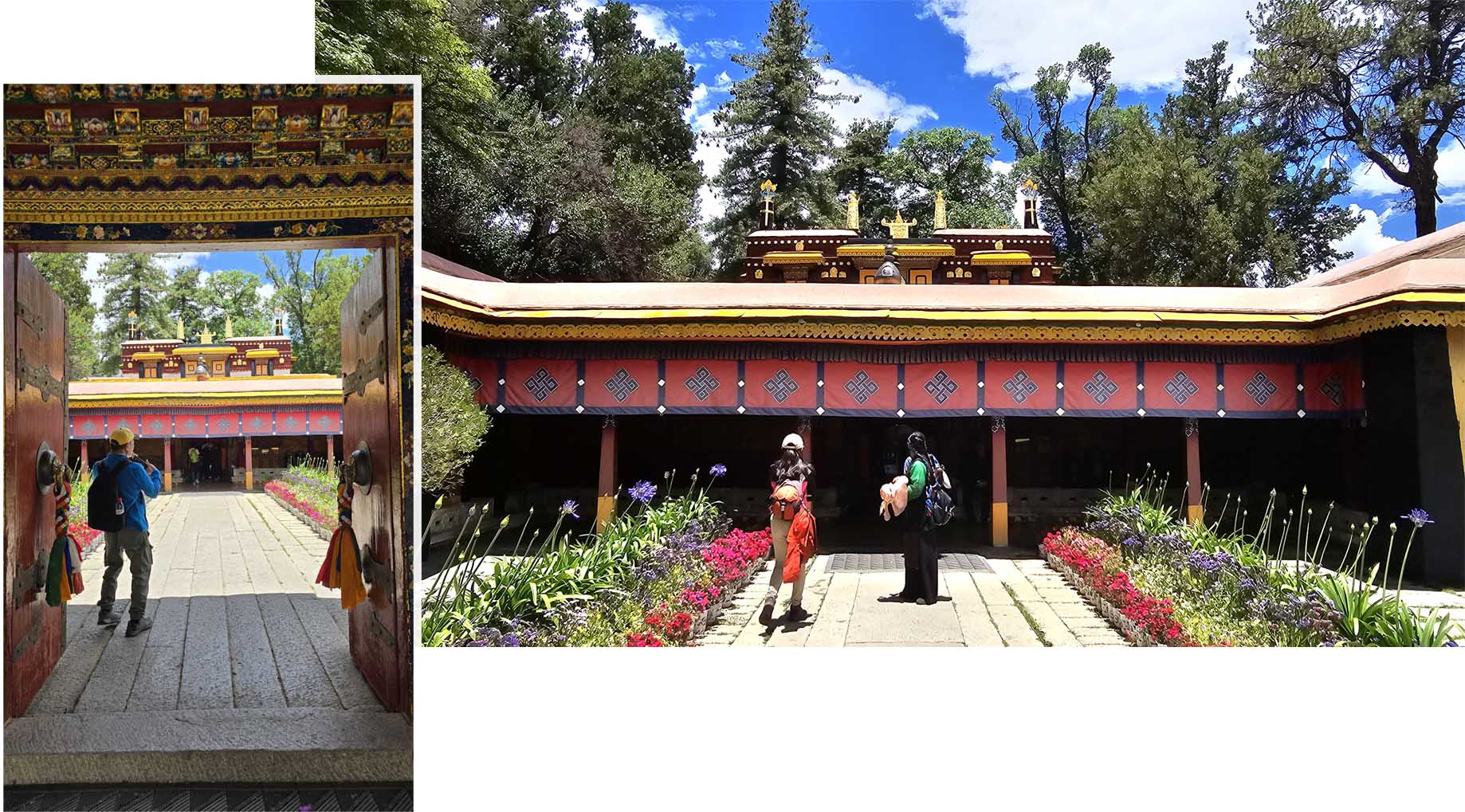
Our guide rushed us from one phodrang to another phodrang in the park, because we were allocated limit time in Norbulingka Park. We had another “attraction” to visit after the park. We found the “rushing” took away much joy of visiting this park. The park deserved to be exploring leisurely, the distance between the phodrang were long walking stretch and walking hurrily was a “kill joy”. On hind sight we should have purchased “shuttle ride” at the park entrance to cut short our walking, but we did not do so on advice by our guide. Our guide was a local used to walking fast at such high altitude and he totally forgot that we should not be walking fast!

Sera Monastery
Sera Monastery ( 色拉寺) was an “eye opener” as compared Drepung Monastery which we had visited in the morning. One was like a “ghost city” and the other totally opposite.
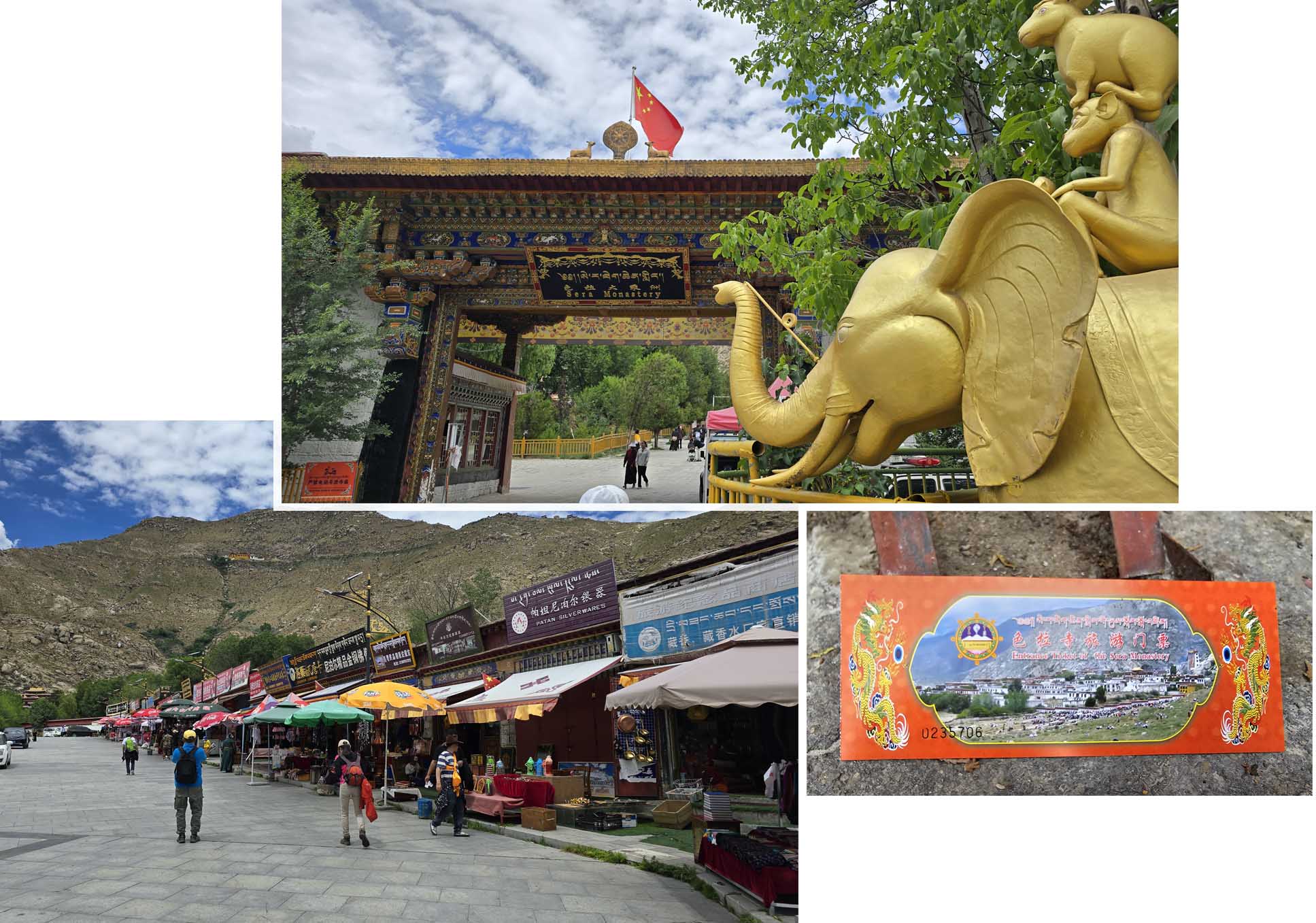
As we walked through the entrance entering the courtyard we saw many monks teeming through the place. There seemed to be an event going on!
Sera Monastery was one of the three great Gelug university monasteries in Tibet, along with Drepung Monastery and Ganden Monastery. The name “Sera” meant “wild roses” in Tibetan and was given to monastery because wild roses grew in the area.
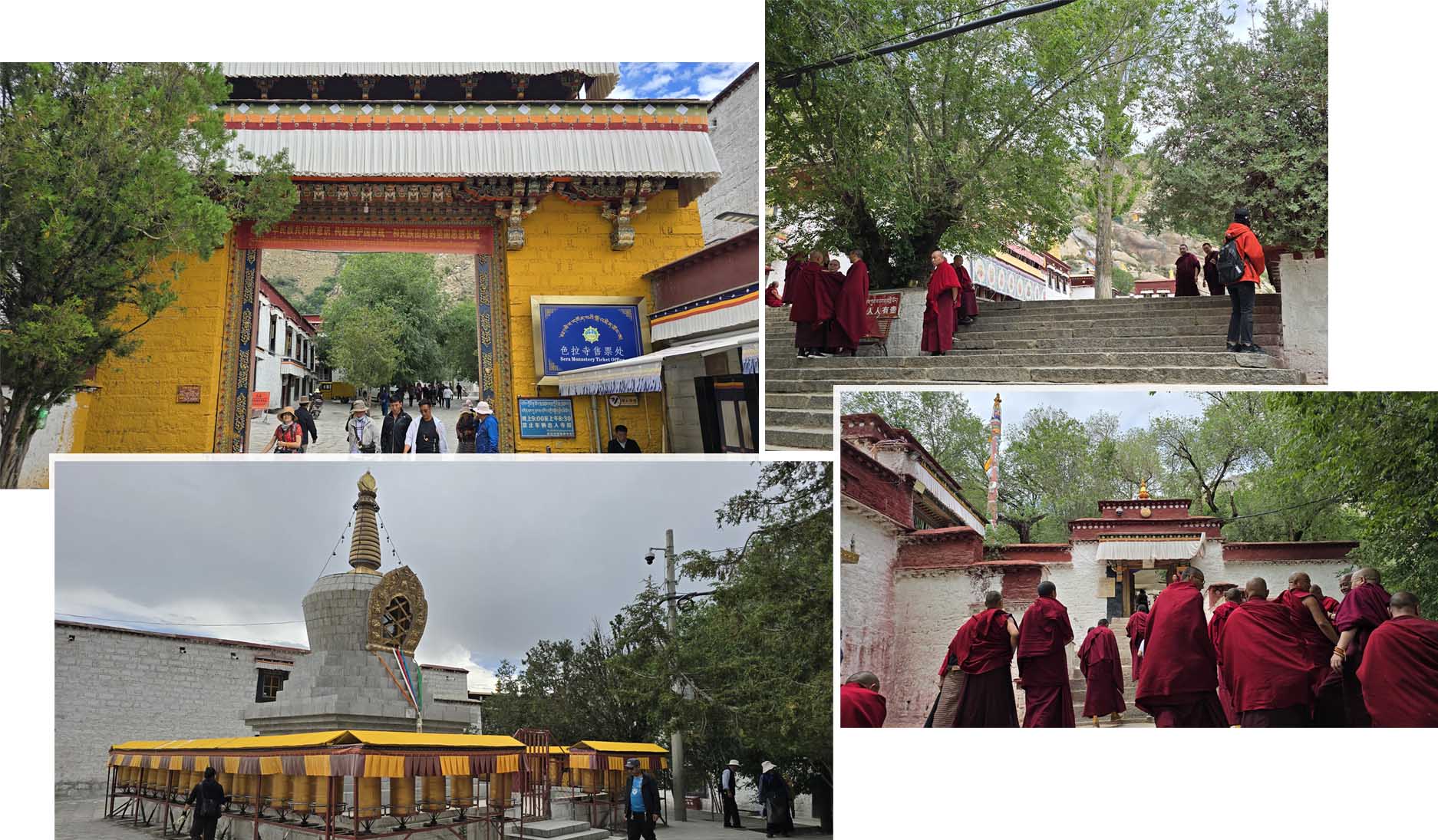
The monastery was founded by Jamchen Chojey in 1419, he was a disciple of the famous Tibetan Buddhist scholar Tsongkhapa. At its peak, the monastery housed more than 5,000 monks and was home to numerous scholars and teachers.
As we walked inner into the monastery, we came to a big garden/courtyar which was shaded by overhead tents. Under the tentages were several different sections, low tables and seats were placed on two sides of a walkway leading to and “altar”. Behind the tables were rows and rows of cushion seats.
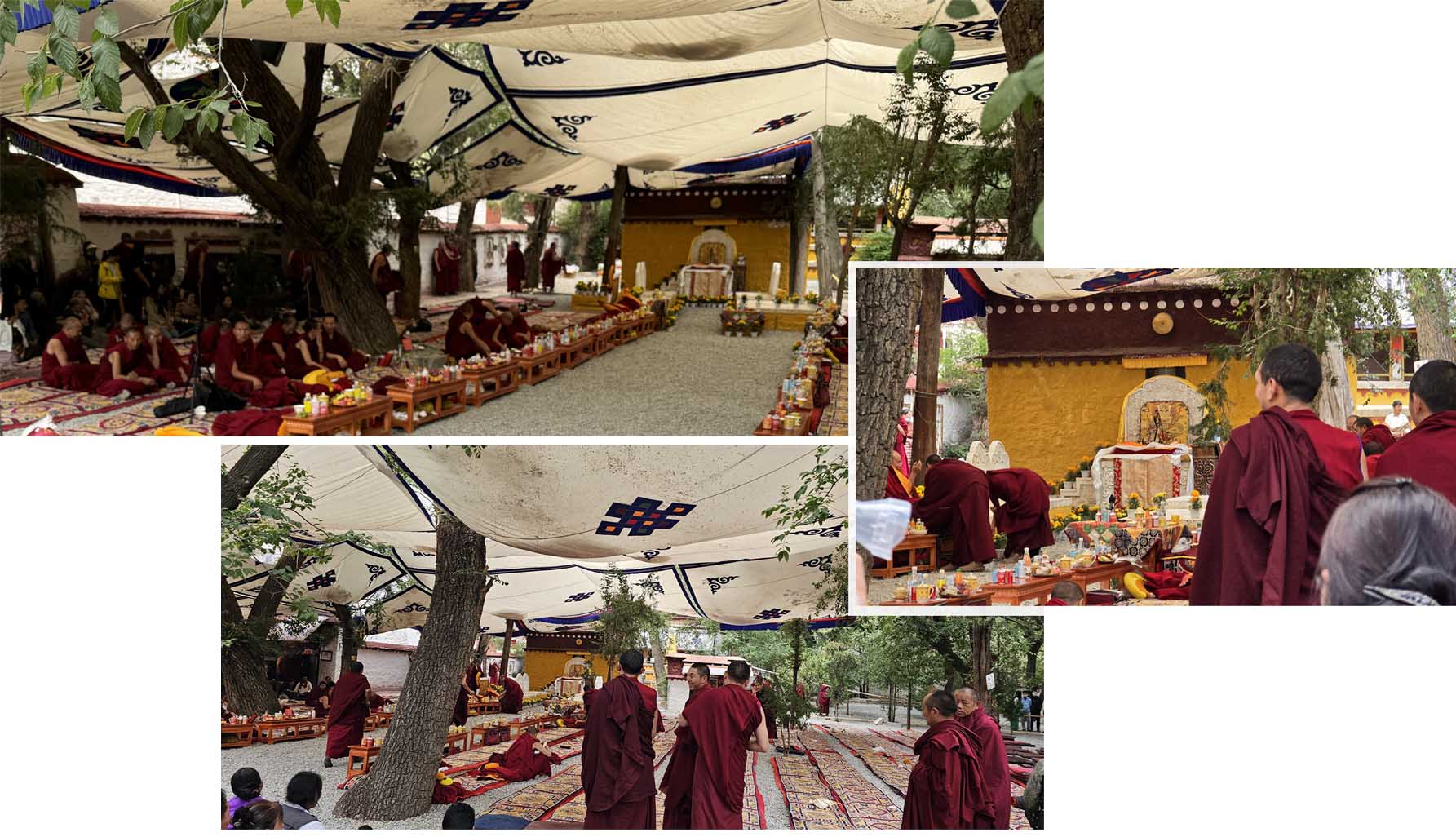
Visitors/tourists were segregated outside the tentage area. We were cordoned in the perimeter surrounding the tentage and were told not to take any photo. We just could not help but “sneak” a couple of photo shots whenever the “enforcing staff” were not watching. Soon more and more monks came in and filled up the many cushion seats
The monks at Sera Monastery were renowned for their debates. This was a tradition central to Tibet, a form of Buddhist education for over 1200 years. One monk would took the role of a questioner and the other took the role of a respondent and the debates were on Buddhist knowledge. Usually there were many groups of monks in the courtyard practicing debates at about 3pm to 5pm every day except Sunday.
On our visit we witnessed a major debate event where the entire school gathered under shaded canopy to witness the debate under the watchful eyes of senior monks/ masters.
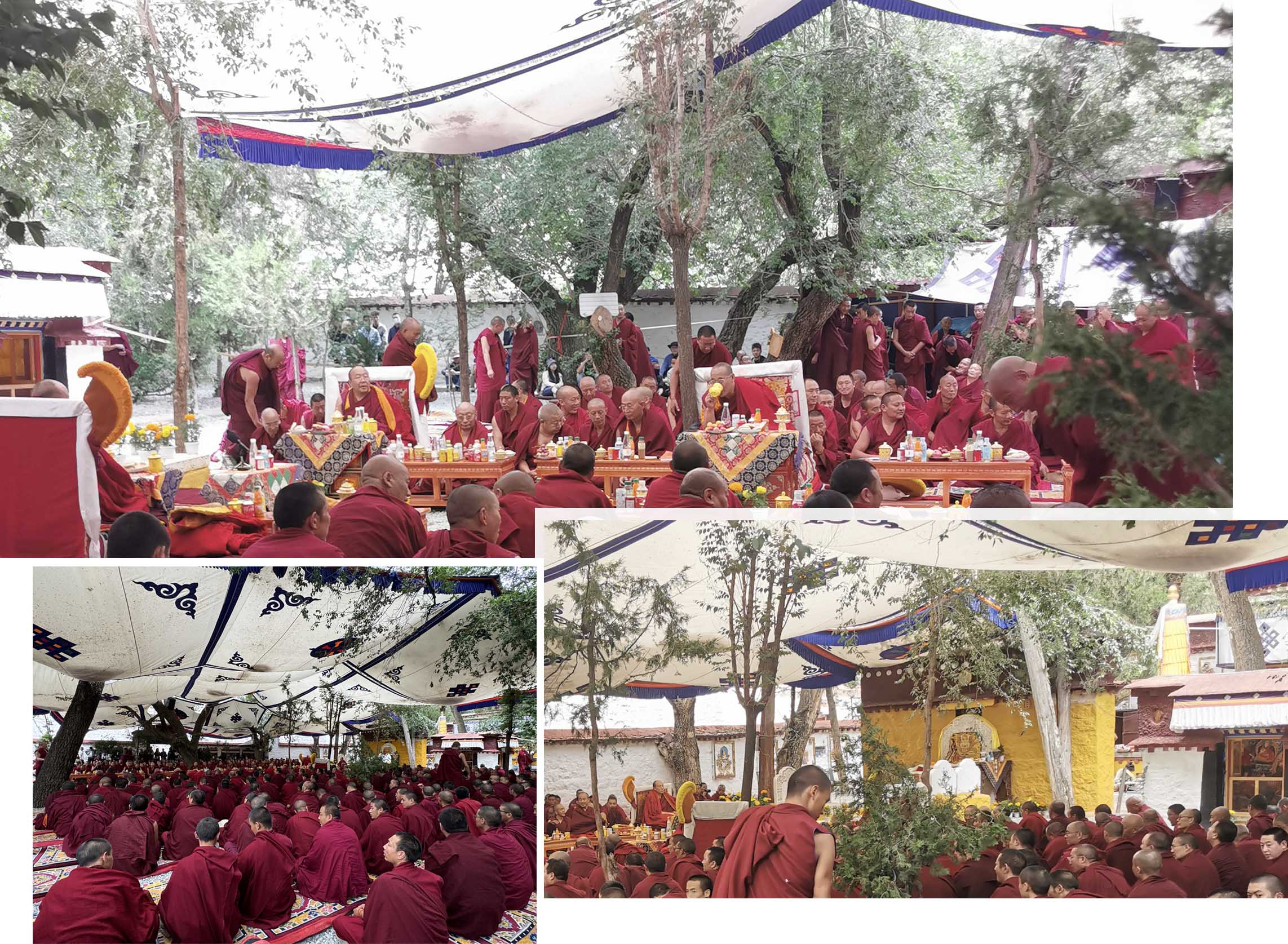
We were surprised it was not a pure conversation sort of debates. The debaters used gestures liked clapping their hands, stamping their feet . Apparentlly during the debates, the debaters used various gestures to strengthen their arguments. It was amazing to see all the actions.
We were in Sera Monastery for about an hour waiting for the monks to gather, then waiting for the debate to start and watching the debate in action. Eventually we did not even bother to walk into the halls, rooms, buildings in Sera Monastery for a look. It was getting late, we were tired and we did not think the interior of Sera Monastery would be very much different from the interior of Drepung Monastery where we visited in the morning.
Dinner
We asked our Tibet driver and guide to recommend a nice place for dinner and like the earlier days they had “no comments”. It was difficult to understand how these two gentlemen working in the Tibetan tourist industy could not give a single recommendation on Tibet food.
Using Baidu Map we found a Tibetan Restaurant (藏家宴(第一分店)) near our hotel.

It was a short walk of 500m from our hotel. It was a nice restaurant so we went in for dinner. The cost of the dinner for all five of us came up to ¥540.

After dinner was a slow stroll back to our hotel. It was a nice 500m walk passing several fruit shops. We entered the fruit shop and bought some fruit.
